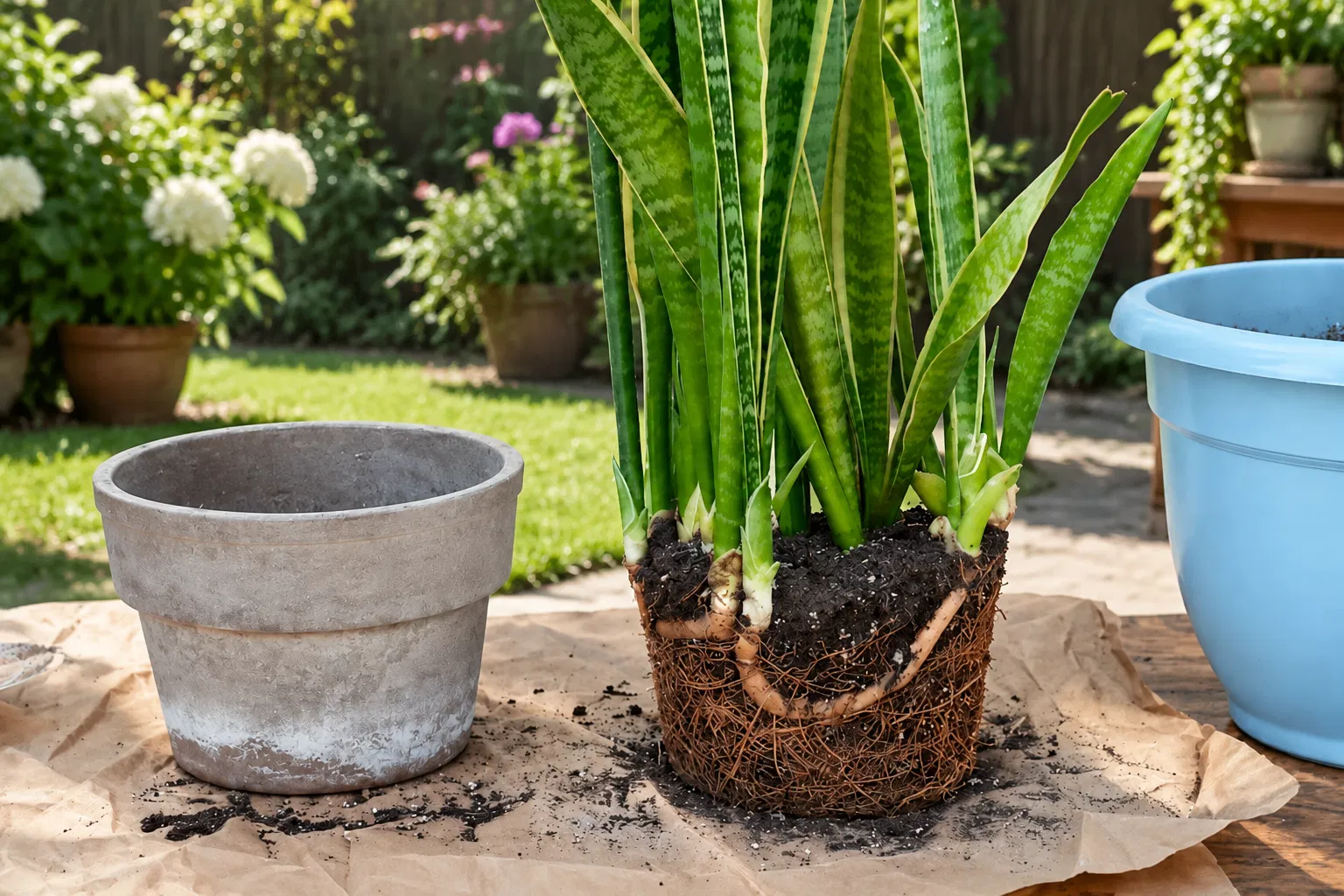
The snake plant, Sansevieria trifasciata (also classified botanically as Dracaena trifasciata), is one of the most forgiving houseplants around — which makes repotting it far less risky than most other indoor plants. Still, a few missteps around soil, watering, and timing can set it back unnecessarily. Here's how to do it right.
Why Snake Plants Handle Repotting Well
Snake plants store water in thick, fleshy leaves and a tough rhizome system, giving them far more tolerance for root disturbance than thin-rooted tropical plants. This resilience is exactly why they're commonly recommended to beginners — but "tolerant" doesn't mean "immune to stress," especially around overwatering right after the move.
When to Repot
Snake plants grow slowly and are happy being slightly root-bound, so they need repotting far less often than most houseplants — typically every 2–3 years, sometimes longer. Repot when:
- Roots or rhizomes are visibly pushing against or cracking the pot.
- Water runs straight through without being absorbed.
- The plant has stopped producing new leaves despite otherwise stable care.
- You want to divide a clump that has become overcrowded.
Repot during spring or early summer when the plant is actively growing, and avoid winter, when snake plants slow down significantly and recover from root disturbance far more slowly.
Choosing the Right Pot
Go up only one size — snake plants actually prefer being a little snug, since a too-large pot holds excess moisture around unused soil and raises the risk of rot in the rhizome. A terracotta pot is a particularly good choice here: its porous walls let excess moisture evaporate, which suits a plant that's far more sensitive to overwatering than to a tight pot.
Getting the Soil Mix Right
Snake plants need a fast-draining, slightly gritty mix — regular houseplant soil retains too much moisture around the rhizome. A reliable blend is about 60% potting mix, 20% cocopeat, and 20% coarse sand or perlite for extra drainage — closer to a succulent or cactus mix than a standard tropical houseplant blend.
Step-by-Step: Repotting Without Stress
- Skip watering for a couple of days beforehand — slightly drier soil separates from the rhizome more cleanly and reduces the risk of snapping roots.
- Tip the pot on its side and ease the plant out gently; snake plant rhizomes can be tightly packed, so avoid yanking from the leaves.
- Inspect the rhizome — trim only soft, mushy, or clearly rotten sections with a clean, sharp tool; healthy rhizomes are firm and pale.
- If dividing, separate sections so each division has at least one healthy fan of leaves attached to its own piece of rhizome.
- Place in the new pot at the same depth as before, backfill with the fresh mix, and firm it gently — no need to pack tightly.
- Hold off on watering for about a week; this lets any small root wounds callous over and significantly lowers the risk of rot setting in.
Aftercare
Keep the newly repotted plant in bright, indirect light and resist the urge to water on your usual schedule — snake plants recovering from repotting need less water than an established plant, not more. Skip fertilizer for at least a month; new growth is usually the clearest sign the plant has settled in.
Frequently Asked Questions
Can I repot a snake plant any time of year?
It's best avoided in winter, when the plant is dormant and recovers from root disturbance much more slowly; spring or early summer is ideal.
Is it normal for a snake plant to look droopy after repotting?
Mild, brief drooping can happen, but snake plants are generally quite stable through repotting — persistent wilting or yellowing usually points to overwatering afterward rather than the repotting itself.
Should I water immediately after repotting?
No — wait about a week to let any root wounds callous over first, which reduces the risk of rot in the fresh mix.
Disclaimer: General care guidance for common Sansevieria trifasciata varieties; specific needs can vary slightly by cultivar and growing conditions.