If you raise chickens, ducks, or other poultry, feed is one of the biggest factors affecting growth, egg production, health, and overall cost. The good news is that formulating poultry feed at home does not have to be complicated. With the right ingredients and a basic understanding of nutrition, you can create a balanced feed that supports your birds while reducing dependency on expensive commercial options.
Whether you are raising layers, broilers, or backyard birds, learning the basics of poultry feed formulation helps you save money, control ingredient quality, and customize rations for different stages of growth. In this guide, you will learn what poultry need, which ingredients to use, and how to mix a simple homemade feed formula.
Why Make Poultry Feed at Home?
Homemade poultry feed gives you more control over what your birds eat. Instead of relying entirely on store-bought feed, you can use locally available ingredients to build a balanced ration.
- Lower costs: You can often reduce feed expenses by using ingredients you already have access to.
- Ingredient control: You know exactly what goes into the feed.
- Flexibility: You can adjust the formula based on bird age, breed, and production goals.
- Freshness: Homemade feed can be mixed in smaller batches, which helps maintain quality.
That said, homemade feed must still meet the nutritional needs of your poultry. A feed that is too low in protein, energy, vitamins, or minerals can lead to poor growth, weak eggshells, low egg production, and increased disease risk.
Basic Nutrients Poultry Need
Before you start mixing feed, it helps to understand the major nutrients poultry require. A balanced poultry ration usually includes the following:
1. Energy
Energy helps birds stay active, maintain body temperature, and support growth and egg production. Common energy sources include corn, sorghum, wheat, and millet.
2. Protein
Protein is essential for muscle development, feather growth, egg formation, and tissue repair. Good protein sources include soybean meal, fish meal, sunflower meal, groundnut cake, and poultry-specific protein concentrates.
3. Vitamins
Vitamins support immunity, reproduction, and metabolism. Poultry need vitamin A, D, E, K, and B-complex vitamins in proper amounts.
4. Minerals
Minerals are important for bone strength, eggshell quality, and body function. Key minerals include calcium, phosphorus, sodium, salt, zinc, and manganese.
5. Water
Water is not part of the feed mix, but it is just as important. Clean water must always be available, since even the best feed will not work well without it.
Common Ingredients Used in Homemade Poultry Feed
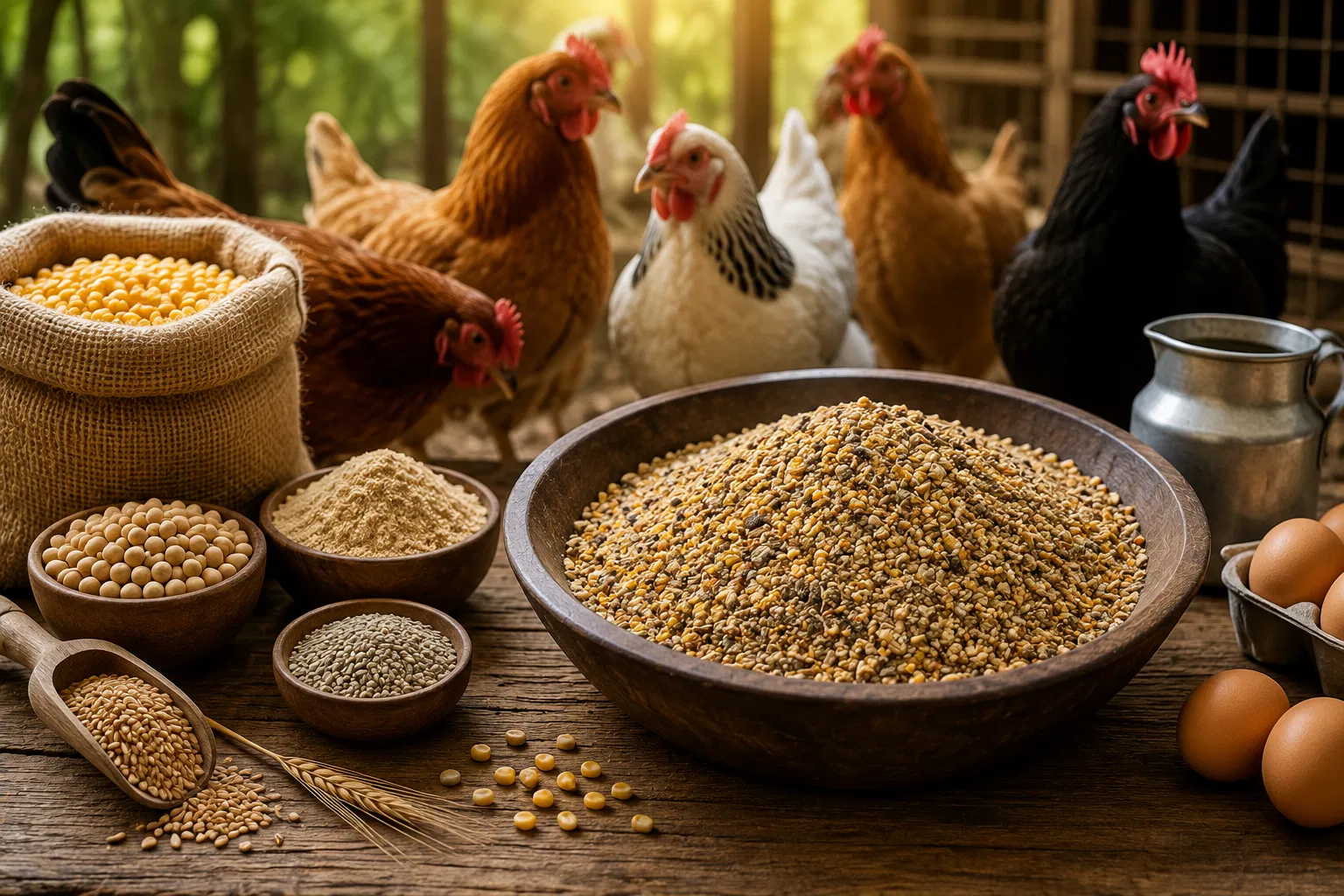
The ingredients you choose will depend on what is locally available, affordable, and suitable for poultry nutrition. Here are common feed ingredients used in home formulations:
- Corn or maize: A major energy source
- Soybean meal: High-protein ingredient
- Fish meal: Rich in protein and minerals
- Wheat bran: Adds fiber and some energy
- Groundnut cake: Useful plant protein source
- Rice bran: Energy source with some fat
- Limestone or oyster shell: Calcium source for layers
- Dicalcium phosphate: Supplies calcium and phosphorus
- Salt: Needed in small amounts for body function
- Vitamin-mineral premix: Helps prevent deficiencies
Not every ingredient will be available everywhere, and that is fine. The goal is to create a formula that combines energy, protein, minerals, and additives in the right proportions.
Types of Poultry Feed Formulations
Different birds need different feed depending on their age and purpose. A good homemade poultry feed formula should match the stage of production.
Starter Feed
Starter feed is for chicks from day-old to about 4–6 weeks. It should be high in protein and easy to digest to support rapid growth.
Grower Feed
Grower feed is for birds that are past the chick stage but not yet laying or finishing. It contains moderate protein and energy for steady development.
Layer Feed
Layer feed is for hens that are producing eggs. It contains more calcium to support strong eggshells and consistent laying.
Broiler Feed
Broiler feed is designed for meat birds. It is usually energy- and protein-rich to promote fast weight gain and efficient feed conversion.
Balanced feed is not about using the most ingredients. It is about using the right ingredients in the right amounts.
Simple Homemade Poultry Feed Formula Example
Here is a basic example of a general-purpose poultry feed mix. This is only a starting point and may need adjustment based on your birds' needs and ingredient quality.
Example Grower Feed Mix
- Maize or corn: 50%
- Soybean meal: 25%
- Wheat bran: 10%
- Groundnut cake or fish meal: 10%
- Limestone or oyster shell: 2%
- Dicalcium phosphate: 1%
- Salt: 0.3%
- Vitamin-mineral premix: 0.5%
- Oil or fat: 1.2%
This type of formula provides a practical balance of energy, protein, and minerals. For layers, the calcium level should be increased. For broilers, energy and protein levels may be higher. Always aim to match the feed to the bird's purpose.
How to Mix Poultry Feed at Home
Mixing feed properly is just as important as choosing the right ingredients. Poor mixing can cause uneven nutrient distribution, which means some birds get too much of one nutrient and too little of another.
- Measure each ingredient accurately. Use scales or consistent measuring containers.
- Grind ingredients if needed. Smaller particles are easier for birds to eat and digest.
- Mix dry ingredients first. Combine grains, meals, minerals, salt, and premix thoroughly.
- Add oil last. If using oil or fat, drizzle it in slowly while mixing.
- Blend until uniform. Make sure the final mix looks even and consistent.
- Store correctly. Keep feed in a dry, cool, rodent-free place.
Important Tips for Better Feed Quality
When formulating poultry feed at home, small mistakes can affect bird performance. Keep these tips in mind:
- Use clean ingredients: Avoid moldy, rotten, or contaminated materials.
- Do not overuse salt: Too much salt can harm birds.
- Include premix: Vitamins and minerals are needed in small but essential amounts.
- Watch protein sources: Low-quality protein ingredients may reduce performance.
- Adjust for bird age: Chicks, growers, layers, and broilers all need different nutrition.
- Check storage regularly: Feed can spoil quickly in damp conditions.
Freshness matters a lot. Even a well-formulated feed can lose quality if stored improperly. Moisture, heat, and pests can damage nutrients and create health risks for your flock.
Signs Your Feed May Need Adjustment
Once your birds start eating the homemade feed, observe them closely. Their condition often tells you whether the ration is working.
- Poor growth or slow weight gain
- Low egg production
- Thin or soft eggshells
- Feather problems
- Lack of energy or reduced appetite
- Uneven flock development
If you notice these signs, review the feed ingredients and proportions. The issue may be inadequate protein, insufficient calcium, poor energy levels, or a missing vitamin-mineral premix.
Final Thoughts on Formulating Poultry Feed at Home
Learning how to formulate poultry feed at home is a smart skill for any poultry keeper. It helps you reduce feeding costs, improve control over ingredients, and tailor nutrition to your flock's needs. The key is balance: energy, protein, vitamins, minerals, and clean water all work together to support healthy birds.
Start with a simple formula, keep records of what you mix, and monitor your birds' performance over time. As you gain experience, you can refine your recipe for better results. If you want healthier birds and more efficient poultry production, begin with a feed plan that is practical, balanced, and consistent.
Take the first step today: review the ingredients available to you, create a basic ration, and build from there. Your flock will benefit from the care you put into every mix.