Picking the right mulch film can make a noticeable difference in crop yield, soil health, weed control, and water efficiency. But with so many options available, the biggest question is often simple: which mulch film thickness and color should you use? The answer depends on your crop, climate, season, and growing goals. Choosing wisely can help you get better results from every planting cycle.
Why Mulch Film Thickness and Color Matter
Mulch film is more than a plastic cover for soil. It influences soil temperature, moisture retention, weed suppression, and light reflection around plants. The thickness affects durability and lifespan, while the color affects how sunlight interacts with the soil and plant canopy.
When you match the film to your growing conditions, you can improve plant establishment, reduce maintenance, and support healthier crops throughout the season.
Understanding Mulch Film Thickness
Mulch film thickness is usually measured in microns or mils. Thicker films tend to last longer and resist tearing, while thinner films are often easier to install and may be more cost-effective for short-season crops.
Common Thickness Options
- Thin films: Suitable for short-term crops and mild conditions, but more vulnerable to punctures and weather damage.
- Medium-thickness films: A balanced choice for many vegetables and fruits, offering decent durability and flexibility.
- Thick films: Best for long growing seasons, rough soil conditions, or areas with strong wind and mechanical stress.
How to Choose the Right Thickness
Consider the length of your crop cycle first. A tomato, pepper, or melon crop that stays in the ground for months will usually benefit from a more durable mulch film than a quick leafy green harvest.
You should also think about:
- Soil conditions: Rocky or uneven soil can damage thin film faster.
- Weather exposure: High wind, intense sun, and heavy rain can shorten film life.
- Installation method: Machine-laid film may require stronger material to handle tension.
- Crop rooting pattern: Aggressive root systems may stress the film more over time.
Rule of thumb: If the crop stays in the field longer, or if conditions are tougher, choose a thicker mulch film.
Choosing the Right Mulch Film Color
The color of mulch film changes how much light is absorbed, reflected, or blocked. That means color can directly affect soil temperature, weed control, and even pest behavior.
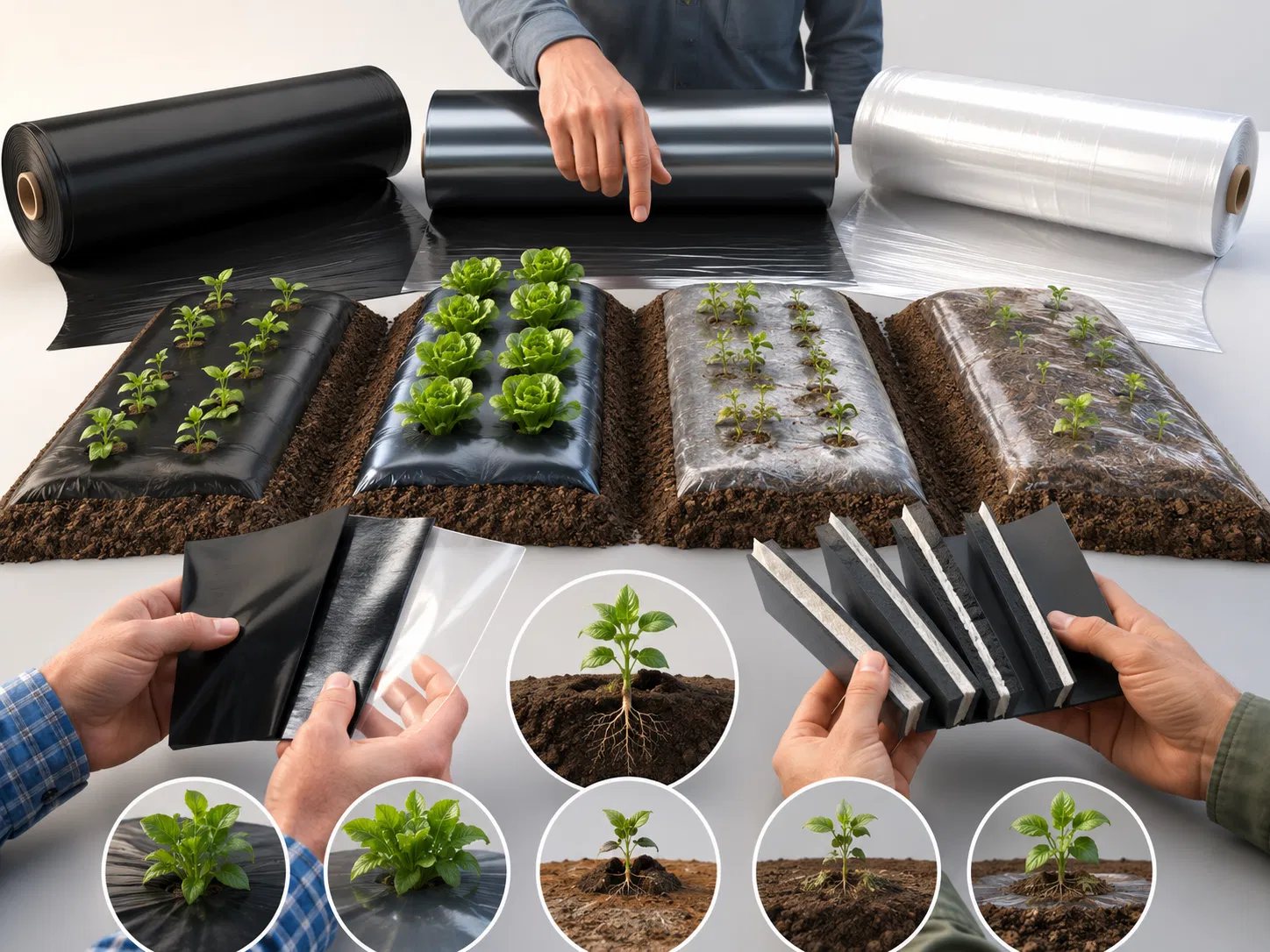
Black Mulch Film
Black mulch film is one of the most widely used choices because it blocks sunlight effectively, which helps suppress weeds. It also warms the soil, making it a strong option for early-season planting and cooler climates.
- Best for: Warm-season crops, weed-heavy fields, and cooler regions
- Benefits: Excellent weed control, better soil warming, improved moisture retention
- Watch for: In very hot climates, it may overheat the soil
Clear Mulch Film
Clear mulch film allows sunlight to pass through and warm the soil quickly. It can be useful for soil solarization and early root development, but it does not block weeds well unless used with specific management practices.
- Best for: Soil warming, solarization, and some early planting situations
- Benefits: Fast soil warming, good for sterilizing soil in solarization applications
- Watch for: Weed growth beneath the film
White Mulch Film
White mulch film reflects sunlight and helps keep soil cooler. It is a smart choice in hot climates or for crops that prefer cooler root zones. It can also improve light distribution around the plant canopy.
- Best for: Hot regions, summer planting, heat-sensitive crops
- Benefits: Reduces soil temperature, reflects light, may lower heat stress
- Watch for: Less soil warming compared with black film
Silver or Reflective Mulch Film
Silver mulch film reflects light strongly and can help deter certain insect pests by disrupting their visual patterns. It also helps control soil temperature and can be useful in high-value crops.
- Best for: Pest-sensitive crops, hot climates, specialty production
- Benefits: Reflects heat, may reduce pest pressure, supports crop vigor
- Watch for: Higher cost than standard black film
Colored Specialty Films
Some growers use red, blue, or brown mulch films to influence growth conditions or market-specific production goals. These are typically more specialized and should be chosen based on crop trials or local research.
- Best for: Specialty crops and experimental growing systems
- Benefits: May influence growth, temperature, and pest response
- Watch for: Limited application data in some regions
Matching Thickness and Color to Your Growing Goals
The best mulch film is not just about one feature. Thickness and color should work together to support your specific crop strategy.
For Early Spring Planting
If you are planting early in the season, especially in cooler areas, a thicker black mulch film is often a practical choice. It helps trap heat, blocks weeds, and stays durable during temperature swings.
For Hot Summer Conditions
In hot climates, a white or silver mulch film may be better because it reduces heat buildup around the root zone. If weed pressure is also a concern, reflective films can offer a balanced solution.
For Short-Season Crops
Short-season crops may not need the highest durability. A medium or thinner mulch film can be enough if conditions are mild and the crop will be harvested quickly.
For Long-Season Crops
For crops like tomatoes, cucumbers, peppers, and melons, durability matters more. A thicker film can reduce breakage, protect against weather stress, and maintain performance throughout the growing cycle.
Other Factors to Consider Before Buying
Thickness and color are important, but they are not the only factors that matter. A good mulch film should also fit your production system and environmental conditions.
- Film width: Must match bed size and row spacing
- UV resistance: Important for films exposed to long periods of sunlight
- Biodegradability: Useful for growers seeking reduced labor and easier cleanup
- Compatibility with irrigation: Especially important for drip-irrigated fields
- Local climate: Temperature and rainfall can influence film performance
Tips for Making the Best Choice
- Start with your crop: Different crops have different temperature and moisture needs.
- Assess your climate: Choose a color that supports the right soil temperature.
- Think about crop duration: Longer cycles usually need thicker film.
- Consider weed pressure: Black and opaque films are usually better for suppression.
- Factor in installation and labor: Stronger films often perform better under mechanical stress.
- Test on a small area first: Trial results can help refine future decisions.
Common Mistakes to Avoid
Many growers choose mulch film based only on price, but that can lead to poor performance and added costs later.
- Using thin film for long crops: This can lead to tearing and early replacement.
- Choosing the wrong color for the climate: Soil may become too hot or too cool.
- Ignoring weed pressure: Some colors are much better at blocking weeds than others.
- Overlooking UV exposure: Weak films can degrade quickly in intense sunlight.
- Not matching film to irrigation setup: Poor compatibility can reduce efficiency.
Final Thoughts
Choosing the right mulch film thickness and color is one of the smartest decisions you can make for crop success. Thicker films deliver better durability, while the right color helps manage soil temperature, weeds, and plant stress. When you match the film to your crop, climate, and season, you create better growing conditions from the start.
Take the time to compare your options carefully. A well-chosen mulch film can improve yields, reduce labor, and make your growing system more efficient season after season.