Watering crops sounds simple until you realize that too much water can be just as damaging as too little. The real challenge is not guessing, but understanding your crop water requirements so you can deliver the right amount at the right time. Whether you manage a small garden, a greenhouse, or a commercial farm, knowing how much water your crop really needs can improve growth, reduce waste, and protect yield quality.
Why Crop Water Needs Are Never One-Size-Fits-All
Every crop uses water differently. A leafy vegetable like lettuce has a different irrigation need than a deep-rooted crop like corn, and both will behave differently in sandy soil versus clay soil. Climate, growth stage, root depth, and planting density all affect how much moisture a plant consumes.
In other words, crop water requirements depend on a combination of factors, not a single number. That is why successful irrigation management starts with observation and planning, not routine watering alone.
What Determines How Much Water a Crop Needs?
To estimate the water needs of crops accurately, you need to understand the main influences behind plant water use.
1. Crop Type
Different crops have different transpiration rates and root systems. Fast-growing vegetables, fruiting crops, and broadleaf plants often need more frequent watering than drought-tolerant grains or mature orchard trees.
2. Growth Stage
A crop's water demand changes as it develops. Seedlings need consistent moisture to establish roots, while flowering and fruiting stages often require more stable irrigation to avoid stress and yield loss.
3. Soil Type
Soil plays a major role in how water is stored and delivered to roots.
- Sandy soil drains quickly and usually needs more frequent irrigation.
- Clay soil holds water longer but can become waterlogged.
- Loam soil balances drainage and retention and is often ideal for many crops.
4. Weather and Climate
Hot, windy, and dry conditions increase evaporation and transpiration, which means your crops will need more water. Cooler weather, cloud cover, and higher humidity reduce water loss.
5. Root Depth
Shallow-rooted crops dry out faster because they can only access moisture near the surface. Deep-rooted crops can draw from a larger soil volume, which may reduce irrigation frequency.
Understanding Evapotranspiration
If you want a more precise estimate of crop water needs, one of the most useful concepts is evapotranspiration, often shortened to ET. ET is the combined water loss from soil evaporation and plant transpiration.
Simply put, ET tells you how much water is leaving the field each day. When ET is high, irrigation demand increases. When ET is low, crops need less supplemental water.
ET is one of the most reliable guides for irrigation planning because it reflects both weather conditions and plant activity.
Many growers use local weather data, crop coefficients, or irrigation scheduling tools to estimate ET-based water needs. This approach is much more accurate than watering by habit.
How to Estimate Water Requirements for Crops
While exact numbers vary, there is a practical way to think about crop water use. Most crops need enough water to keep root zones evenly moist without saturating them. The goal is to replenish what the crop and environment have removed.
A simple method is to consider these three steps:
- Measure soil moisture before irrigating.
- Check crop stage and weather to estimate current demand.
- Apply water deeply and evenly so roots can absorb it effectively.
For many farms, irrigation efficiency improves dramatically when water is applied based on actual need rather than a fixed schedule. This prevents both under-watering and overwatering, which can weaken roots and increase disease pressure.
Signs Your Crop Is Not Getting the Right Amount of Water
Crops often show visible stress when their water supply is off balance. Learning these signs can help you correct problems early.
Signs of Underwatering
- Wilting during the hottest part of the day
- Dry, crumbly soil
- Slow growth
- Smaller leaves or fruit
- Leaf curling or yellowing
Signs of Overwatering
- Constantly wet soil
- Root rot or fungal problems
- Yellowing leaves despite moist soil
- Poor root development
- Runoff or standing water
Both conditions can reduce yield. In many cases, overwatering causes more long-term damage than mild underwatering because it limits oxygen in the root zone.
Best Practices for Efficient Irrigation
Good irrigation management is about precision. The more efficiently you use water, the healthier your crop is likely to be.
Water Early in the Day
Early morning irrigation reduces evaporation losses and allows foliage to dry before nightfall, which helps lower disease risk.
Use Drip Irrigation When Possible
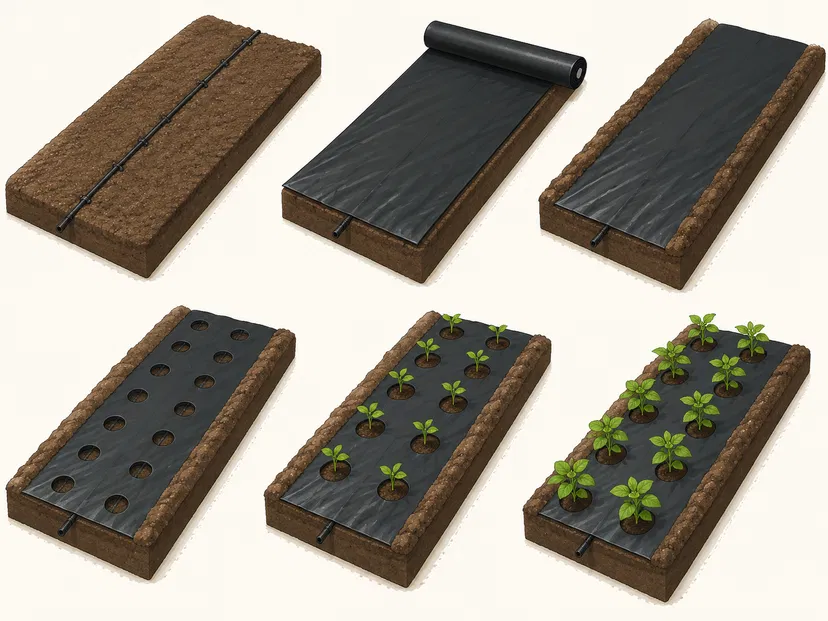
Drip systems deliver water directly to the root zone, minimizing waste and improving moisture control. They are especially useful for row crops, vegetables, and orchards.
Mulch to Preserve Soil Moisture
Organic mulch, plastic mulch, or cover residue can reduce evaporation, moderate soil temperature, and keep moisture available longer.
Monitor Soil Moisture Regularly
Use soil moisture sensors, tensiometers, or even manual checks to know when irrigation is actually needed. Consistent monitoring prevents guesswork.
Avoid Shallow, Frequent Watering
Light watering encourages roots to stay near the surface, making plants more vulnerable during heat or drought. Deep watering promotes stronger root systems.
How Different Crops Compare
Crop water requirements vary widely, but general patterns can help guide your irrigation strategy.
- Leafy greens: Need frequent, moderate moisture because they have shallow roots and fast growth cycles.
- Fruiting vegetables: Require steady watering, especially during flowering and fruit development.
- Grains: Often tolerate short dry periods better but still need adequate moisture during critical stages.
- Fruit trees: Need deep, less frequent irrigation once established, with extra attention during hot weather and fruit fill.
- Root crops: Need balanced moisture to support uniform root development and avoid splitting or misshapen growth.
Understanding your crop's water needs by category is a smart starting point, but local soil and climate conditions should always guide the final irrigation plan.
Why Overwatering Costs More Than You Think
It is easy to assume that more water means healthier crops, but excess moisture can create serious problems. Overwatering leaches nutrients, increases disease risk, and can suffocate roots by reducing oxygen in the soil.
It also wastes a valuable resource. In areas where water is expensive or scarce, poor irrigation practices can significantly raise costs. Efficient water use supports both productivity and sustainability.
Building a Smarter Watering Strategy
The best watering strategy combines observation, measurement, and flexibility. Instead of asking, "How often should I water?" ask, "What does the crop, soil, and weather tell me today?"
A smarter approach includes:
- Tracking rainfall and irrigation amounts
- Adjusting for heat, wind, and humidity
- Testing soil moisture before watering
- Watching plant response during key growth stages
- Using crop-specific irrigation scheduling tools when available
This kind of system helps you align water delivery with actual crop demand, which is the foundation of effective irrigation management.
Conclusion: Give Your Crop What It Actually Needs
How much water your crop really needs depends on more than a schedule. Crop type, soil, weather, growth stage, and root depth all shape water demand. Once you understand these factors, you can move from guesswork to precision and protect both yield and resources.
The best irrigation plan is not the one that uses the most water, but the one that delivers the right amount at the right time. Start monitoring moisture, adjust for changing conditions, and make every drop count for healthier crops and better results.