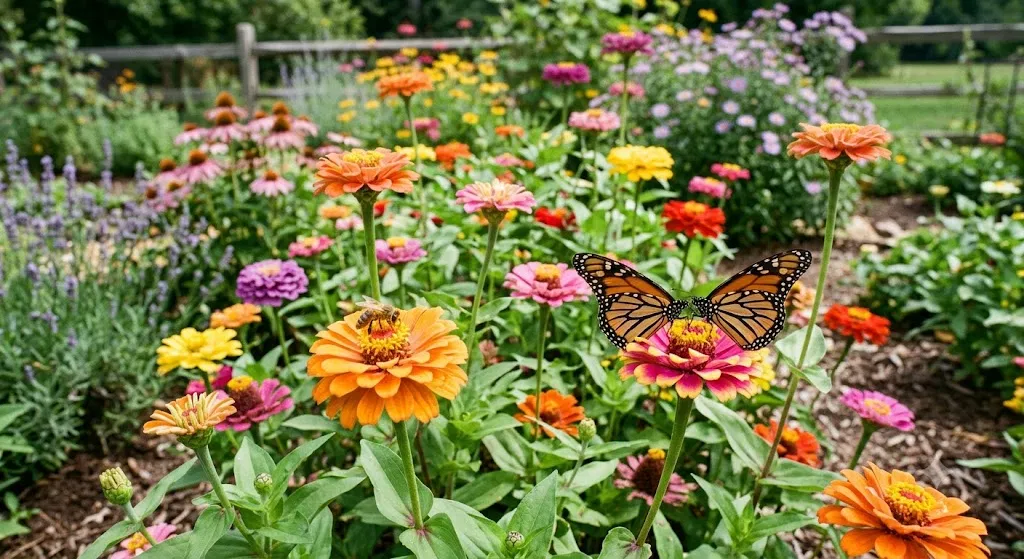
If you want a garden that buzzes with life from summer through fall, zinnia flowers are one of the easiest and most rewarding choices you can plant. Their bright colors, long bloom season, and simple flower structure make them a magnet for bees, butterflies, and other beneficial pollinators. Best of all, zinnias are beginner-friendly, fast-growing, and thrive in sunny spaces with minimal fuss.
Whether you're designing a full pollinator garden or just want to add more wildlife-friendly flowers to your yard, zinnias offer a perfect mix of beauty and function. In this guide, you'll learn why zinnias are so effective for attracting pollinators, how to grow them successfully, and which varieties work best for creating a colorful, pollinator-rich garden.
Why Zinnias Are Ideal for Pollinator Gardens
Zinnias are among the best annual flowers for pollinator support because they provide exactly what bees and butterflies need: easy access to nectar and pollen. Their open, daisy-like blooms create a landing pad for insects, while their bright colors help pollinators spot them from a distance.
Unlike heavily hybridized flowers that may have reduced nectar or overly dense petals, many zinnia varieties remain highly attractive to wildlife. The more open the flower, the easier it is for pollinators to feed. That makes zinnias a smart choice for anyone building a bee-friendly garden or a butterfly garden.
Tip: Choose single-flowered or semi-double zinnias if your main goal is attracting pollinators. These forms are usually more accessible than fully double blooms.
Best Zinnia Varieties for Bees and Butterflies
Not all zinnias are equally effective for pollinators. While many varieties are beautiful, some are better suited for supporting wildlife than others. When selecting seeds or transplants, look for blooms that are easy to land on and reach.
Top pollinator-friendly zinnia types
- Zinnia elegans – Classic, tall zinnias with large, colorful blooms that butterflies love.
- Profusion series – Compact plants with abundant flowers and strong disease resistance.
- Zahara series – Heat-tolerant and dependable, ideal for long-lasting color in hot climates.
- California Giant zinnias – Bold, showy blooms that offer a wide feeding surface for pollinators.
- Single-flowered zinnias – The best option for maximizing access to nectar and pollen.
If your goal is to attract the widest range of pollinators, include a mix of heights and flower colors. Bees are often drawn to purple, yellow, and white tones, while butterflies tend to flock to vivid reds, oranges, pinks, and purples.
How to Grow Zinnias for Maximum Pollinator Appeal
Growing zinnias for pollinators is simple, but a few smart planting choices can make your garden even more attractive to bees and butterflies. The healthier and more abundant your zinnia blooms, the more wildlife they will support.
1. Plant in full sun
Zinnias thrive in full sun, and pollinators are more active in warm, sunny areas. Aim for at least 6 to 8 hours of direct sunlight each day. A sunny flower bed, border, or raised garden bed works perfectly.
2. Use well-draining soil
Zinnias dislike soggy roots. They prefer soil that drains well and isn't overly rich. In fact, too much fertilizer can lead to lush foliage and fewer flowers. A balanced, moderately fertile soil is ideal for producing steady blooms.
3. Direct sow or transplant carefully
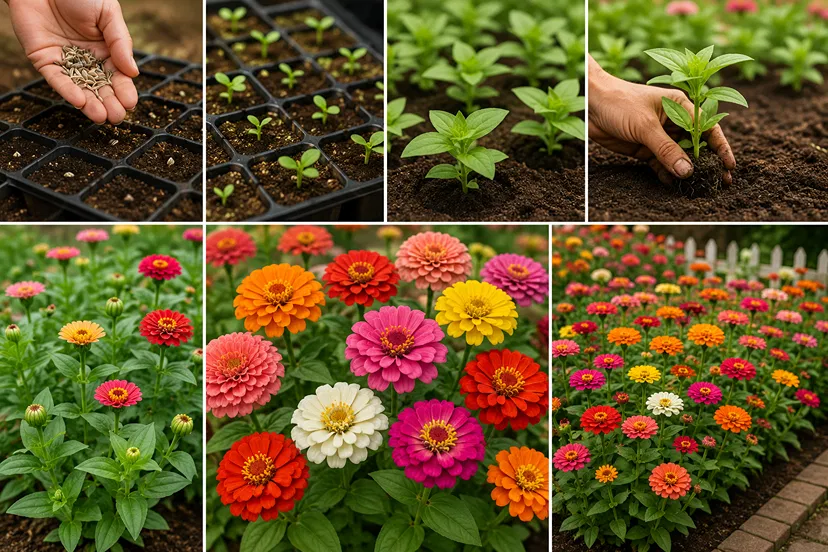
You can start zinnias from seed after the last frost or transplant young plants once the weather warms. Direct sowing is often easiest and helps avoid transplant shock. Space plants properly so they have room for airflow, which reduces disease and keeps blooms coming.
4. Keep blooms coming
One of the biggest advantages of zinnias is their long flowering season. To encourage continuous blooming, deadhead spent flowers regularly. This prevents the plant from putting energy into seed production and encourages more blossoms for pollinators.
5. Water at the base
Water zinnias deeply but infrequently, aiming for the soil rather than the leaves. Wet foliage can contribute to fungal problems like powdery mildew, especially in humid climates. Healthy plants produce more flowers, which means more nectar for visiting insects.
Creating a Pollinator Garden with Zinnias
Zinnias work beautifully when paired with other pollinator-friendly plants. A diverse garden provides food sources across multiple seasons and attracts a wider variety of beneficial insects. Think beyond zinnias and combine them with flowers that bloom at different times and offer different shapes of nectar sources.
Great companion plants for zinnias
- Milkweed – Essential for monarch butterflies.
- Bee balm – A magnet for bees, hummingbirds, and butterflies.
- Sunflowers – Large, pollen-rich blooms that support many pollinators.
- Cosmos – Light, airy flowers that pair well with zinnias.
- Salvia – Rich nectar source with a long bloom window.
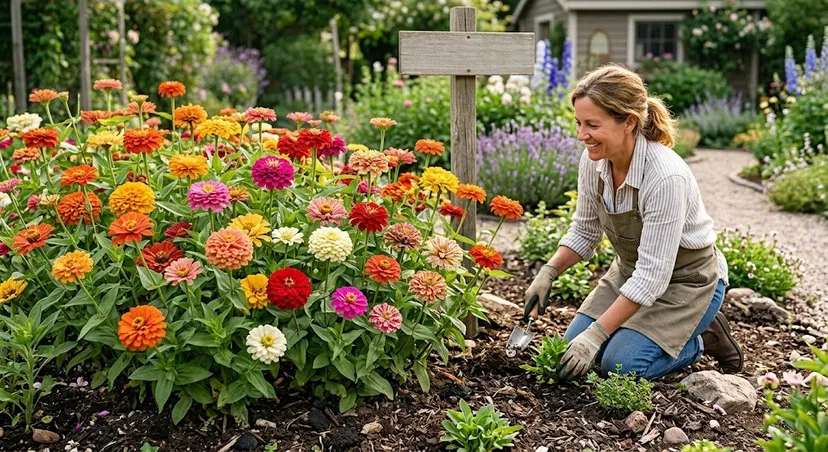
Layer your garden with tall, medium, and low-growing plants to create visual interest and feeding opportunities at different heights. Plant zinnias in clusters rather than single scattered plants, since grouped flowers are easier for pollinators to spot and visit efficiently.
Why Bees Love Zinnias
Bees are highly efficient pollinators, and zinnias give them a simple, rewarding food source. The open face of a zinnia flower allows bees to collect nectar and pollen without struggling through dense petals. This ease of access is one reason zinnias are so reliable in a pollinator-friendly landscape.
Native bees, honeybees, and even small solitary bees may visit zinnias throughout the day. The continuous bloom cycle makes them especially useful during the middle and late parts of the growing season, when bees are actively foraging for food.
Why Butterflies Love Zinnias
Butterflies are drawn to zinnias for the same reasons gardeners love them: bold color, long bloom time, and easy landing spots. Butterflies need broad, flat flowers that allow them to perch while sipping nectar, and zinnias fit that need perfectly.
By planting zinnias in sunny areas with other nectar-rich flowers, you can encourage regular butterfly visits from species such as swallowtails, painted ladies, monarchs, and fritillaries. If you want to make your garden even more butterfly-friendly, avoid pesticides and provide nearby host plants for caterpillars.
Common Mistakes to Avoid
Even though zinnias are easy to grow, a few mistakes can reduce their pollinator value. Avoiding these issues will help your garden stay vibrant and active all season long.
- Choosing the wrong flower form: Fully double zinnias may be less accessible to pollinators than single blooms.
- Overfertilizing: Too much nitrogen can produce leaves instead of flowers.
- Overcrowding plants: Poor airflow can lead to mildew and weaker flowering.
- Using pesticides: Even organic sprays can harm bees and butterflies if used improperly.
- Ignoring deadheading: Removing faded blooms keeps flowers coming throughout the season.
Seasonal Care Tips for Healthy Zinnias
To keep your pollinator garden productive, give zinnias a little routine care. With just a small amount of attention, they can bloom heavily for months.
- Pinch young plants to encourage bushier growth.
- Remove faded flowers every few days.
- Water deeply during dry spells.
- Watch for powdery mildew in humid weather.
- Leave a few seed heads at the end of the season if you want to feed birds later.
These simple steps help zinnias stay healthy and flowering, which keeps pollinators coming back day after day.
Conclusion: A Simple Flower with Big Pollinator Value
Zinnias are one of the easiest ways to turn an ordinary garden into a thriving habitat for bees and butterflies. Their vivid blooms, long season of color, and pollinator-friendly structure make them a standout choice for gardeners who want both beauty and ecological benefit.
If you're planning a pollinator garden, start with zinnias, then build around them with other nectar-rich flowers. Plant them in sunny clusters, choose open-flowered varieties, and keep them blooming through the season. With just a little care, your garden can become a lively stop for pollinators all summer long.
Start with zinnias this season and watch your garden come alive with color, movement, and the joyful buzz of pollinators.