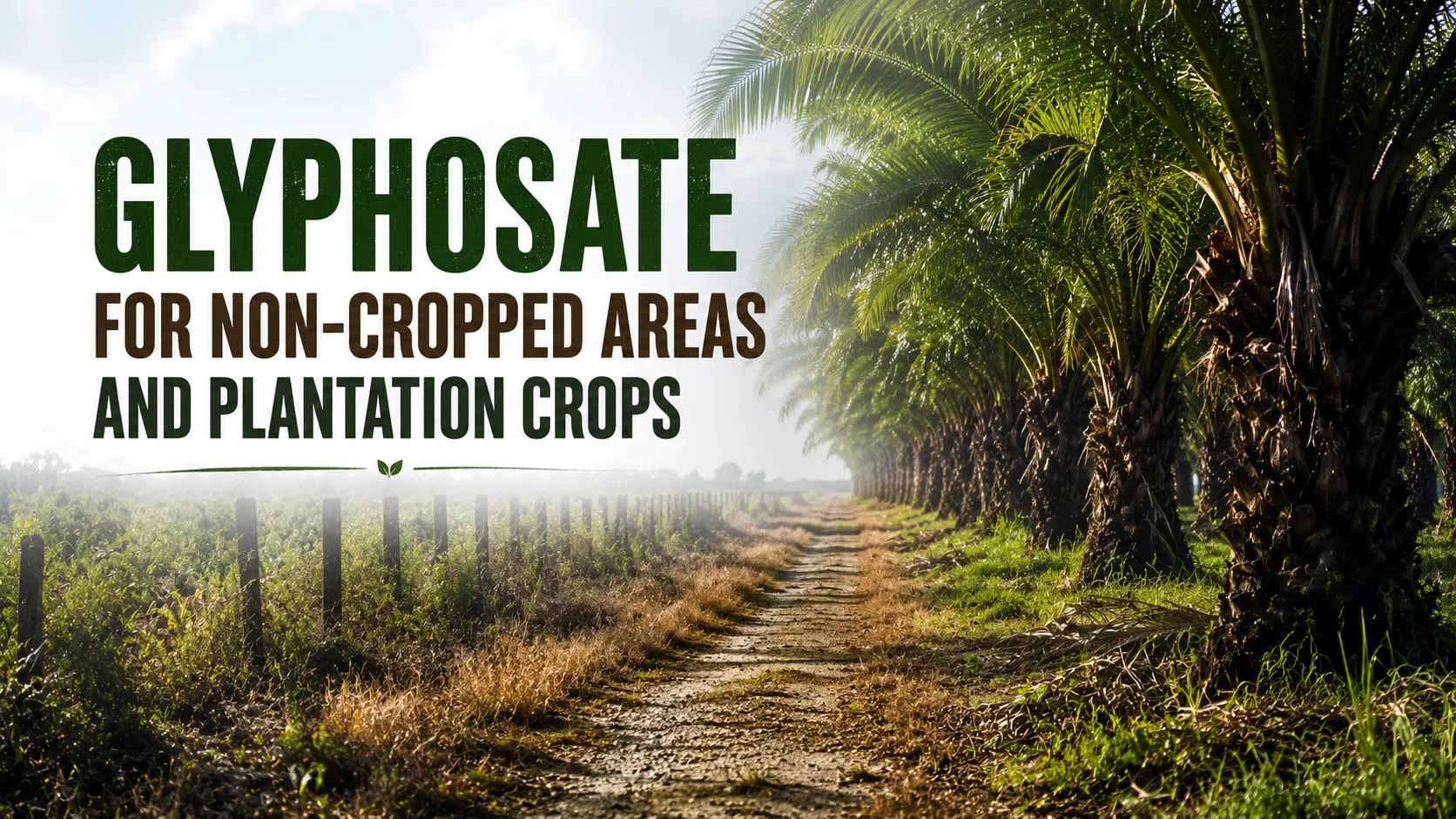
Weed pressure can quickly take over roadsides, fence lines, orchards, and plantation fields, competing for water, nutrients, and sunlight. In these situations, glyphosate for non-cropped areas and plantation crops remains one of the most widely used herbicide options for effective, broad-spectrum weed control. When applied correctly, it helps maintain cleaner growing environments, reduces labor demands, and supports better crop management.
But successful use of glyphosate is not just about spraying weeds and moving on. Timing, application method, weed stage, and safety practices all matter. In plantation crops and non-cropped areas, using glyphosate strategically can improve results while minimizing risk to desirable plants and the environment.
What Is Glyphosate?
Glyphosate is a systemic, non-selective herbicide that moves through the plant after absorption and interferes with essential growth processes. Because it affects a wide range of weeds, it is commonly used for controlling annual and perennial grasses, broadleaf weeds, and certain difficult-to-manage species.
Its popularity comes from its effectiveness, versatility, and ability to manage weeds in many settings, especially:
- Roadsides and drainage channels
- Fence lines and field edges
- Orchards and plantation crops
- Pre-plant land preparation
- Industrial and utility areas
Why Glyphosate Is Used in Non-Cropped Areas
Non-cropped areas often need to stay weed-free for practical and safety reasons. Dense vegetation can restrict visibility, harbor pests, and interfere with access to infrastructure or fields. Glyphosate is commonly chosen because it provides effective burndown control without leaving long-lasting soil activity.
Common uses in non-cropped areas include:
- Road shoulders and highways: Helps maintain visibility and access
- Fence lines: Reduces competition and eases maintenance
- Canals and drainage areas: Prevents overgrowth that can block water flow
- Warehouses and storage yards: Keeps grounds clean and manageable
- Solar farms and utility corridors: Controls unwanted vegetation around equipment
In these environments, glyphosate can be a cost-effective solution when integrated into a broader vegetation management plan.
Glyphosate in Plantation Crops
Plantation crops such as coffee, tea, rubber, oil palm, cocoa, and fruit orchards often face intense weed competition, especially in the early stages of establishment. Glyphosate is widely used for directed weed control beneath the canopy or in alleyways, where it helps reduce weed pressure without requiring full-field cultivation.
Because plantation crops are perennial and often closely spaced, controlling weeds manually can be expensive and time-consuming. Glyphosate provides a practical alternative when used carefully and with proper application methods.
Benefits in plantation systems include:
- Reduced competition for moisture and nutrients
- Cleaner field conditions for workers and machinery
- Lower labor costs compared to repeated hand weeding
- Improved access for harvesting and crop care
- Flexible use in spot spraying and directed application
Key Advantages of Glyphosate Use
One reason glyphosate remains widely adopted is its combination of performance and practicality. When used responsibly, it offers several important advantages.
1. Broad-spectrum weed control
Glyphosate controls many weed species, including annuals and perennials. This makes it useful in mixed weed populations where selective herbicides may not be enough.
2. Systemic action
Because glyphosate moves throughout the plant, it can suppress roots and growing points, which is especially helpful against perennial weeds with underground storage structures.
3. Flexible application
It can be used for spot spraying, directed spraying, and pre-plant cleanup, making it adaptable to different management goals.
4. No soil residual activity
Glyphosate is absorbed by foliage and does not typically persist in soil in the same way as residual herbicides, which can be an advantage when planning crop rotation or replanting.
Best results come from treating weeds when they are actively growing, healthy, and not under stress.
Best Practices for Applying Glyphosate
Proper use is essential for both effectiveness and safety. Mistakes in application can reduce control, increase drift, or damage nearby plants.
1. Target weeds at the right growth stage
Younger weeds are often easier to control, but many perennial weeds should be treated when they are actively moving nutrients to roots. Avoid spraying stressed weeds during drought, cold weather, or severe disease pressure.
2. Use directed application in plantation crops
In plantation systems, spray only the weeds and avoid contact with green stems, leaves, or suckers of the crop. Shields, low-pressure sprayers, and careful nozzle selection can reduce off-target exposure.
3. Prevent spray drift
Wind can carry droplets onto desirable plants. Apply glyphosate during calm conditions and use appropriate droplet sizes to improve placement.
4. Follow label instructions
Always use the recommended dose, water volume, and adjuvants listed on the product label. Overuse does not improve performance and may increase resistance risk.
5. Rotate weed management tactics
Relying only on glyphosate can lead to herbicide-resistant weeds. Combine chemical control with mowing, mulching, cover crops, cultivation, and sanitation where possible.
Safety and Environmental Considerations
Although glyphosate is widely used, responsible handling is critical. Applicators should wear suitable protective equipment and avoid exposure to drift, splash, or contaminated surfaces.
Important precautions include:
- Wear gloves, long sleeves, and eye protection
- Mix and spray according to label directions
- Avoid application near water unless the product is approved for that use
- Keep spray away from young tree trunks, green bark, and foliage
- Store chemicals securely and away from food or feed
Environmental stewardship also matters. Buffer zones, careful nozzle selection, and thoughtful timing help reduce unintended impacts on nearby vegetation and habitats.
Common Mistakes to Avoid
Even experienced growers can lose control results by overlooking basic details. Some of the most common mistakes include:
- Spraying weeds that are too large or mature
- Applying during windy conditions
- Using contaminated equipment
- Mixing incorrect concentrations
- Allowing spray to contact crop tissue
- Repeating glyphosate alone without resistance management
Each of these errors can reduce weed control and increase long-term management costs.
Is Glyphosate Still a Good Choice?
For many growers and land managers, the answer is yes—when used appropriately. Glyphosate remains a valuable tool for managing weeds in non-cropped areas and plantation crops because of its versatility, broad-spectrum activity, and efficient performance.
However, it should be part of a larger integrated weed management strategy. That means combining chemical, cultural, and mechanical practices to protect crop health, reduce costs, and preserve effectiveness over time.
Conclusion
Glyphosate for non-cropped areas and plantation crops continues to play an important role in modern weed management. It offers practical, efficient control in places where weed competition can disrupt operations, reduce productivity, and increase maintenance demands. The key is using it wisely—at the right time, with the right method, and with careful attention to safety and resistance management.
If you manage plantation crops or maintain non-cropped areas, glyphosate can be a powerful part of your weed control plan. Pair it with good agronomic practices, and you'll create cleaner, more productive, and easier-to-manage growing spaces.