Sugarcane growers are always looking for ways to increase cane length, improve crop vigor, and maximize yield. One of the most effective plant growth regulators for this purpose is GA3 for sugarcane, also known as gibberellic acid. When used correctly, GA3 can stimulate cell elongation, promote taller canes, and support better field performance.
If your goal is stronger stalks, longer internodes, and higher tonnage at harvest, understanding how GA3 works in sugarcane is essential. Used as part of a smart crop management program, it can make a measurable difference in production.
What Is GA3 in Sugarcane?
GA3, or gibberellic acid, is a natural plant hormone that influences growth and development. In sugarcane, it is widely used to encourage stem elongation and improve overall plant height. This effect is especially valuable in commercial cane production, where every extra centimeter of stalk length can contribute to better yield.
Unlike fertilizers that supply nutrients, GA3 acts as a growth signal. It tells the plant to stretch cells, lengthen internodes, and accelerate certain growth processes. For sugarcane farmers, this means a chance to enhance crop architecture and improve the final harvest.
How GA3 Helps Sugarcane Grow Longer and Heavier
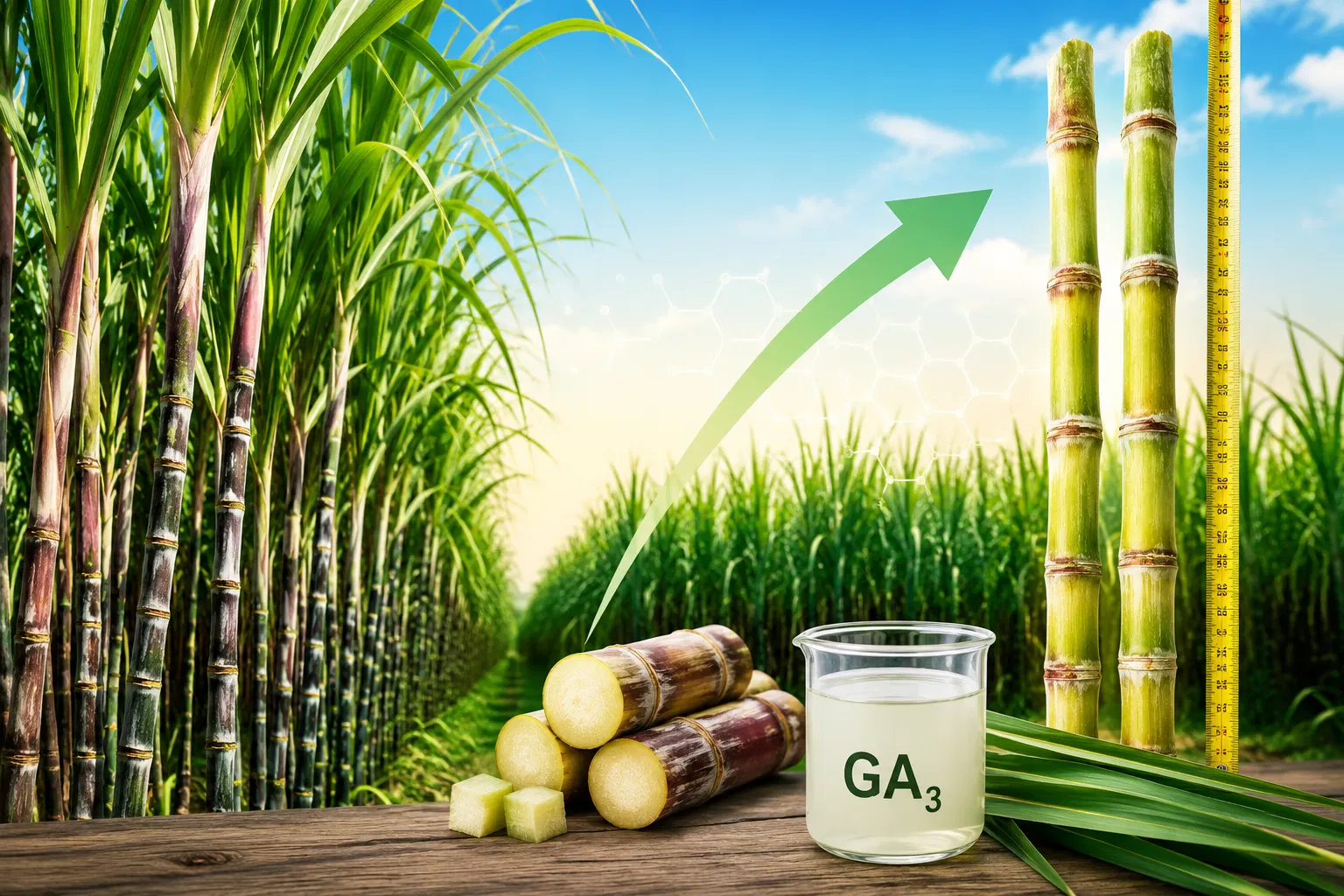
The main benefit of GA3 for sugarcane is its ability to promote cane elongation. It does this by stimulating rapid cell division and cell expansion in the stalk. As a result, the internodes become longer, and the canes develop greater length.
This growth response can lead to several practical advantages:
- Longer canes with improved stalk development
- Better canopy structure for efficient field growth
- Higher biomass accumulation
- Potential yield improvement when used at the right stage
In many situations, GA3 is used to support crop uniformity, especially when plants are healthy but need a growth push to reach their full potential. It is not a substitute for good agronomy, but it can be a powerful supplement when conditions are favorable.
Best Time to Apply GA3 on Sugarcane
Timing is one of the most important factors in getting results from GA3. The application stage can influence whether the plant responds with strong elongation or little noticeable effect.
In sugarcane, GA3 is commonly applied during the active vegetative growth phase, when the crop is developing vigorously and has enough leaf area to absorb and respond to the treatment. This is typically before the final maturation stage.
General Timing Guidelines
- Apply during healthy, active growth.
- Avoid stressed crops that are facing drought, nutrient deficiency, or pest pressure.
- Use at a stage when elongation will contribute to cane development and not reduce quality.
For best results, farmers should follow local recommendations, product labels, and agronomic advice suited to the variety and climate conditions in their area.
Recommended Application Method
GA3 is usually applied as a foliar spray in sugarcane. This allows the hormone to be absorbed through the leaves and transported to the growing tissues where elongation occurs.
A successful application depends on proper coverage and correct dosage. Too little may give weak results, while too much can lead to unwanted growth responses or poor crop balance.
Application Tips
- Use clean water and ensure proper spray mixing.
- Apply during calm weather to reduce spray drift.
- Spray evenly for uniform crop response.
- Follow the manufacturer's dosage and dilution instructions carefully.
- Combine GA3 use with balanced nutrition and irrigation management.
Tip: GA3 works best when the crop is already healthy. Strong roots, adequate nitrogen, and good moisture levels help maximize its effect on cane length and yield.
Factors That Influence GA3 Performance in Sugarcane
Not every field will respond the same way to GA3. Several factors determine how well the treatment works and how much benefit you can expect.
1. Variety of Sugarcane
Different sugarcane varieties respond differently to plant growth regulators. Some varieties show a strong elongation response, while others may respond more moderately.
2. Nutrient Status
Plants need enough nitrogen, phosphorus, potassium, and micronutrients to support growth. If the crop is nutrient-deficient, GA3 may not deliver the expected increase in cane length.
3. Moisture Availability
Water stress can limit the plant's ability to respond to GA3. Moist, well-managed fields usually show better results than drought-stressed areas.
4. Crop Health
Pest damage, disease pressure, and herbicide injury can reduce the effectiveness of GA3. A healthy crop is more likely to convert hormonal stimulation into real growth.
5. Weather Conditions
Temperature, humidity, and rainfall patterns can influence absorption and plant response. Stable weather often supports better outcomes after foliar application.
Benefits of Using GA3 in Sugarcane Production
When used correctly, GA3 can offer several agronomic benefits that support better farm returns.
- Increased cane length through internode elongation
- Improved crop uniformity in active growth stages
- Potential yield boost by increasing stalk size and biomass
- Enhanced field efficiency when integrated into crop management
- Better return on investment in productive fields with strong growth potential
These benefits make GA3 a useful tool in modern sugarcane cultivation, particularly for farmers aiming to optimize productivity without relying solely on conventional inputs.
Precautions Before Using GA3
Even though GA3 can be highly beneficial, it should be used with care. Overapplication or poorly timed spraying can reduce the value of the treatment.
Keep these precautions in mind:
- Do not apply to weak or stressed crops.
- Avoid using excessive concentrations.
- Do not spray without confirming the crop stage.
- Always read and follow label directions.
- Test on a small area first if you are using a new product or method.
Responsible use is key. The goal is to guide growth, not force it beyond what the plant can support.
GA3 for Sugarcane and Yield Improvement
More cane length often contributes to better yield, but yield is not determined by length alone. Stalk weight, number of millable canes, and overall crop health also matter. GA3 helps by encouraging elongation, which may improve the total biomass available at harvest.
In the right field conditions, this can translate into:
- Higher tonnage per acre
- Better cane structure for harvesting
- More uniform stalk development
- Improved productivity in commercial plantations
However, the biggest gains usually come when GA3 is paired with strong agronomic practices such as proper fertilization, irrigation, weed control, and timely harvest.
Final Thoughts
GA3 for sugarcane is a powerful growth tool for farmers who want to improve cane length and support higher yield potential. By promoting cell elongation and boosting internode development, gibberellic acid can help sugarcane reach a more productive growth stage.
Still, success depends on timing, dosage, crop health, and field conditions. Used wisely, GA3 becomes more than a spray—it becomes a strategic part of sugarcane crop management.
If you want longer canes and stronger field performance, start with healthy agronomy, then use GA3 as a targeted growth enhancer for the best results.