Efficient watering is the secret behind healthier plants, lower water bills, and less time spent dragging hoses around the yard. That is exactly why drip irrigation has become one of the most popular ways to water gardens, landscapes, raised beds, and even commercial crops. But what makes a drip irrigation system actually work? The answer lies in its components.
Understanding the parts of a drip irrigation system helps you plan, install, troubleshoot, and maintain it with confidence. Whether you are setting up a backyard vegetable garden or a large landscape system, knowing each component will help you build a setup that delivers water precisely where it is needed.
What Is a Drip Irrigation System?
A drip irrigation system is a low-pressure watering method that slowly delivers water directly to the root zone of plants. Instead of spraying water across a wide area, it uses a network of tubing, emitters, filters, valves, and fittings to control flow and reduce waste.
Drip irrigation is designed to conserve water, improve plant health, and minimize runoff, evaporation, and overwatering.
This makes it ideal for gardens, orchards, flower beds, container plants, and row crops. To get the best results, each part of the system must work together properly.
Main Components of a Drip Irrigation System
1. Water Source
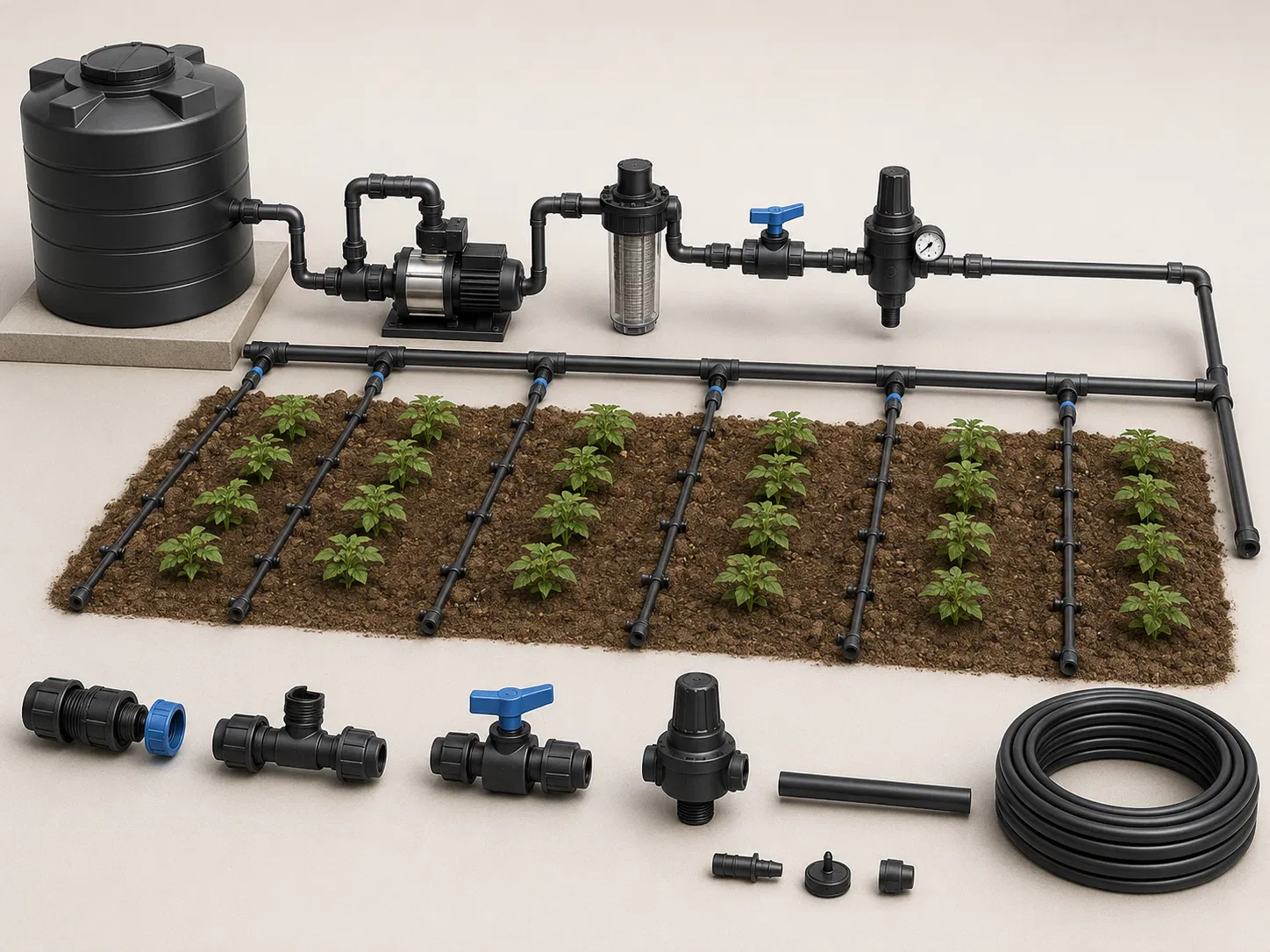
Every drip irrigation system begins with a water source. This may be a garden hose, outdoor spigot, rainwater tank, well pump, or main irrigation line. The water source supplies the system and determines what additional components may be needed.
If you are connecting to a household water line, you may need pressure control and backflow protection. If you are using a tank or pump, you may need a different setup to maintain steady flow.
2. Backflow Preventer
A backflow preventer stops contaminated water from flowing backward into the clean water supply. This is an important safety device, especially in systems connected to potable water.
Backflow prevention is often required by plumbing codes and is one of the first accessories installed after the water source. It helps protect drinking water from fertilizers, soil, and debris that could enter the irrigation line.
3. Pressure Regulator
Drip systems work at much lower pressure than standard household water lines. A pressure regulator reduces incoming water pressure to a safe and consistent level, usually around 25 to 30 psi, depending on the system design.
Without this component, tubing and emitters can burst, leak, or deliver water unevenly. A pressure regulator ensures the drip irrigation system operates smoothly and efficiently.
4. Filter
Filtering water is one of the most important steps in drip irrigation. Emitters and drippers have very small openings, which can clog easily if sediment, rust, or organic matter gets inside the line.
A filter removes particles before they enter the tubing. Common options include screen filters and disc filters. If your water source contains debris or minerals, a filter is essential for keeping the system running properly.
5. Main Line Tubing
The main line is the primary tubing that carries water from the source through the system. It is usually made of polyethylene and comes in different diameters, such as 1/2 inch, 3/4 inch, or larger for commercial systems.
This tubing serves as the backbone of the drip irrigation system. It distributes water to smaller branches, emitters, or drip lines placed near plants.
6. Submain Lines and Distribution Tubing
Submain lines branch off from the main line and carry water closer to specific planting areas. Distribution tubing is often smaller in diameter and is used to route water to different zones, beds, or containers.
These lines help create a flexible system layout. They make it easier to customize watering based on plant type, spacing, and sun exposure.
7. Emitters
Emitters are the heart of drip irrigation. These small devices release water slowly and consistently near the plant roots. They are available in different flow rates, such as 0.5, 1, 2, or 4 gallons per hour.
There are several emitter types:
- Inline emitters: Built into drip tubing at set intervals
- On-line emitters: Installed separately into tubing where needed
- Pressure-compensating emitters: Deliver uniform flow across varying terrain
- Adjustable emitters: Allow manual control over water output
The right emitter choice depends on plant size, soil type, and water needs.
8. Drip Tape or Drip Line
Drip tape and drip line are popular options for delivering water along rows of crops or garden beds. Drip tape is thin and lightweight, making it suitable for seasonal use. Drip line is more durable and is often used in permanent installations.
Both options contain emitters spaced along the tubing, allowing water to seep out slowly and evenly. These components are especially useful for vegetables, ground cover, and closely spaced plants.
9. Fittings and Connectors
Fittings hold the system together and connect the various parts of the tubing network. Common fittings include:
- Couplings
- Elbows
- Tees
- End caps
- Adapters
- Reducing connectors
These pieces help direct water flow, change tubing size, and seal the ends of lines. Secure fittings are essential to preventing leaks and maintaining pressure.
10. Valves
Valves control when and where water flows through the drip irrigation system. Manual valves allow you to turn sections on or off by hand, while automatic valves are used in timed irrigation setups.
Zoning with valves makes it possible to water different areas separately. This is helpful when plants have different moisture needs or when some parts of the landscape receive more sunlight than others.
11. Timer or Controller
A timer or irrigation controller automates watering schedules. It turns the system on and off at specific times, helping ensure consistency and reducing the chance of human error.
This component is especially valuable for busy homeowners, large gardens, and commercial operations. A well-programmed timer can improve water efficiency and support healthy plant growth.
12. Stakes and Hold-Downs
Stakes and hold-downs keep tubing and emitters in place. They prevent lines from shifting due to wind, foot traffic, or water pressure changes.
These simple accessories help maintain neat spacing and keep water delivery close to the intended root zone. They are especially useful in garden beds, planter boxes, and landscaped areas.
13. Flush Valves and End Caps
Flush valves and end caps make maintenance easier. End caps close off the ends of tubing, while flush valves allow debris to be cleared out of the line during routine cleaning.
Flushing the system periodically helps prevent clogging and extends the life of emitters and tubing. This is a small but important part of drip irrigation maintenance.
Optional Components That Improve Performance
Mulch
Although not a mechanical component, mulch pairs well with drip irrigation. It helps retain moisture, suppress weeds, and reduce evaporation around the root zone.
Fertilizer Injector
A fertilizer injector allows nutrients to be delivered through the irrigation system. This process, often called fertigation, can be useful for gardens and crops that benefit from regular feeding.
Water Meter
A water meter helps monitor usage and track system efficiency. It is useful for households, farms, and landscape managers trying to conserve water and manage costs.
How the Components Work Together
When all the components are installed correctly, a drip irrigation system functions as a highly efficient water delivery network. Water enters from the source, moves through the backflow preventer, pressure regulator, and filter, then travels through the main tubing and branch lines. Finally, emitters release water slowly and directly where plants need it most.
The result is targeted watering with less waste, fewer weeds, and healthier plants. Each part plays a specific role, and removing even one essential component can reduce performance or damage the system.
Tips for Choosing the Right Drip Irrigation Components
- Match the system to your water source. Household water, well water, and tank systems may need different filters or pressure regulators.
- Consider plant spacing. Closely spaced plants may benefit from drip line, while individual shrubs may need point-source emitters.
- Plan for maintenance. Choose components that are easy to access, flush, and replace.
- Use quality fittings. Cheap connectors can leak and reduce system efficiency.
- Think about expansion. Leave room to add zones or new tubing later.
Conclusion
A drip irrigation system is only as good as the components that make it up. From the water source and pressure regulator to the tubing, emitters, fittings, and timer, every part has a job to do. When those parts work together, you get a reliable system that saves water, supports plant health, and makes irrigation far easier to manage.
If you are planning a drip irrigation setup, start with the basics, choose quality components, and design for your plants’ specific needs. A well-built system can deliver lasting results season after season.
Ready to build a smarter watering system? Understanding these drip irrigation components is the first step toward more efficient, healthier gardening.