Water is becoming one of the most valuable resources in Indian agriculture. For farmers facing rising input costs, irregular rainfall, and water scarcity, drip irrigation offers a practical and profitable solution. It delivers water directly to the roots of crops, reduces wastage, and helps improve crop health and yield. If you want to grow more with less water, drip irrigation can be a game changer.
What Is Drip Irrigation?
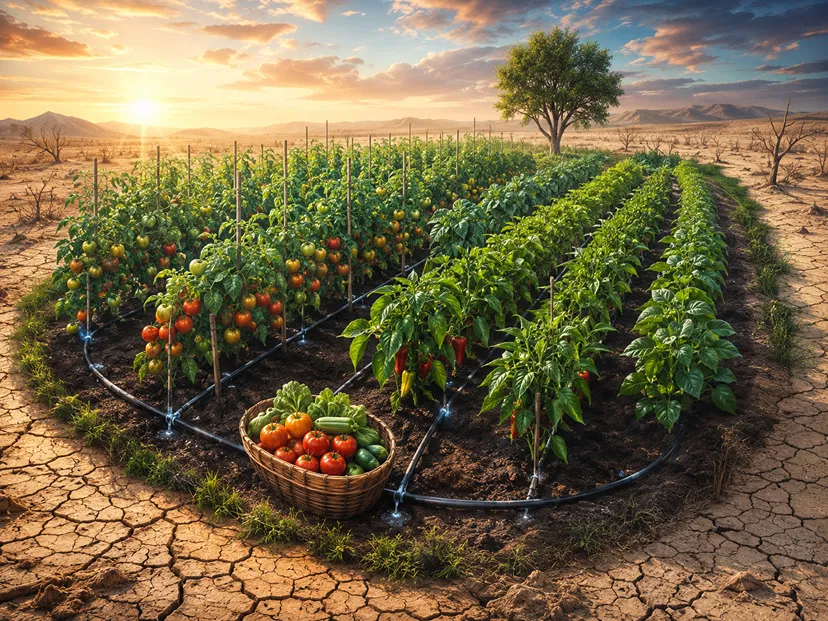
Drip irrigation is a micro-irrigation system that supplies water slowly and directly to the root zone of plants through pipes, tubes, valves, and emitters. Instead of flooding the entire field, water is released in small drops or a steady trickle near each plant.
This method is especially useful for Indian farmers who grow vegetables, fruits, sugarcane, cotton, spices, flowers, and plantation crops. It works well in both small farms and large commercial farms.
Why Drip Irrigation Is Important for Indian Farmers
Indian agriculture depends heavily on monsoon rainfall, but climate variability has made farming more unpredictable. Drip irrigation helps farmers manage water more efficiently and protect crops during dry periods.
Drip irrigation can reduce water usage by 30% to 60% while improving fertilizer efficiency and crop productivity.
Here are the main reasons farmers are adopting drip irrigation:
- Water savings: Water goes only where it is needed.
- Higher yield: Consistent moisture supports better plant growth.
- Lower weed growth: Only the crop root zone gets water, not the whole field.
- Reduced labour: Less manual irrigation means lower labour costs.
- Better fertilizer use: Fertigation allows fertilizers to be applied through the system.
- Suitable for uneven land: Works well on slopes and irregular fields.
How Drip Irrigation Works
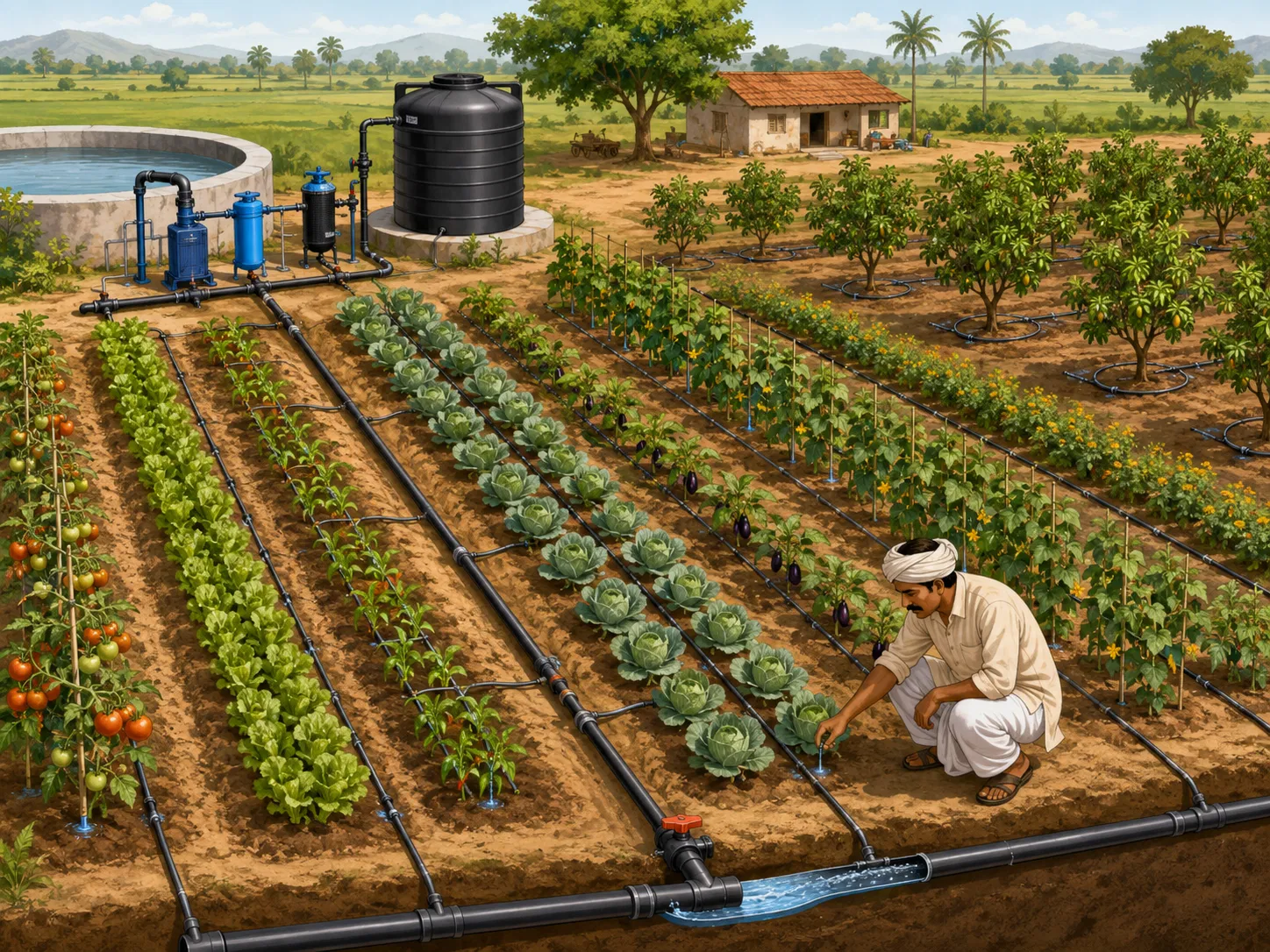
A drip irrigation system usually includes a water source, pump, filter, mainline, sub-main lines, lateral pipes, emitters, and control valves. Water passes through the filter to remove dirt and debris, then moves through the pipeline network. Emitters release water slowly near the plant base.
The system can be operated manually or automatically. Some advanced setups use timers, sensors, and fertigation units to improve precision and convenience.
Main Components of a Drip Irrigation System
1. Water Source
This may be a borewell, canal, pond, tank, or reservoir. The water quality should be checked because dirty water can clog emitters.
2. Pump
The pump creates pressure to move water through the system. The pump size depends on field size, crop type, and water source.
3. Filters
Filters are essential in drip irrigation. Common types include screen filters, sand filters, and disc filters. They prevent clogging and extend system life.
4. Pipes and Tubes
Main pipes carry water from the source. Sub-main and lateral pipes distribute it across the field.
5. Emitters or Drippers
These release water at a controlled rate. They can be inline or online depending on the crop layout.
6. Valves and Control Units
These help regulate water flow and divide the field into irrigation zones.
7. Fertigation Unit
This allows fertilizers to be mixed with irrigation water, saving time and improving nutrient delivery.
Benefits of Drip Irrigation for Different Crops
Drip irrigation is highly effective across many crops grown in India. For horticulture crops like mango, banana, pomegranate, grape, and citrus, it helps maintain consistent soil moisture and improves fruit quality. For vegetables such as tomato, chilli, brinjal, cucumber, and okra, it supports faster growth and better uniformity.
In cash crops like sugarcane and cotton, drip irrigation can significantly reduce water use and increase productivity. For flower cultivation and polyhouse farming, it provides precise control, which is critical for quality output.
Types of Drip Irrigation Systems
Surface Drip Irrigation
In this system, pipes are laid on the soil surface. It is easy to install, maintain, and inspect.
Subsurface Drip Irrigation
Here, pipes are buried below the soil surface. This system reduces evaporation and is useful for certain high-value crops, though it is more expensive and harder to maintain.
Inline Drip System
Emitters are fixed at regular intervals inside the lateral pipe. It is commonly used for row crops.
Online Drip System
Emitters are attached externally and can be placed according to plant spacing. It is suitable for orchards and widely spaced crops.
Steps to Install Drip Irrigation on a Farm
- Assess the field: Measure the area, slope, crop spacing, and water source.
- Choose the right system: Select based on crop type, soil, and budget.
- Prepare the layout: Design mainline, sub-main lines, and lateral placement.
- Install filtration: Set up proper filters to avoid clogging.
- Lay pipes and emitters: Place them according to crop spacing and irrigation needs.
- Test the system: Check for leaks, pressure issues, and clogging.
- Start regular operation: Irrigate according to crop stage and soil moisture.
Drip Irrigation Cost and Subsidy in India
The cost of drip irrigation in India depends on land size, crop type, piping material, automation level, and brand. Small farms may need a modest investment, while large orchards or commercial farms may require a higher budget. However, many farmers recover the cost through water savings, better yields, and reduced labour.
The Government of India and state agriculture departments often provide subsidies under micro-irrigation schemes. These subsidies can significantly reduce the upfront cost for farmers. It is advisable to check with the local कृषि विभाग or horticulture office for current eligibility, documents, and application procedures.
Maintenance Tips for Long-Lasting Performance
Proper maintenance is essential to keep drip irrigation efficient. A poorly maintained system can suffer from clogging, leakage, and pressure imbalance.
- Clean filters regularly.
- Flush lines periodically to remove dirt and sediment.
- Check emitters for clogging or damage.
- Monitor pressure to ensure even water distribution.
- Use good-quality fertilizers and chemicals to avoid blockage.
- Inspect pipes and joints for leaks.
- Protect the system from rodents, sunlight damage, and physical damage.
Common Problems in Drip Irrigation
Although drip irrigation is highly efficient, farmers may face a few challenges if the system is not installed or maintained properly.
- Clogging: Caused by dirt, algae, or mineral deposits.
- Uneven pressure: Leads to inconsistent irrigation across the field.
- Pipe damage: Can occur due to animals, machinery, or weather conditions.
- Initial cost: The upfront investment may feel high for small farmers.
- Technical knowledge: Proper installation and operation require training.
Best Practices for Farmers Using Drip Irrigation
To get the maximum benefit from drip irrigation, farmers should follow a few smart practices:
- Match irrigation timing with crop stage and soil moisture.
- Use fertigation for balanced nutrient supply.
- Choose emitters based on crop spacing and water requirement.
- Keep records of irrigation duration and water usage.
- Train workers to handle the system properly.
- Consult an agriculture expert for system design on larger farms.
Is Drip Irrigation Worth It?
For most Indian farmers, the answer is yes. Drip irrigation is one of the most efficient ways to manage water, improve crop performance, and reduce waste. It is especially valuable in regions with low rainfall, declining groundwater, or high-value crops.
While the initial setup cost may be a concern, the long-term benefits often outweigh the investment. Farmers save water, reduce labour, improve fertilizer use, and increase productivity. In today’s changing agricultural environment, drip irrigation is not just an option—it is a smart farming strategy.
Conclusion
Drip irrigation gives Indian farmers a powerful advantage: more control over water, better crop growth, and greater profitability. Whether you grow vegetables, fruits, or cash crops, this system can help you farm more efficiently and sustainably.
If you are planning to modernize your farm, now is the right time to explore drip irrigation. Speak with your local agriculture office, compare system options, and choose a setup that fits your crop and budget. A well-designed drip irrigation system can transform your farm for years to come.