Watermelon plants are thirsty, sun-loving growers, but they don’t need wasteful watering to produce big, juicy fruit. In fact, one of the smartest ways to grow healthier watermelon with less water is to combine drip irrigation and mulching. This proven approach delivers moisture directly to the roots, keeps soil temperatures stable, reduces weeds, and supports consistent fruit development from planting to harvest.
If you want stronger vines, fewer disease problems, and sweeter watermelons, using drip irrigation with mulch can make a noticeable difference. Whether you’re growing in a backyard garden or managing a larger plot, this method helps you save time, conserve water, and improve overall crop performance.
Why Drip Irrigation Works So Well for Watermelon
Watermelons need steady moisture, especially during early growth, flowering, and fruit enlargement. But overhead watering often wastes water and can create wet foliage that encourages disease. Drip irrigation solves these problems by delivering water slowly and directly into the root zone.
With drip irrigation for watermelon, the plant receives a more consistent supply of moisture. That consistency is important because irregular watering can lead to poor vine growth, blossom-end issues, and fruit cracking. Drip systems also reduce evaporation, making them far more efficient than sprinklers or hand watering.
Key benefits of drip irrigation for watermelon
- Water efficiency: Uses less water by targeting the root zone.
- Healthier plants: Keeps leaves dry and lowers disease risk.
- Better fruit quality: Supports steady growth and improved sweetness.
- Reduced weed pressure: Water goes to the crop, not the surrounding soil.
- Time savings: Automates watering and reduces manual labor.
How Mulching Supports Watermelon Growth
Mulching is the perfect partner to drip irrigation. When you apply mulch around watermelon plants, you create a protective layer that helps the soil retain moisture, blocks sunlight from reaching weed seeds, and keeps soil temperatures more stable.
This matters because watermelon roots perform best when the soil stays evenly warm and moist. Without mulch, the soil can dry out quickly under hot summer conditions. With mulch, moisture stays in the ground longer, which means your drip irrigation system works even more efficiently.
Best mulch options for watermelon
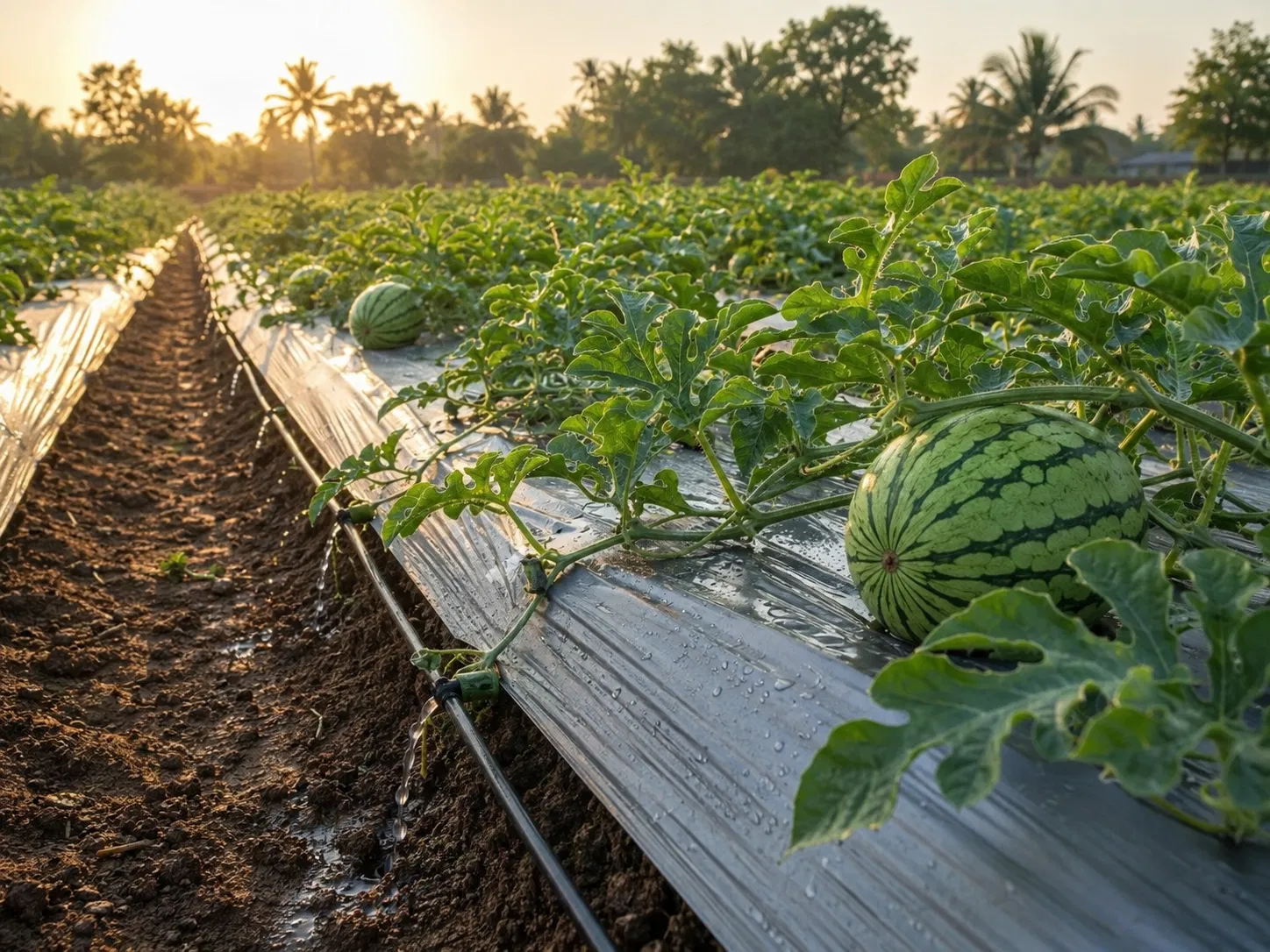
- Plastic mulch: Excellent for weed control and soil warming, especially in early season planting.
- Organic mulch: Straw, shredded leaves, or grass clippings help conserve moisture and improve soil over time.
- Landscape fabric: Durable and reusable, though it may require careful setup with drip lines.
For many growers, black plastic mulch is a popular choice because it warms the soil quickly in spring and suppresses weeds effectively. Organic mulch, on the other hand, is ideal if you want to build soil health naturally and reduce plastic use.
Why the Combination Is Better Than Either Method Alone
Drip irrigation and mulching work best together because each method strengthens the other. Drip irrigation provides targeted moisture, while mulch protects that moisture from evaporation. This combination creates a more stable growing environment, especially during hot, dry weather.
When used together, they can help watermelon vines develop more uniformly and reduce stress during critical growth stages. Less stress often means better pollination, stronger fruit set, and more consistent melon size.
“Steady moisture, warm soil, and fewer weeds create the ideal conditions for productive watermelon vines.”
Setting Up Drip Irrigation for Watermelon
Setting up a drip system for watermelon is straightforward, but a few details make a big difference. The goal is to keep water near the root zone without soaking the entire bed.
Basic setup steps
- Prepare the bed: Create raised rows or planting mounds if desired for drainage and root development.
- Lay the drip line: Position the drip tape or tubing along the row near the plants.
- Space emitters properly: Use emitter spacing that matches plant spacing and soil type.
- Install a timer: A timer helps maintain consistent watering schedules.
- Test the system: Check for leaks, clogs, and even water distribution before planting or early in the season.
For watermelon, the drip line is usually placed close to the crown or slightly offset from the stem to encourage root spread. In sandy soils, more frequent watering may be needed. In heavier soils, longer but less frequent watering often works better.
Applying Mulch the Right Way
Timing and placement are important when mulching watermelon beds. Apply mulch after the soil has warmed up enough for planting, or use plastic mulch before transplanting seedlings into the bed.
If using organic mulch, leave a small gap around the base of the plant to reduce the chance of stem rot and pest issues. The mulch layer should be thick enough to block sunlight and preserve moisture, but not so thick that it prevents water from reaching the soil.
Mulching tips for best results
- Keep mulch evenly spread across the bed.
- Avoid piling mulch against stems.
- Check moisture levels regularly under the mulch.
- Replenish organic mulch as it decomposes.
- Make sure drip lines remain in place and functional underneath or beside the mulch.
Watering Schedule for Watermelon with Drip Irrigation
Watermelon plants do not need the same amount of water throughout the season. Their needs change as they grow, and drip irrigation makes it easier to adjust.
General watering stages
- Seedling stage: Keep the soil lightly moist to support root establishment.
- Vine growth stage: Increase watering as the plant expands and leaf production increases.
- Flowering and fruit set: Maintain steady moisture to support pollination and fruit formation.
- Fruit enlargement: This is a high-demand period where consistent watering is critical.
- Ripening stage: Slightly reduce water near harvest to improve sweetness and reduce excess splitting.
Always adjust irrigation based on weather, soil type, and plant response. A well-mulched bed may need less frequent watering than bare soil because it loses moisture more slowly.
Common Mistakes to Avoid
Even a great system can underperform if it is not managed carefully. A few common mistakes can limit the benefits of drip irrigation and mulching for watermelon.
- Overwatering: Too much water can reduce flavor and encourage root problems.
- Uneven mulch coverage: Gaps in mulch allow weeds and moisture loss.
- Improper drip placement: If water is too far from the root zone, plants may struggle.
- Neglecting maintenance: Clogged emitters or damaged tubing reduce efficiency.
- Using mulch too early: Cold soil can slow early growth if mulch is applied before warming.
Monitoring your crop regularly helps prevent these problems. Look for wilting, slow growth, yellowing leaves, or dry soil beneath the mulch. Small adjustments early can prevent larger issues later.
How This Method Improves Yield and Fruit Quality
Healthy watermelon plants are more likely to produce larger, more uniform fruit. By keeping water consistent and reducing stress, drip irrigation and mulching support stronger vines and better fruit development.
Growers often notice improved yield because plants can direct energy into fruit production instead of coping with drought stress or weed competition. The result is often fewer small, misshapen melons and more marketable fruit with better size and quality.
In many cases, this system also improves fruit sweetness. When plants receive stable moisture early and mid-season, they can develop fruit more evenly. Then, as harvest approaches, slightly reducing irrigation can help concentrate sugars without stressing the plant excessively.
Final Thoughts on Drip Irrigation and Mulching for Watermelon
If you want a practical, efficient, and high-performing way to grow watermelon, combining drip irrigation and mulching is one of the best strategies available. This approach saves water, reduces weeds, supports healthy roots, and helps produce better fruit with less effort.
Start with a reliable drip system, choose the right mulch for your growing conditions, and pay attention to watering throughout the season. With the right setup and a little monitoring, your watermelon plants will have everything they need to thrive.
For bigger harvests, healthier vines, and sweeter melons, make drip irrigation and mulching part of your watermelon growing plan this season.