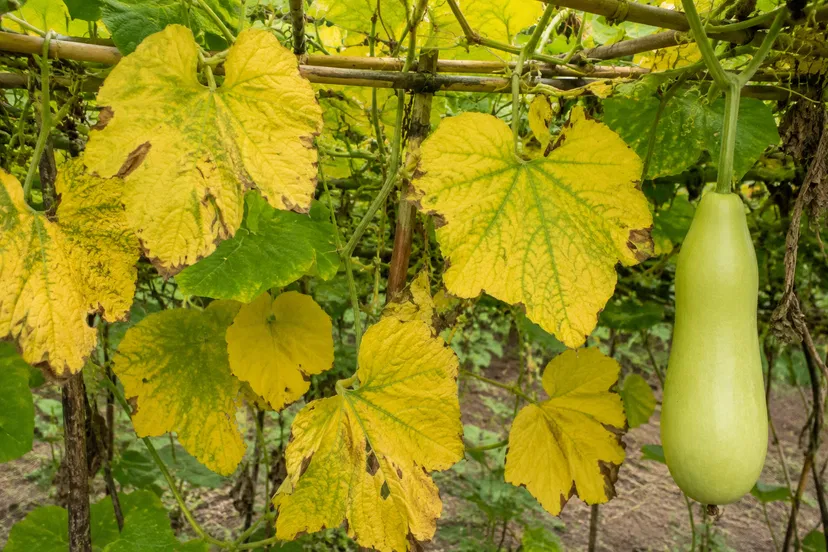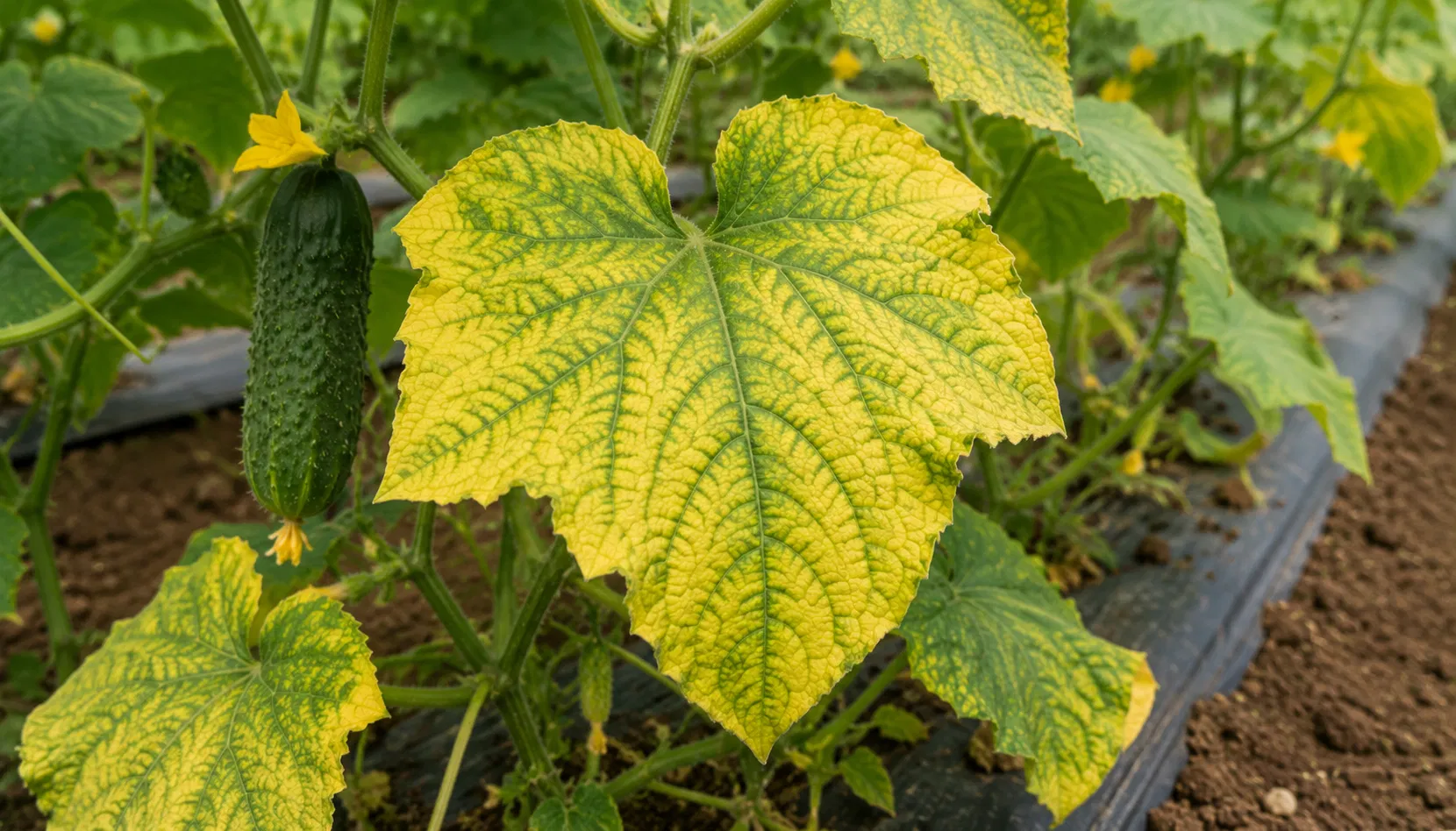
Yellow cucumber leaves can be frustrating, especially when your vines were once thriving and now look weak, pale, and stressed. The tricky part is that cucumber yellow leaves can be caused by more than one problem. In many gardens, the issue is either a nutrient deficiency or downy mildew, and knowing the difference is the key to saving your crop.
If you catch the signs early, you can often correct the problem before it spreads. If you misdiagnose it, though, you may waste time adding fertilizer when the plant actually has a disease, or overlook a nutrient problem while the leaves continue to decline. Here’s how to tell what your cucumber plants are really telling you.
Why Cucumber Leaves Turn Yellow
Yellowing leaves are a common symptom of plant stress. Cucumbers are fast-growing, heavy feeders, and they need consistent nutrition, warm weather, and plenty of moisture. When any of those needs are off, the leaves often show it first.
Two of the most common causes are:
- Nutrient deficiency, especially nitrogen, magnesium, or iron
- Downy mildew, a fungal-like disease that spreads quickly in humid conditions
Although both can produce yellow leaves, the pattern, location, and speed of damage are usually different.
How to Tell If It’s a Nutrient Deficiency
Nutrient deficiency tends to appear gradually. The plant may look a little pale at first, then more yellow over time. Often, the older leaves are affected before the newer growth.
Common signs of nutrient deficiency in cucumbers
- Older leaves yellow first
- Overall pale green or yellow color rather than spotting
- Slow growth or smaller-than-normal leaves
- Weak vines and reduced fruit production
- Yellowing between leaf veins in some cases
Which nutrients are usually lacking?
Nitrogen deficiency is the most common reason cucumber leaves turn yellow. Nitrogen supports healthy leafy growth, so when it’s low, older leaves fade first and the plant may look generally weak.
Magnesium deficiency often causes yellowing between the veins on older leaves while the veins stay greener.
Iron deficiency usually shows up on newer leaves, which turn yellow while the veins remain green.
What nutrient deficiency usually looks like
The yellowing is often uniform or patterned across the leaf, not blotchy in a disease-like way. You may also notice the plant has been underfed, overwatered, or planted in poor soil. Heavy fruiting can drain nutrients quickly, especially in containers or raised beds.
If the yellowing is slow, starts on older leaves, and the plant still looks healthy otherwise, nutrient deficiency is more likely than disease.
How to Tell If It’s Downy Mildew
Downy mildew is a serious cucumber disease that can spread fast, especially during cool, damp, or humid weather. Unlike nutrient problems, it often causes a more dramatic, patchy leaf pattern and may move quickly through the plant.
Common signs of downy mildew in cucumbers
- Angular yellow spots between the veins
- Patchy or blotchy yellowing rather than even fading
- Gray, purple, or fuzzy growth on the undersides of leaves in humid conditions
- Leaves brown and crispy as the disease progresses
- Rapid spread from lower leaves to upper leaves
The key clue: leaf spots
Downy mildew often begins as yellow patches that look angular because they are limited by the leaf veins. These spots may later turn brown. If you flip the leaf over and see fuzzy growth on the underside, that is a major warning sign.
Unlike nutrient deficiency, downy mildew does not usually improve with fertilizer. In fact, because it spreads so quickly, treating it like a feeding issue can delay the right response.
Quick Comparison: Nutrient Deficiency vs Downy Mildew
- Nutrient deficiency: gradual yellowing, older leaves first, often uniform, plant may still grow slowly
- Downy mildew: fast-spreading yellow spots, often angular or blotchy, lower leaves first, may show fuzzy growth underneath
- Nutrient deficiency: usually improves after feeding and correcting soil conditions
- Downy mildew: requires immediate disease management and removal of affected tissue
What to Do If It’s a Nutrient Deficiency
If your cucumber yellow leaves are caused by a nutrient deficiency, the fix is usually straightforward. Start by improving soil fertility and watering consistency.
Steps to correct nutrient deficiency
- Apply a balanced fertilizer or one formulated for vegetables.
- Add compost to improve soil health and nutrient availability.
- Check watering habits so roots can absorb nutrients properly.
- Test the soil if yellowing continues, especially if you garden in containers or poor soil.
- Watch new growth to see whether it returns to healthy green.
Keep in mind that already yellow leaves may not turn green again. The goal is to protect the newer growth and improve the plant’s overall health.
What to Do If It’s Downy Mildew
If symptoms point to downy mildew, act quickly. This disease can move through a cucumber patch fast and may affect nearby squash or melon plants too.
Steps to manage downy mildew
- Remove heavily infected leaves to slow spread.
- Dispose of infected plant material; do not compost it if disease is active.
- Improve air circulation by spacing plants properly and trimming overcrowded growth.
- Water at the base instead of overhead to reduce leaf wetness.
- Use a fungicide labeled for downy mildew if appropriate for your garden.
Also, avoid working in the garden when leaves are wet, since spores can spread more easily that way. Prevention is important because once downy mildew is established, it is difficult to reverse.
How to Prevent Yellow Cucumber Leaves
The best way to prevent yellowing is to keep cucumbers growing under steady, healthy conditions from the start. Strong plants are less vulnerable to both nutrient issues and disease.
Prevention tips
- Plant in rich, well-draining soil
- Feed regularly during active growth and fruiting
- Water deeply and consistently
- Mulch around plants to hold moisture and reduce stress
- Space plants properly to improve airflow
- Rotate crops each season to reduce disease pressure
- Inspect leaves often for early signs of trouble
When Yellow Leaves Are Normal
Not every yellow leaf means disaster. As cucumber plants mature, older leaves near the base may naturally yellow and die off, especially after heavy fruiting. A few aging leaves are normal if the plant otherwise looks vigorous and the new growth remains green.
The concern starts when yellowing spreads quickly, affects many leaves, or comes with spots, fuzz, or weak growth.
Final Takeaway
When you notice cucumber leaves turning yellow, the first step is to look closely at the pattern. If the yellowing is gradual and affects older leaves first, a nutrient deficiency is likely. If the yellowing appears as angular spots, spreads quickly, or includes fuzzy growth underneath the leaf, downy mildew is the more likely culprit.
Acting early makes all the difference. Feed the plant if it’s hungry, remove infected leaves if it’s diseased, and keep your cucumbers growing in healthy conditions for the best chance at a productive harvest. If your plants are showing symptoms now, inspect them closely today and respond before the problem spreads.