If your cucumbers are suddenly yellowing, rotting, or dropping before they’re ready, cucumber fruit flies may be to blame. These pests can damage fruit quickly, leaving behind scars, soft spots, and tunneling that ruin your harvest. The good news is that with early identification, smart trapping, and the right spray strategy, you can protect your cucumber plants and reduce future outbreaks.
What Are Cucumber Fruit Flies?
Cucumber fruit flies are small pests that target cucurbit crops such as cucumbers, melons, squash, and gourds. Adult flies lay eggs near or inside developing fruit, and the larvae feed on the flesh as they hatch. This feeding causes internal damage that often goes unnoticed until the fruit starts to decay.
Because the damage happens beneath the skin, cucumber fruit fly infestations are often mistaken for disease or nutrient problems. That is why spotting the early signs is so important.
Common Symptoms of Cucumber Fruit Fly Damage
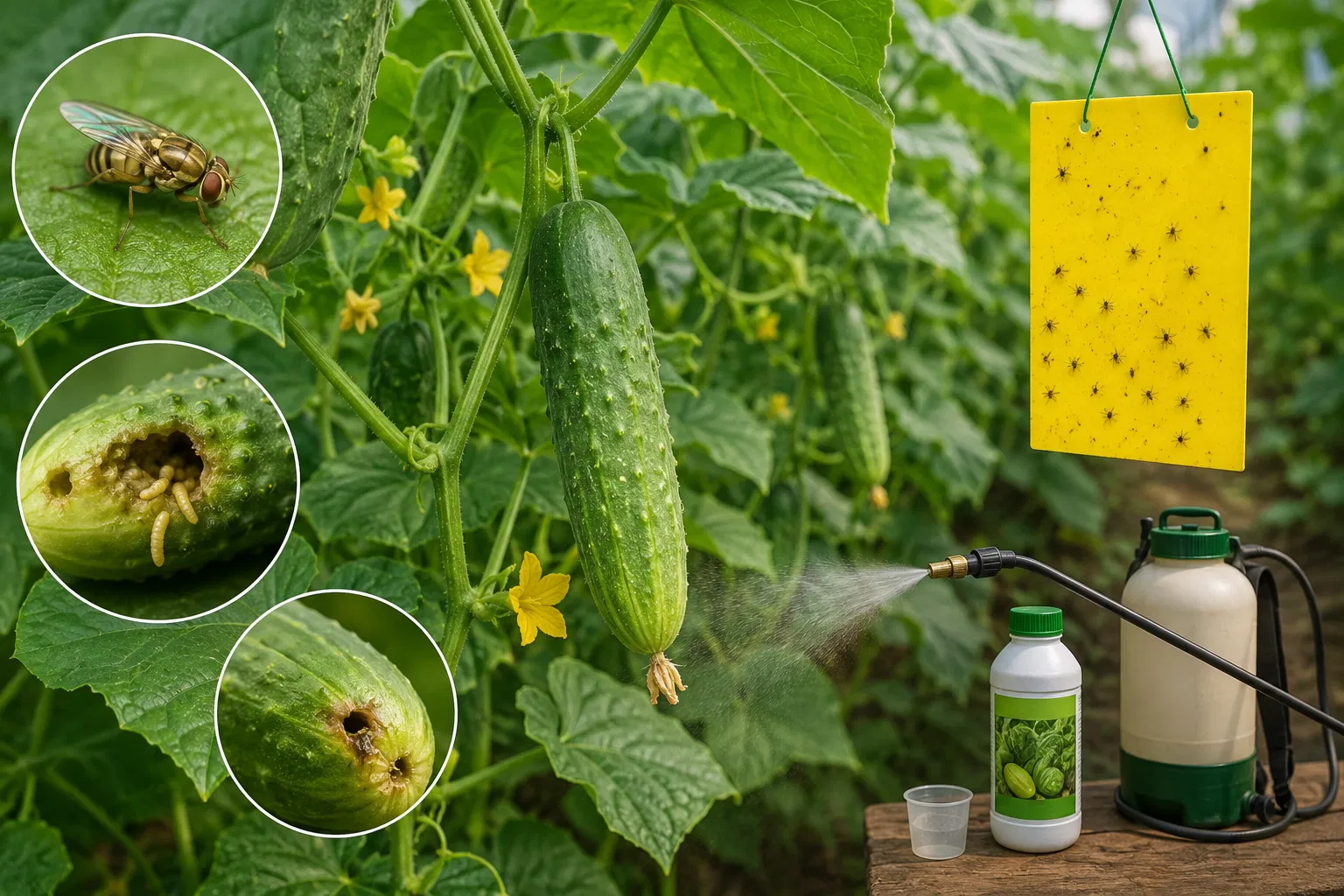
Knowing the symptoms of cucumber fruit fly activity can help you act before the infestation spreads. Look for these warning signs:
- Small puncture marks on the fruit skin where eggs were laid
- Soft or sunken spots that develop as larvae feed inside the fruit
- Premature yellowing or uneven ripening
- Fruit rot starting at the puncture site
- Tunneling or internal browning when fruit is cut open
- Fruit drop before maturity
In severe cases, the fruit may look fine on the outside but be completely damaged inside. If you notice punctures and soft areas together, fruit flies are a likely cause.
How to Confirm an Infestation
Before treating, inspect your plants carefully. Check the fruit surface, especially near the stem and blossom end. Use a knife to slice open suspicious cucumbers and look for larvae, browning, or mushy flesh.
Tip: Fruit fly damage usually starts on the fruit, not the leaves. If the plant looks healthy but the cucumbers are rotting, pests are a strong possibility.
You can also monitor adult activity with traps. If flies are consistently showing up in traps, it confirms that control efforts should begin immediately.
Best Traps for Cucumber Fruit Fly Control
Trapping is one of the most effective first steps in cucumber fruit fly control. Traps help reduce adult populations and let you monitor pressure in the garden.
1. Yellow Sticky Traps
Yellow sticky traps attract many flying insects, including fruit flies. Place them near cucumber plants, but not directly touching the foliage. These traps work best for monitoring and reducing small infestations.
2. Baited Bottle Traps
Homemade bait traps can attract adult flies before they lay eggs. Use a bottle or jar with small entry holes and add a sweet bait such as fruit juice, cider vinegar, or overripe fruit. Hang or place the trap near the crop canopy.
3. Commercial Fruit Fly Traps
Commercial traps often use specific attractants designed for fruit fly species. These are useful when infestations are recurring or when you need stronger monitoring in larger gardens.
To get the best results, use multiple traps and check them often. Replace bait regularly so the trap remains effective.
Spray Guide for Cucumber Fruit Fly Control
Sprays can help protect cucumbers, but they work best as part of an integrated approach. Since larvae are protected inside the fruit, sprays are most effective against adults before egg-laying occurs.
Insecticidal Soap
Insecticidal soap can help suppress soft-bodied pests and is often used in organic gardens. While it may not eliminate fruit flies entirely, it can be part of a broader management plan when adults are exposed.
Neem Oil
Neem oil works as a repellent and growth disruptor. Apply it according to label directions, covering the leaf surfaces and developing fruit lightly. Neem is best used preventively and may reduce egg-laying pressure when applied consistently.
Pyrethrin-Based Sprays
Pyrethrin sprays can knock down adult fruit flies on contact. These products are fast-acting, but timing is critical. Apply in the evening or early morning when pollinators are less active, and always follow label instructions carefully.
Spinosad
Spinosad is a strong option for fruit fly management in many home gardens and organic systems. It can be used as a bait spray or direct treatment, depending on the product. Spinosad is often more effective than many broad-spectrum sprays because it targets specific pests while being gentler on beneficial insects when used properly.
Important: Always read and follow the product label. Spray only as directed for cucurbits, and observe harvest intervals before picking fruit.
How to Apply Sprays Effectively
Sprays are most useful when adults are active and before they lay eggs. For best results:
- Inspect plants regularly for fresh punctures or adult fly activity.
- Target sprays at the fruit and surrounding foliage, not just the leaves.
- Reapply after rain if the label recommends it.
- Rotate control methods to reduce resistance and improve results.
- Combine sprays with traps and sanitation for better long-term control.
Because fruit flies reproduce quickly, missing even a few days can lead to new infestations. A consistent schedule makes a big difference.
Garden Sanitation and Prevention Tips
Prevention is one of the most important parts of cucumber fruit fly control. If you remove breeding sites and reduce access to fruit, you can break the pest cycle.
- Pick cucumbers as soon as they are mature.
- Remove damaged, fallen, or rotting fruit immediately.
- Do not leave overripe fruit on the vine.
- Keep weeds and plant debris under control.
- Use row covers early in the season if fruit flies are a known problem.
- Rotate cucurbit crops each year when possible.
Healthy, well-spaced plants are easier to inspect and less likely to become overwhelmed by pests. Good airflow and regular harvesting can also reduce stress on the crop.
When to Take Action
The best time to act is at the first sign of damage or adult fly activity. Once larvae are inside the fruit, rescue options are limited. That means prevention, monitoring, and early spraying are far more effective than waiting until cucumbers begin to rot.
If the infestation is severe, remove heavily damaged fruit and increase trap density. In persistent cases, repeated applications of an approved spray may be necessary, along with tighter sanitation practices.
Final Thoughts on Cucumber Fruit Fly Control
Cucumber fruit flies can ruin a harvest fast, but they are manageable with the right approach. Watch for punctures, soft spots, and premature fruit rot. Use traps to monitor and reduce adult populations, and apply sprays early to stop egg-laying before larvae get inside the fruit.
For the best results, combine traps, targeted sprays, and strong garden sanitation. If you stay consistent, you can protect your cucumber plants, improve fruit quality, and enjoy a healthier harvest all season long.