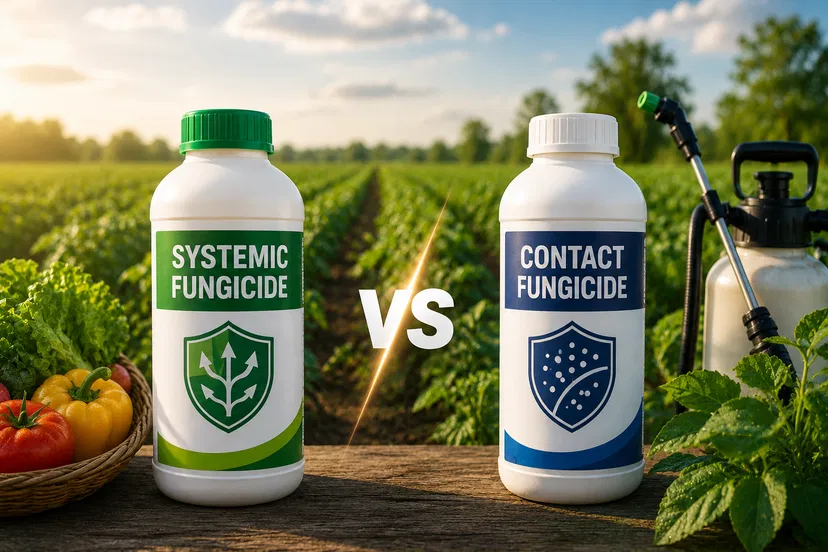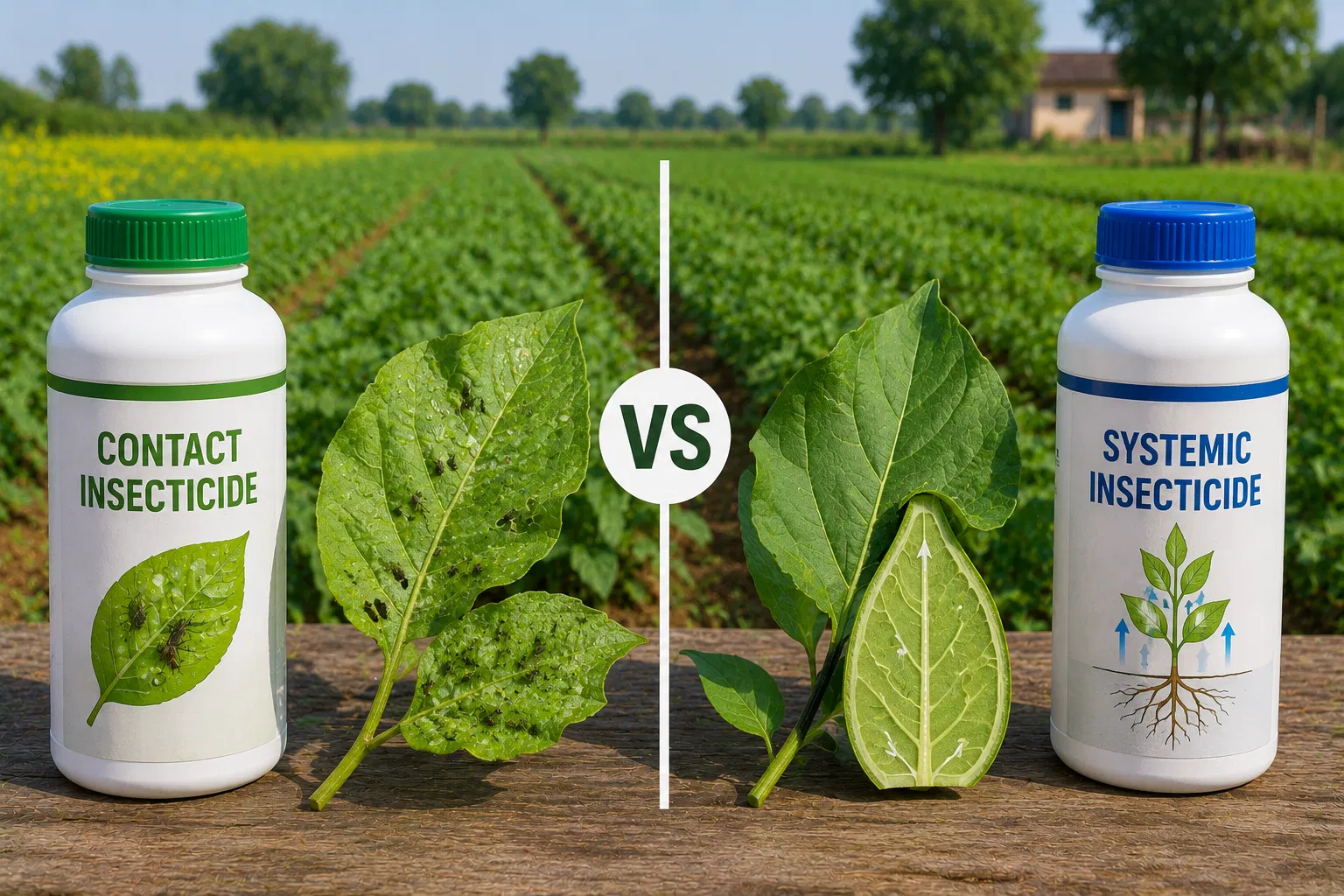
Contact and systemic insecticides differ mainly in how they reach the pest. A contact product must touch the insect or a surface the insect contacts. A systemic product is absorbed by the plant and affects pests that feed on treated tissue or sap.
Neither category is automatically better. The correct choice depends on the pest's location, feeding behaviour, crop stage, weather, resistance history, and label approval. Understanding the difference prevents wasted applications and unnecessary crop risk.
What Are Contact Insecticides?
Contact insecticides act when the spray droplet or dried residue comes into contact with the pest. They often provide relatively rapid knockdown when insects are exposed and coverage is thorough.
Strengths of contact products
- Fast action against exposed pests
- Useful for localised infestations
- May have limited movement inside the plant
- Can be effective when applied directly to pest colonies
Limitations of contact products
- Poor control of insects hidden inside leaves, stems, or fruit
- High dependence on spray coverage
- Possible wash-off by rain
- Greater exposure of surface-dwelling beneficial insects
What Are Systemic Insecticides?
Systemic insecticides are absorbed through roots, leaves, stems, or seed tissues and move within the plant. The extent and direction of movement vary. Some are mainly upward-moving, some move locally through the treated leaf, and only a few move broadly through both xylem and phloem.
Strengths of systemic products
- Can reach sap-feeding pests hidden beneath leaves
- Less dependent on direct contact with every insect
- May provide longer residual activity
- Can protect new growth when the label indicates suitable movement
Limitations of systemic products
- May take longer to show visible control
- Can create residue concerns if misused
- May expose pollinators through contaminated nectar or pollen
- Can select strongly for resistance when overused
Side-by-Side Comparison
| Factor | Contact | Systemic |
|---|---|---|
| How it reaches pests | Direct spray or residue contact | Absorbed plant tissue |
| Coverage need | Usually high | Still important, but direct pest contact is less critical |
| Typical speed | Often fast | May be slower |
| Hidden pests | Often less effective | Often more effective against feeding pests |
| Residual action | Variable, often shorter | Variable, sometimes longer |
| Rain sensitivity | High before drying | Lower after absorption, depending on label |
Which Pests Suit Contact Products?
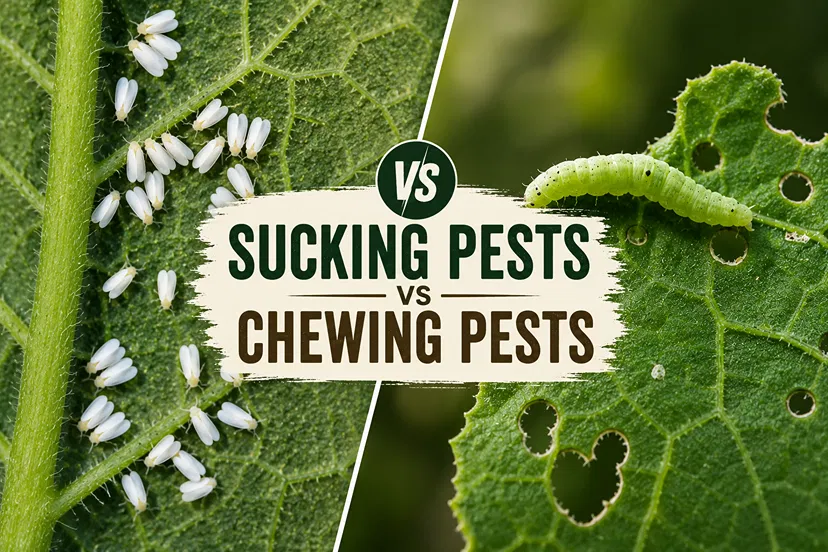
Contact products are commonly considered for exposed aphids, caterpillars, beetles, bugs, or adult insects visible on the plant. They are less reliable when pests remain inside mines, stems, fruit, curled leaves, or protected colonies.
Good scouting should confirm where the pest is located before a crop protection treatment is chosen.
Which Pests Suit Systemic Products?
Systemic products may be useful against aphids, whiteflies, leafhoppers, scale insects, mealybugs, or other pests that feed from plant fluids. Suitability depends on the labelled crop and pest.
A systemic insecticide will not automatically control every chewing insect. The pest must ingest a biologically active dose from the treated plant.
Coverage Still Matters
Systemic does not mean careless application. Uneven coverage can lead to uneven absorption and weak control. Calibrated sprayers, correct nozzles, suitable water volume, and attention to the target canopy remain important.
Contact products need especially thorough coverage of leaf undersides, growing points, and other pest habitats. Avoid runoff because excess liquid wastes product and increases environmental contamination.
Can Adjuvants Improve Performance?
Approved adjuvants may improve spreading, wetting, sticking, or penetration, but they should only be used when the label permits them. A strong penetrant may increase crop injury or residues when combined with a systemic product.
Speed of Control
Contact insecticides may cause visible knockdown within hours, but rapid movement does not always mean long residual protection. Systemic products may need time for absorption and distribution before pests stop feeding or die.
Do not reapply early simply because dead insects are not immediately visible. Check the labelled assessment period.
Resistance Considerations
Contact and systemic describe movement, not resistance group. Two products can differ in movement but share the same mode of action. Rotate by mode-of-action group, not by the words contact or systemic.
Repeated systemic use can create sustained selection pressure. Repeated contact spraying can also select resistance if the same active group is used again and again.
Crop and Harvest Safety
Only use a product registered or labelled for the crop. This is especially important for vegetables such as tomato, where residue limits and pre-harvest intervals directly affect food safety.
Observe the maximum number of applications, re-entry interval, pre-harvest interval, and any restrictions during flowering.
When Contact Insecticides May Be Preferred
- The pest is exposed and localised.
- Fast knockdown is necessary.
- A short residual period is preferred.
- Spot treatment can reduce overall exposure.
- The crop label supports the use.
When Systemic Insecticides May Be Preferred
- The pest feeds from sap or protected plant tissue.
- Direct coverage is difficult.
- Longer internal protection is justified.
- Pollinator and residue restrictions can be met.
- Resistance rotation allows the selected group.
Final Thoughts
Contact insecticides depend on direct exposure and complete coverage. Systemic insecticides depend on plant absorption and pest feeding. Both can fail when used against the wrong pest, at the wrong stage, or without attention to resistance and safety.
Identify the pest, read the label, check the mode of action, and choose the least disruptive effective option. The difference between contact and systemic products is useful only when it leads to a better, safer field decision.