If you want stronger soil, healthier crops, and better yields without relying too heavily on synthetic inputs, the smartest move is often not choosing between biofertilizers and organic manures—it is combining them. Used together, these two natural soil-building tools can work in harmony to improve nutrient availability, support beneficial microbes, and create a more resilient growing environment for your plants.
Whether you are managing a home garden, vegetable plot, orchard, or a larger farm, understanding how to combine biofertilizers with organic manures for best results can make a real difference in plant growth and soil fertility. The key is knowing how each input works, why they complement each other, and how to apply them correctly.
Why Biofertilizers and Organic Manures Work Better Together
Biofertilizers are living microorganisms that help plants access nutrients more efficiently. These microbes may fix atmospheric nitrogen, solubilize phosphorus, or improve root development. Organic manures, on the other hand, improve soil structure, add organic matter, and provide a slow release of nutrients.
When combined, they create a synergistic effect:
- Organic manures feed the soil and create a favorable environment for microbial activity.
- Biofertilizers boost nutrient availability by making key nutrients easier for plants to absorb.
- Microbial populations multiply faster when enough organic matter is present.
- Plants develop stronger roots, which improves uptake of water and nutrients.
“Healthy soil is not built by one input alone. It is created by the right combination of biology, organic matter, and balanced nutrient management.”
Understanding the Role of Biofertilizers
Biofertilizers are not fertilizers in the traditional sense. They do not directly supply large amounts of nutrients like chemical fertilizers. Instead, they enhance natural soil processes and help plants get more from what is already present in the soil.
Common Types of Biofertilizers
- Rhizobium – Helps legumes fix nitrogen in root nodules.
- Azotobacter – Free-living nitrogen fixer useful in many crops.
- Azospirillum – Promotes root growth and nitrogen availability.
- Phosphate-solubilizing bacteria – Release bound phosphorus in the soil.
- Mycorrhizal fungi – Expand root absorption area and improve nutrient uptake.
These beneficial organisms are most effective when soil conditions are supportive. That is where organic manures become especially important.
How Organic Manures Support Soil Health
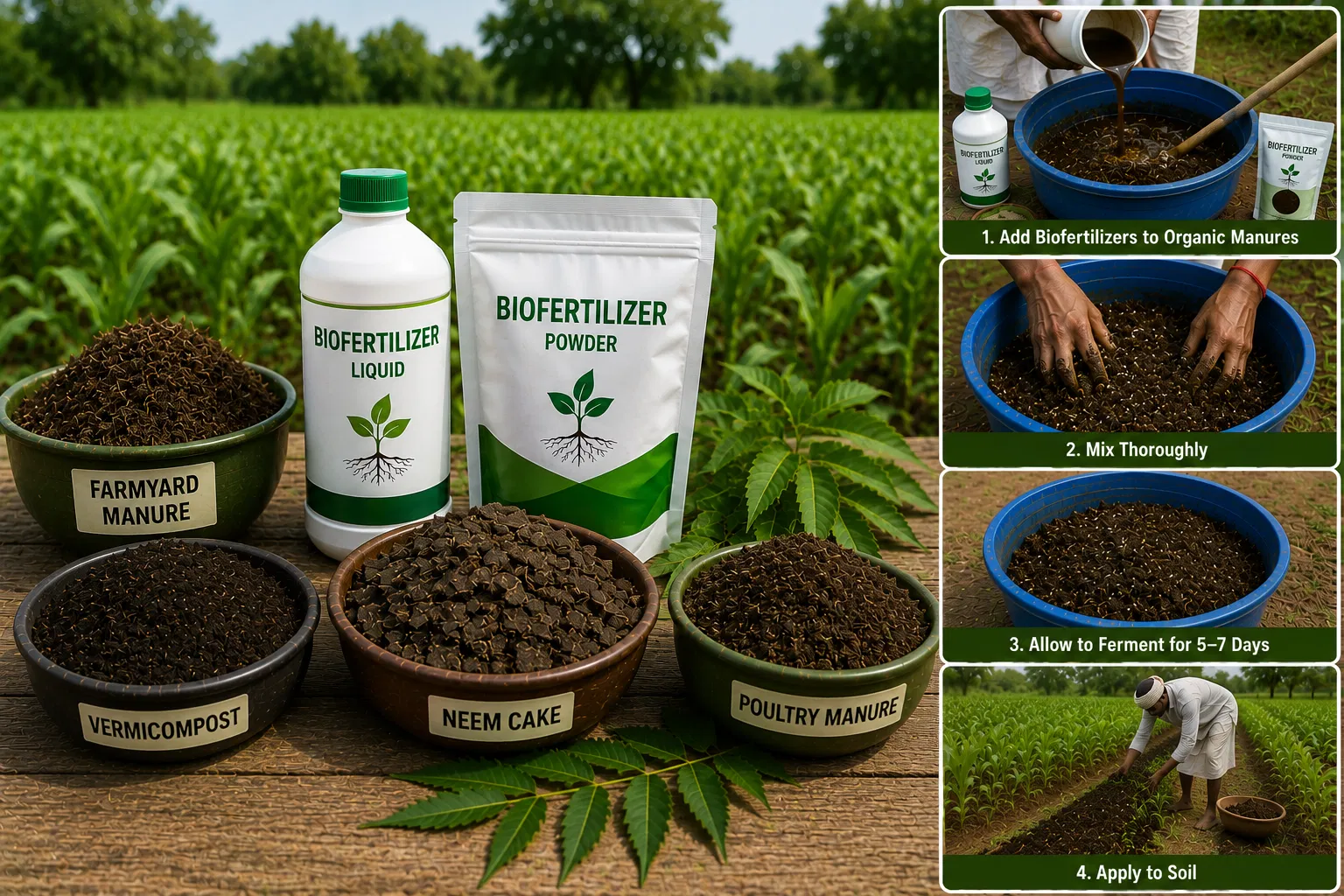
Organic manures include compost, farmyard manure, vermicompost, green manure, poultry manure, and other decomposed natural materials. They are essential for long-term soil fertility because they improve both the physical and biological quality of soil.
Key Benefits of Organic Manures
- Improve soil structure and aeration
- Increase water-holding capacity
- Provide slow-release nutrients
- Encourage beneficial microbes
- Reduce nutrient leaching
Unlike quick-release synthetic fertilizers, organic manures nourish the soil ecosystem over time. This creates a stable foundation for biofertilizers to thrive.
Best Ways to Combine Biofertilizers With Organic Manures
To get the best results, biofertilizers and organic manures should be used in a planned and compatible way. Simply mixing everything together without timing or care can reduce effectiveness.
1. Apply Organic Manure First
Organic manure should usually be incorporated into the soil before planting. This improves soil texture and prepares the root zone for microbial colonization. A well-decomposed compost or farmyard manure is ideal because it supports microbial life without creating heat or excess ammonia that may harm biofertilizer organisms.
2. Use Biofertilizers at the Right Stage
Biofertilizers are often most effective when applied directly to seeds, seedlings, or roots. This allows the microorganisms to establish close contact with the plant early in growth.
Common application methods include:
- Seed treatment before sowing
- Root dipping for transplants
- Soil application mixed with compost
3. Mix Biofertilizers With Composted Material, Not Fresh Manure
Fresh manure may generate excessive heat or contain harmful compounds that reduce microbial survival. Always use well-rotted or fully composted organic material. If mixing biofertilizer with compost for soil application, ensure the compost is cool, moist, and mature.
4. Maintain Adequate Soil Moisture
Beneficial microbes need moisture to survive and multiply. Dry, compacted soil limits their activity, while overly wet soil can reduce oxygen availability. Keep soil evenly moist for stronger microbial performance and better nutrient uptake.
5. Avoid Harsh Chemical Treatments Immediately After Application
Strong fungicides, pesticides, or high doses of chemical fertilizers can damage biofertilizer organisms. If such inputs are necessary, apply them carefully and avoid direct contact with microbial inoculants.
Practical Combinations That Work Well
Different crops respond well to different combinations of biofertilizers and organic manures. The right pairing depends on your soil type, crop needs, and growing conditions.
For Vegetables
Vegetable crops benefit greatly from compost or vermicompost combined with phosphate-solubilizing bacteria and mycorrhizal fungi. This supports faster growth, better flowering, and improved fruiting.
For Legumes
Legumes such as beans, peas, lentils, and groundnut respond strongly to Rhizobium plus farmyard manure or compost. The manure improves soil condition, while Rhizobium helps fix atmospheric nitrogen naturally.
For Cereals and Grains
Crops like maize, wheat, and rice often perform better with Azotobacter or Azospirillum alongside well-decomposed compost. This combination supports root growth and nutrient efficiency.
For Fruit Trees
Orchards benefit from a mix of organic manure, mycorrhizal fungi, and composted plant material. This improves long-term soil fertility and enhances root access to phosphorus and micronutrients.
Common Mistakes to Avoid
Even though biofertilizers and organic manures are natural inputs, they still need to be used correctly. Avoid these common mistakes to protect their effectiveness:
- Using fresh, undecomposed manure
- Applying biofertilizers in hot, dry soil
- Storing biofertilizers in direct sunlight
- Mixing biofertilizers with chemical pesticides
- Overapplying manure without soil testing
Good soil management is about balance. More is not always better, especially when microbial life is involved.
Benefits You Can Expect Over Time
When biofertilizers and organic manures are used together consistently, the results become more noticeable season after season. You are not just feeding plants for one harvest—you are improving the entire soil system.
- Improved soil fertility
- Better root development
- Higher nutrient efficiency
- Reduced dependence on chemical fertilizers
- Stronger crop resilience against stress
- Better yield quality and consistency
These benefits are especially valuable in sustainable agriculture, organic farming, and regenerative growing systems.
Final Thoughts
Combining biofertilizers with organic manures is one of the most effective ways to build fertile, living soil and support healthy crop growth naturally. Organic manures create the ideal environment, while biofertilizers activate nutrient cycling and improve plant access to essential elements. Together, they offer a practical, sustainable, and cost-effective path to better results in the field or garden.
If your goal is stronger plants, improved soil health, and more productive harvests, start by using well-decomposed organic manures and compatible biofertilizers in the right way. Small improvements in soil biology can lead to big gains in crop performance.
For best results, think long term: nourish the soil first, and the plants will follow.