Stem borer is one of the most destructive pests in paddy fields, often causing hidden damage that becomes visible only when yield losses have already started. If you are looking for a reliable solution, chlorantraniliprole for stem borer in paddy is widely recognized for its strong and long-lasting control. It helps protect rice crops at critical growth stages, reducing dead hearts, white ears, and overall crop stress.
In this guide, we’ll look at how chlorantraniliprole works, why it is effective against stem borer, how to apply it properly, and what farmers should keep in mind for better results.
What Is Stem Borer in Paddy?
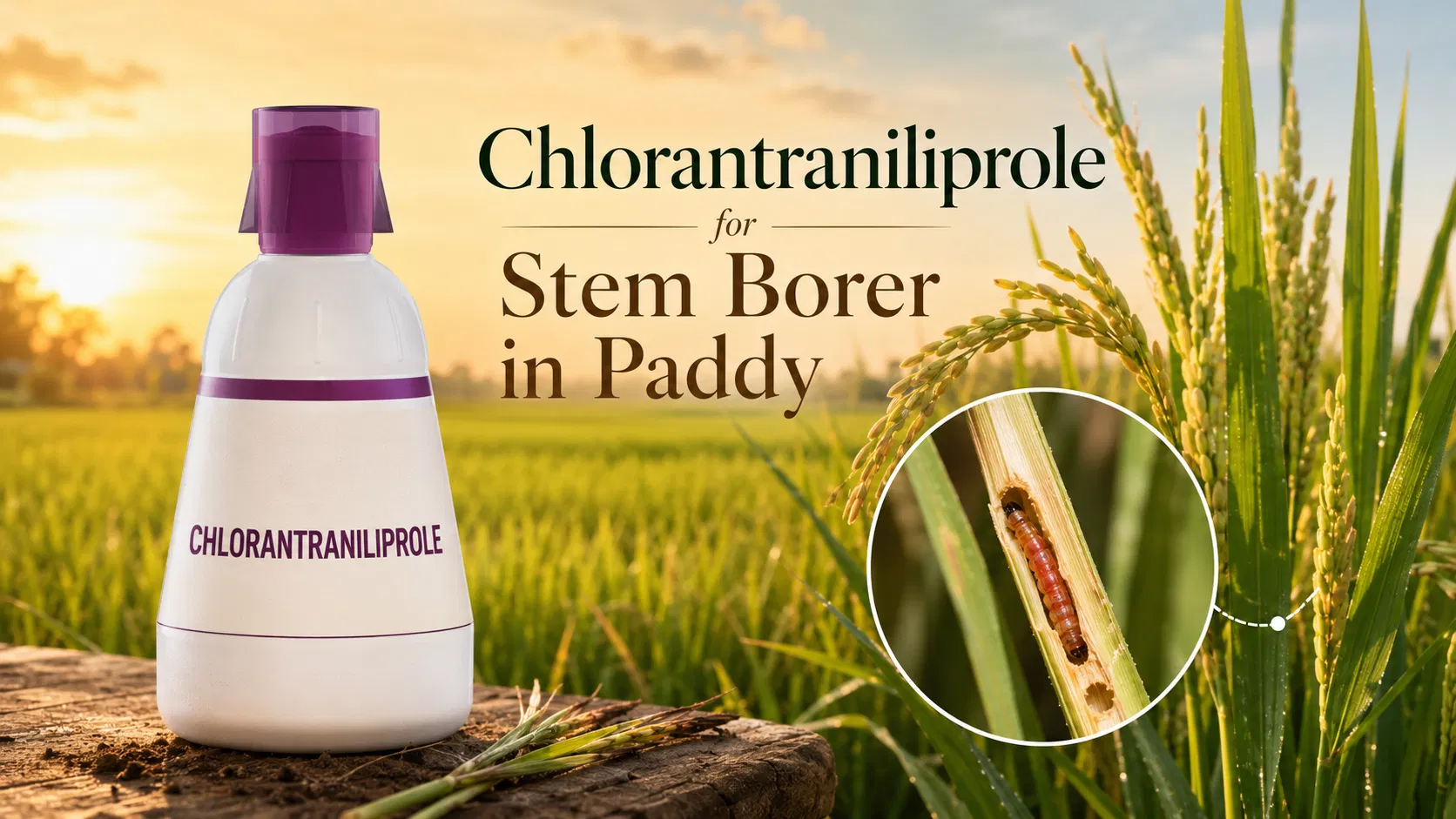
Stem borer is a major insect pest in rice that attacks the stem of the plant. The larvae bore into the stem and feed inside, making them difficult to detect early. In paddy, this pest usually causes damage in two major forms:
- Dead hearts in the vegetative stage
- White ears in the reproductive stage
Because the larvae live inside the stem, contact insecticides often fail to provide complete control. This is why a targeted insecticide like chlorantraniliprole is preferred by many rice growers.
Why Chlorantraniliprole Is Effective Against Stem Borer
Chlorantraniliprole belongs to the anthranilic diamide class of insecticides. It works by activating the ryanodine receptors in the insect’s muscles, causing paralysis and death. Once ingested or absorbed by the pest, it quickly stops feeding and reduces further crop damage.
Its effectiveness in paddy comes from several advantages:
- Fast feeding cessation — larvae stop damaging the plant soon after exposure
- Long residual activity — protection lasts longer compared to many older insecticides
- Targeted action — highly effective against lepidopteran pests like stem borer
- Better crop safety — generally gentle on rice plants when used correctly
Chlorantraniliprole is especially valuable in paddy because it controls hidden stem borer larvae that are hard to reach with surface sprays alone.
Benefits of Using Chlorantraniliprole in Paddy
Farmers choose chlorantraniliprole not just for pest control, but for the practical crop protection benefits it offers during the rice season. Some of the main benefits include:
1. Strong Protection at Critical Stages
Rice is most vulnerable during early vegetative growth and panicle initiation. Chlorantraniliprole helps protect these stages by controlling borer larvae before severe damage occurs.
2. Reduced Yield Loss
By limiting dead hearts and white ears, the product helps preserve productive tillers and grain formation, which supports better harvest outcomes.
3. Longer Protection Window
Unlike insecticides that lose activity quickly, chlorantraniliprole offers extended control, reducing the need for frequent applications.
4. Convenient Pest Management
It fits well into integrated pest management programs and can be part of a broader strategy for healthy paddy production.
When to Apply Chlorantraniliprole for Stem Borer in Paddy
Timing is extremely important for the best results. Chlorantraniliprole should be applied when stem borer infestation begins or when early signs of damage appear. In many cases, preventive application is recommended based on pest monitoring and local field conditions.
Look for these warning signs:
- Egg masses on rice leaves
- Early dead hearts in the field
- Irregular tiller damage
- Stem borer moth activity at night
Regular field scouting helps determine the right time for spray or granular application. Early intervention is always more effective than waiting for widespread infestation.
How to Use Chlorantraniliprole in Paddy Fields
Chlorantraniliprole is available in different formulations depending on the crop protection program and local market availability. Always follow the label directions and local agricultural recommendations for dose and application method.
Application Methods
- Foliar spray — suitable for quick field coverage where spray access is practical
- Granular application — often useful in flooded or standing water conditions in paddy
Best Application Practices
- Apply at the first sign of egg laying or early larval activity.
- Use clean water and properly calibrated equipment for even coverage.
- Ensure the spray reaches the base of the plant where stem borer activity begins.
- Avoid applying during strong winds or heavy rain.
- Follow the recommended dose on the product label.
For paddy fields with standing water, granular formulations may offer practical advantages. In spray programs, good coverage is essential because the pest often affects lower plant parts.
Integrated Pest Management for Stem Borer Control
Chlorantraniliprole works best when used as part of an integrated pest management approach. This helps improve pest control while reducing resistance risk and unnecessary chemical use.
Useful IPM practices include:
- Use healthy, pest-free seedlings
- Monitor fields regularly for egg masses and early damage
- Encourage natural enemies where possible
- Remove and destroy heavily infested plant parts if needed
- Avoid unnecessary repeated insecticide use
Combining monitoring, cultural practices, and selective insecticide use creates a more sustainable stem borer control strategy in paddy.
Precautions While Using Chlorantraniliprole
Although chlorantraniliprole is effective, it must be used responsibly for safe and successful pest management. Keep these precautions in mind:
- Always read and follow the product label carefully
- Wear protective equipment during mixing and application
- Do not exceed the recommended dose
- Store the product away from children, animals, and food items
- Rotate pest control products when advised to reduce resistance pressure
Responsible use not only protects the crop but also helps preserve the effectiveness of the product in future seasons.
Common Questions Farmers Ask
Is chlorantraniliprole good for stem borer in paddy?
Yes. It is one of the most effective insecticides for controlling stem borer in rice because it targets the pest inside the stem and provides long-lasting control.
Can it stop dead hearts already caused by stem borer?
It cannot reverse damage already done, but it can stop further infestation and protect healthy tillers from becoming damaged.
Is one application enough?
That depends on pest pressure, crop stage, and local conditions. In some cases, one well-timed application may be enough; in others, follow-up control may be needed based on field monitoring.
Conclusion
Chlorantraniliprole for stem borer in paddy offers a practical and effective way to protect rice crops from one of their most damaging pests. With its strong action, long residual effect, and good crop safety, it has become a trusted option for rice farmers aiming to reduce dead hearts, white ears, and yield losses.
For best results, apply it at the right time, use the correct method, and combine it with regular field scouting and integrated pest management practices. A timely, well-planned approach can make a major difference in paddy productivity and crop health.
Protect your rice crop early, stay vigilant in the field, and use chlorantraniliprole wisely for dependable stem borer control.