Charcoal rot is a soil-borne fungal disease that hits soybean hardest during hot, dry spells, striking right at the seed and seedling stage before the crop has a chance to establish. It's caused by the fungus Macrophomina phaseolina, which survives in the soil and on old crop debris for years, waiting for the right conditions to attack. Once a field is infected, the disease tends to return in the same patches every dry season unless the seed and soil are protected early.
Signs of Charcoal Rot in Soybean
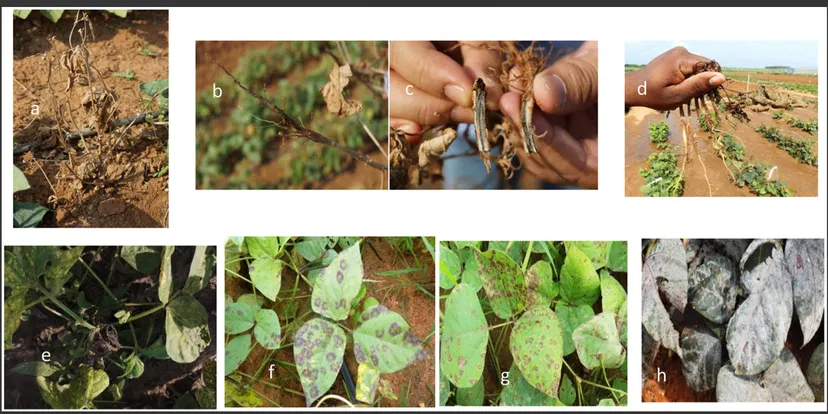
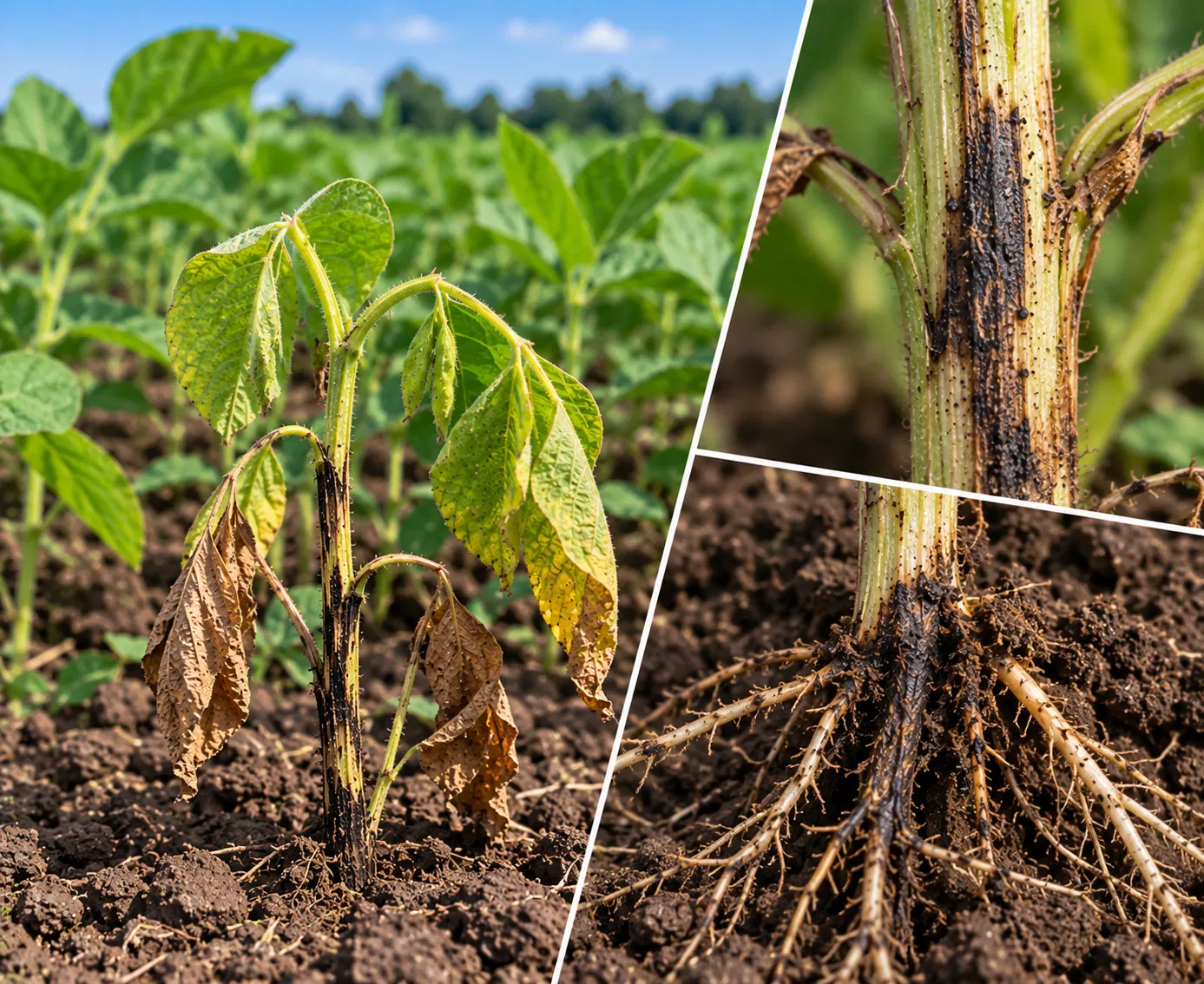
- Sudden yellowing or wilting of young plants
- Roots and lower stem turn brown to black, looking charred
- Grey, powdery fungal specks visible inside the split stem or root
- Poor germination or seedlings dying soon after emergence
- Gaps appearing in rows where affected plants have died
Causes of Charcoal Rot in Soybean
- Hot, dry weather and drought stress, especially at 30-35°C
- Moisture stress in the soil around sowing and early growth
- Poor quality or damaged seed carrying the fungus
- Continuous soybean cultivation in the same field without rotation
- Infected crop debris left in the field from a previous season
Seed Treatment Solutions
1. Carbendazim 12% + Mancozeb 63% WP
This combination pairs a systemic fungicide with a contact one, giving soybean seed dual protection right from sowing. Carbendazim moves into the germinating seed to stop the fungus establishing internally, while mancozeb protects the seed coat and surrounding soil from external infection.
Product Recommendation
2. Carboxin 37.5% + Thiram 37.5% WS
This is a purpose-built seed dresser that combines a systemic fungicide with a contact one to protect soybean seed both inside and out. It has a long track record specifically against collar rot and charcoal rot, and also helps seedlings emerge more evenly.
Product Recommendation
3. Pseudomonas fluorescens
EBS Pseudomonas Fluorescens is a good friendly bacteria for your seed. Coat your seed with it before sowing, and it sets up home around the roots as the plant comes up, crowding out the charcoal rot fungus before it gets a foothold.
Product Recommendation
4. Trichoderma viride
Multiplex Nisarga works the same way but with a different helper fungus, Trichoderma viride. It grows faster than the disease fungus and simply takes over the space around the root before charcoal rot gets a chance to spread.
Product Recommendation
Product Dosage
| Product Name | Dosage |
|---|---|
| Saaf Fungicide | 2.25-3.0 g per kg seed |
| Vitavax Power Fungicide | 2.25-3.0 g per kg seed, made into a slurry with 10 ml water per kg seed |
| EBS Pseudomonas Fluorescens Bio Fungicide | As per label recommendation |
| Multiplex Nisarga | 20 g per kg seed |
Note: Charcoal rot builds up in hot, dry soil, so along with seed treatment, avoiding moisture stress at sowing and rotating with a non-host crop in badly affected fields both help keep the disease pressure down.
Disclaimer: Always confirm current label registration, approved dosage, water volume, and pre-harvest interval (PHI) for your state before using any product, since labels are periodically revised by regulatory authorities.
This guide is a general advisory. Do your own research and verification before using any product. Always confirm suitability for your crop stage, region, and field conditions before making any purchase, spray, or crop-management decision.