Cauliflower is one of the most widely grown cole crops in India, valued for its short duration and steady market demand. But its dense canopy, tender curd, and preference for cool, humid weather make it an easy target for fungal disease — often starting right in the nursery, well before the crop reaches the field.
Left unchecked, these diseases can wipe out seedlings, stunt growth, and disfigure the curd right before harvest, cutting into both yield and market price. This guide covers the four fungal diseases every cauliflower grower should be able to recognise, how to spot each one early, and which fungicides are suited to managing them.
1. Damping Off (Pythium spp.)
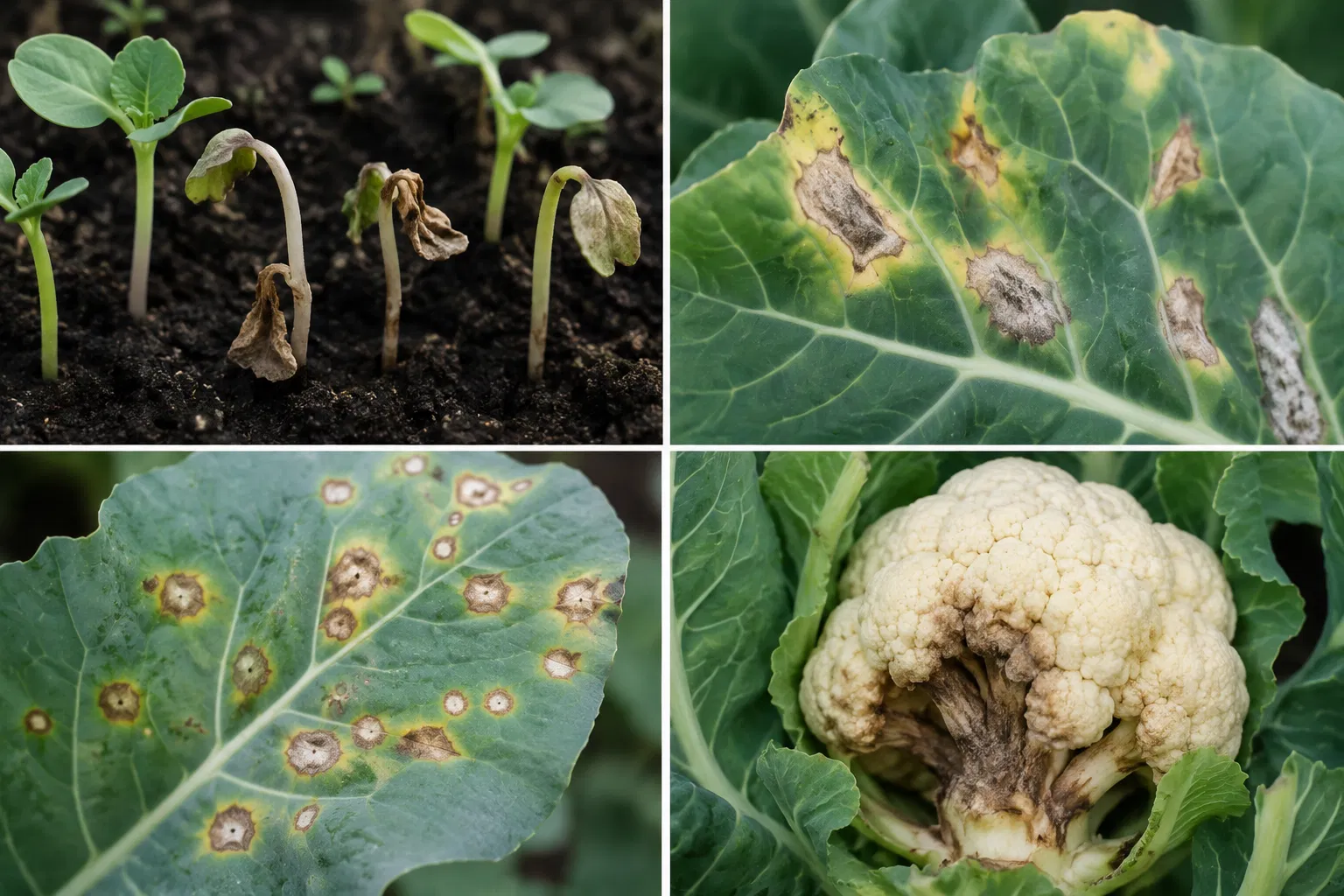
Damping off strikes cauliflower seedlings in the nursery, rotting the stem at the soil line and toppling otherwise healthy-looking plants within days. A bad outbreak can wipe out an entire seed bed before transplanting.
How to Spot It
Look for a water-soaked, thin lesion girdling the stem right at the soil surface. Affected seedlings collapse and lie flat, and patches of the nursery bed thin out rapidly as neighbouring seedlings go down one after another.
Solutions to Manage/Control It
| Product | Active Ingredient |
|---|---|
| Tata Rallis Captaf Fungicide | Captan 50% WP |
2. Downy Mildew (Hyaloperonospora parasitica)
Downy mildew shows up during cool, damp spells and spreads fast across the crop canopy, weakening leaves and reducing the plant's ability to feed the developing curd.
How to Spot It
Yellowish, angular patches appear on the upper leaf surface, with a pale grey to purplish fuzzy growth developing directly underneath them, usually most visible in the early morning when humidity is high.
Solutions to Manage/Control It
| Product | Active Ingredient |
|---|---|
| Katyayani Azochlo Star Fungicide | Azoxystrobin 4.8% w/w + Chlorothalonil 40% w/w SC |
3. Leaf Spot (Alternaria brassicae)
Leaf spot chips away at the plant's leaf area over time, and in humid conditions the spots can coalesce into larger blighted patches that reduce the crop's overall vigour ahead of curd formation.
How to Spot It
Small, dark brown to black spots appear on the leaves with a pattern of concentric rings, sometimes surrounded by a faint yellow halo. Older leaves are usually affected first, and spots enlarge and merge as the disease progresses.
Solutions to Manage/Control It
| Product | Active Ingredient |
|---|---|
| Indofil M-45 Fungicide | Mancozeb 75% WP |
| Syngenta Kavach Fungicide | Chlorothalonil 75% WP |
| Katyayani Azochlo Star Fungicide | Azoxystrobin 4.8% w/w + Chlorothalonil 40% w/w SC |
4. Collar Rot (Sclerotium rolfsii)
Collar rot attacks the stem base at soil level, cutting off the plant's water and nutrient supply. Infected plants wilt suddenly and rarely recover once the rot has girdled the stem.
How to Spot It
A soft, water-soaked rot develops at the collar region of the stem, often with white, cottony fungal growth and small brown to tan sclerotia visible on the affected tissue and surrounding soil.
Solutions to Manage/Control It
| Product | Active Ingredient |
|---|---|
| Tata Rallis M-45 Fungicide | Mancozeb 75% WP |
Frequently Asked Questions
What is the most common cause of seedling loss in cauliflower nurseries?
Damping off, caused by soil-borne Pythium spp., is the most common reason for sudden seedling collapse in cauliflower nurseries, especially in overwatered or poorly drained seed beds.
Which weather conditions favour downy mildew in cauliflower?
Downy mildew develops fastest during cool temperatures combined with high humidity or prolonged leaf wetness, which is why it's most common in early morning dew or after extended cloudy, rainy spells.
Can collar rot be treated once a plant has wilted?
Once collar rot has girdled the stem and the plant has wilted, recovery is unlikely. Management is most effective as a preventive measure applied before symptoms appear or at the very first sign of infection.
Is leaf spot only a cosmetic issue on cauliflower?
No — while leaf spot starts as small lesions, a heavy infection reduces the plant's functional leaf area, which can weaken the plant and affect curd size and quality if left unmanaged.
- Fungicide labels, registered dosages, and pre-harvest intervals can change — always confirm the current registration, dosage, and PHI on the product label before use.
- This guide is a general advisory only. Please do your own research and verify with a local agronomist or dealer before making any purchase, spray, or crop-management decision.