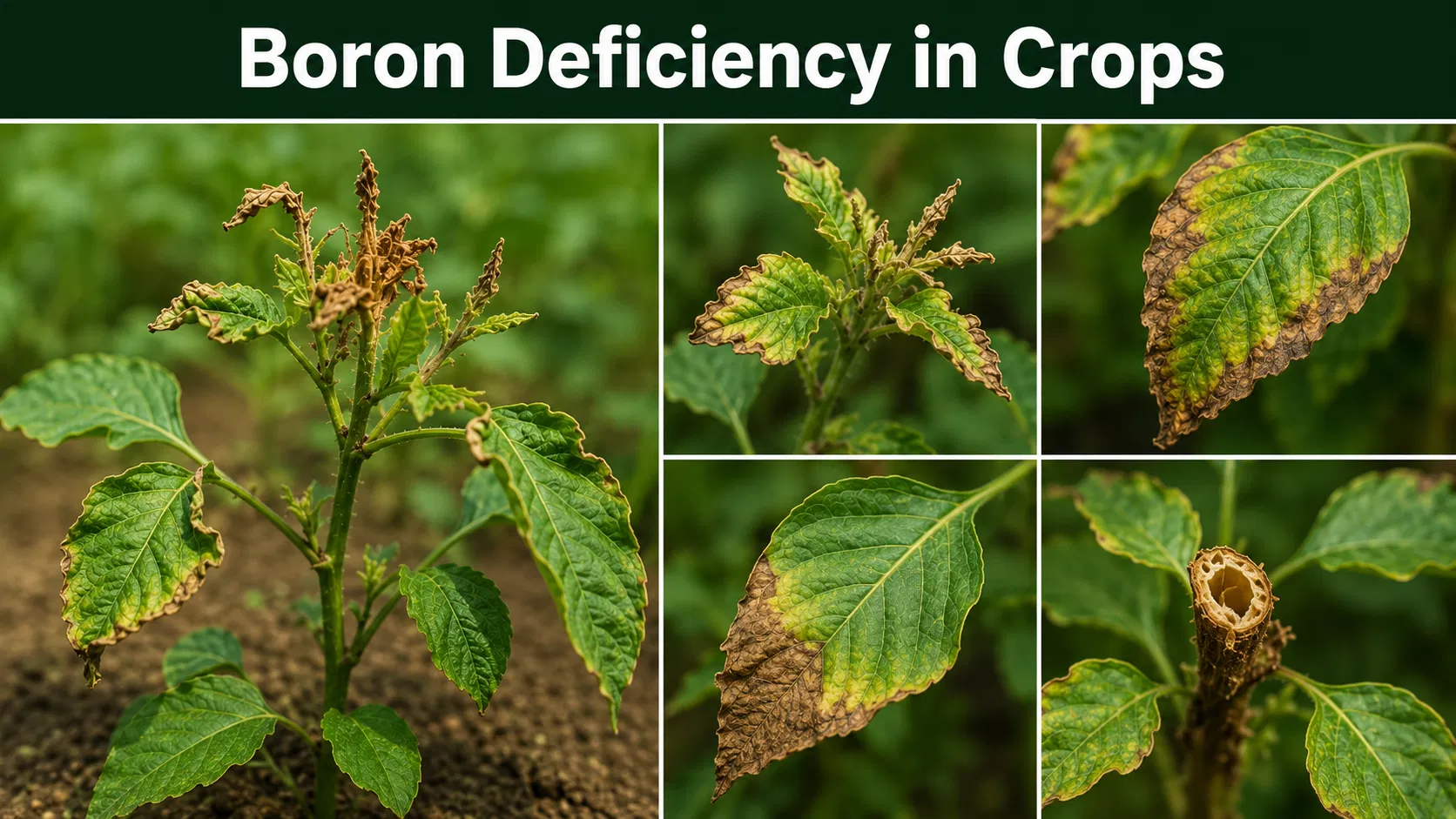
Boron deficiency can quietly reduce crop health, stunt growth, and lower yields before many growers realize there is a problem. Because boron is needed in small amounts, it is easy to overlook—yet when levels drop too low, the impact on flowering, fruit set, root development, and overall plant structure can be severe. Knowing how to identify boron deficiency in crops early and how to treat it correctly can make a major difference in productivity.
What Is Boron Deficiency?
Boron is an essential micronutrient that supports cell wall formation, sugar transport, pollen viability, and new tissue growth. Unlike nitrogen or potassium, crops need boron in very small quantities, but the margin between deficiency and excess is narrow. That means both underapplication and overapplication can cause serious crop issues.
Boron deficiency in crops typically appears first in actively growing tissues such as new leaves, growing points, flowers, and fruits. Because boron is not easily moved within plants, symptoms often show up in the newest growth rather than older leaves.
Common Symptoms of Boron Deficiency in Crops
Symptoms vary by crop species, soil type, and severity, but the most common signs are easy to recognize once you know what to look for.
1. Stunted or distorted new growth
Young leaves may become thick, brittle, curled, or deformed. In severe cases, growing tips can die back completely.
2. Poor flowering and fruit set
Boron plays a critical role in pollen tube growth and fertilization. Deficient crops often produce fewer flowers, drop blossoms early, or set poorly shaped fruit.
3. Hollow stems, cracked tissue, or internal browning
Some crops develop hollow stems, cracked fruits, or darkened internal tissues when boron is lacking. This can reduce market quality and storage life.
4. Weak root development
Roots may become short, thickened, or discolored. Poor root growth limits water and nutrient uptake, compounding other stress problems.
5. Death of growing points
In severe deficiency, the apical meristems can die, causing multiple side shoots, uneven growth, and reduced yields.
Key insight: Boron deficiency often shows up first in new growth and reproductive tissues, making early scouting essential for protecting yield.
What Causes Boron Deficiency?
Boron deficiency can be triggered by several soil, climate, and management factors. Understanding the cause is essential for choosing the right treatment.
- Low soil boron levels: Some soils naturally contain little boron, especially sandy soils with low organic matter.
- High rainfall or heavy irrigation: Boron is highly mobile in soil and can leach below the root zone.
- High soil pH: Alkaline soils can reduce boron availability to plants.
- Drought stress: Low moisture limits boron movement from soil to roots.
- Excess lime or calcium: Over-liming can reduce micronutrient availability.
- Rapid crop growth: Fast-growing crops may outpace boron supply during critical stages.
Because soil conditions affect boron availability so strongly, a crop may appear deficient even if the soil contains some boron. The issue is often availability, not just total content.
How to Diagnose Boron Deficiency
Visual symptoms are a useful starting point, but diagnosis should not rely on appearance alone. Other nutrient problems, disease, herbicide injury, or environmental stress can produce similar symptoms.
- Inspect symptoms in new growth: Look for distorted leaves, dead growing points, and poor flowering.
- Test the soil: Soil testing helps determine whether boron levels are low or if pH may be limiting uptake.
- Use tissue analysis: Plant tissue tests confirm whether the crop is actually deficient.
- Review field conditions: Check rainfall, irrigation, soil texture, and liming history.
A combined approach gives the most accurate diagnosis and helps avoid unnecessary or excessive boron applications.
How to Treat Boron Deficiency in Crops
Treating boron deficiency requires precision. Since boron has a narrow safety range, applying too much can damage crops just as easily as applying too little.
1. Apply boron based on soil and tissue test results
The safest treatment starts with testing. If boron deficiency is confirmed, correct it using a source and rate appropriate for the crop, soil type, and growth stage.
2. Use foliar sprays for quick correction
Foliar boron applications can provide a fast response when deficiency is affecting active growth or flowering. This method is useful when crops need immediate support, but it is usually a short-term solution rather than a full replacement for soil correction.
3. Improve soil boron for longer-term management
If the underlying issue is low soil boron, apply a soil amendment or fertilizer containing boron. This helps rebuild reserves in the root zone and support future crops.
4. Avoid overapplication
Too much boron can be toxic, especially in sensitive crops. Follow label directions carefully and never assume that more fertilizer will solve the problem faster.
5. Manage irrigation and soil moisture
Maintaining even soil moisture improves boron uptake. Drought can intensify deficiency, while overwatering can increase leaching in lighter soils.
Best Boron Sources for Crops
Several fertilizers and amendments can supply boron, depending on the crop and application method.
- Borax: A common soil-applied boron source, often used in small, carefully measured amounts.
- Solubor: A highly soluble source often used in foliar sprays or fertigation.
- Boronated fertilizers: Blended fertilizers that include boron for balanced nutrition.
- Compost and organic matter: These do not provide a quick fix but can help improve micronutrient retention over time.
The best choice depends on urgency, soil type, crop sensitivity, and the stage of growth. Foliar applications are often preferred for rapid correction, while soil applications are better for building long-term fertility.
How to Prevent Boron Deficiency
Prevention is more effective than emergency correction. Because boron levels can shift quickly with rainfall, pH, and soil texture, consistent management is important.
- Test soil regularly, especially in sandy or low-organic-matter fields.
- Monitor tissue boron levels during critical growth stages.
- Maintain balanced fertility and avoid excessive liming.
- Use boron only when recommended by test results or crop need.
- Watch high-value crops closely during flowering and fruit set.
For many growers, the most effective strategy is to build boron into a broader fertility plan rather than treating it as a one-time fix.
Crops Commonly Affected by Boron Deficiency
Some crops are especially sensitive to boron shortages. These often include:
- Brassicas such as broccoli, cauliflower, and cabbage
- Root crops like beet, turnip, and carrot
- Fruit crops including apple, grape, and strawberry
- Legumes such as alfalfa and clover
- Oilseeds and flowering crops that depend on strong pollination
Because sensitivity varies by crop, application rates and timing must be tailored carefully. What works for one crop may be harmful to another.
Final Thoughts on Boron Deficiency in Crops
Boron deficiency in crops can be easy to miss at first, but it has a direct impact on growth, flowering, root development, and yield quality. The best results come from early identification, soil and tissue testing, and careful treatment with the right boron source at the right rate. Whether you are managing vegetables, fruit crops, or field crops, consistent monitoring and precise nutrient management can help prevent losses and keep plants performing at their best.
If your crops are showing distorted new growth, poor flowering, or weak fruit set, check boron levels early and act quickly before yield is affected.