Bitter gourd is a valuable vegetable crop, but one disease can quickly damage both yield and quality: Bitter Gourd Yellow Mosaic Virus. This virus spreads fast, weakens plants, and leaves fruits unattractive and unmarketable. If you grow bitter gourd, knowing the early symptoms and the best prevention methods can help you protect your crop before serious losses occur.
What Is Bitter Gourd Yellow Mosaic Virus?
Bitter Gourd Yellow Mosaic Virus is a viral disease that affects bitter gourd plants and causes yellow patches, mottling, and distortion in leaves and fruits. It is commonly spread by whiteflies, which act as the main insect carrier. Once a plant is infected, the virus cannot be cured, so prevention is the most effective strategy.
The disease is especially dangerous during warm and humid weather, when whitefly populations increase rapidly. In many regions, it can spread from one plant to an entire field in a short time if action is not taken early.
Common Symptoms of Bitter Gourd Yellow Mosaic Virus
Recognizing symptoms early is the key to limiting damage. The signs often begin on young leaves and gradually spread to the rest of the plant.
1. Yellow mosaic pattern on leaves
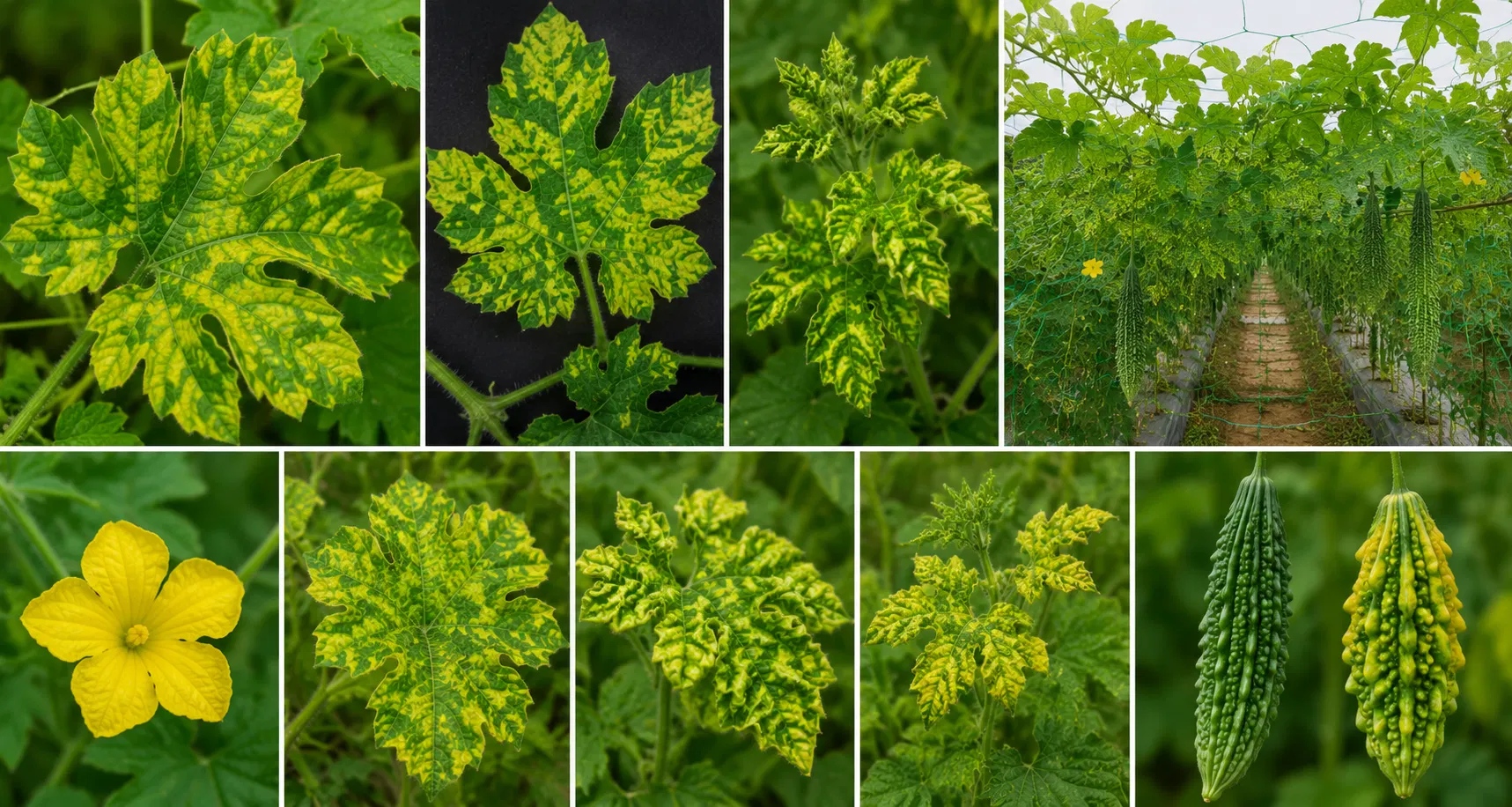
The most obvious symptom is a yellow and green mosaic pattern on the leaves. The leaf surface looks patchy, with irregular yellow spots mixed with healthy green areas. This is usually the first visible warning sign.
2. Leaf curling and distortion
Infected leaves often become curled, twisted, or misshapen. New leaves may appear smaller than normal and may not expand properly. As the virus spreads, the plant becomes weak and stunted.
3. Stunted plant growth
Virus-infected bitter gourd plants usually grow slowly. The vines remain short, weak, and less productive. This reduced growth directly affects flowering and fruit formation.
4. Reduced flowering and fruit set
Infected plants may produce fewer flowers, and many of those flowers may drop before setting fruit. Even when fruits do form, they may be fewer in number and smaller in size.
5. Fruit deformation and poor quality
The fruits may become twisted, discolored, or uneven in shape. In severe cases, the skin can show yellow patches or mosaic-like markings, making the crop unattractive in the market.
6. Overall decline in plant vigor
As the disease progresses, the plant looks weak and unhealthy. Leaves may become dull, the canopy may thin out, and the plant may fail to support normal fruit production.
Important: Once a plant is infected with Bitter Gourd Yellow Mosaic Virus, there is no direct cure. The best approach is early detection, removal of infected plants, and strict prevention of whitefly spread.
How the Virus Spreads
The virus is mainly transmitted by whiteflies, tiny sap-sucking insects that move from infected plants to healthy ones. When they feed on infected plant tissue, they pick up the virus and spread it to nearby plants.
The disease can also spread through:
- Infected seedlings or transplant materials
- Weeds that act as alternate hosts
- Poor field sanitation
- Nearby infected cucurbit crops
Because the virus spreads so efficiently through insect movement, controlling whiteflies is one of the most important steps in disease management.
Prevention of Bitter Gourd Yellow Mosaic Virus
Since there is no cure, prevention should begin before planting and continue throughout the crop cycle. A combination of clean planting material, insect control, and field hygiene gives the best protection.
1. Use healthy, virus-free seeds and seedlings
Always start with certified, disease-free planting material. Avoid using seedlings from uncertain sources, especially if they show yellowing, curling, or weak growth.
2. Control whiteflies early
Whitefly management is essential. Use an integrated approach to keep their population low:
- Install yellow sticky traps to monitor and reduce adult whiteflies
- Use reflective mulches to discourage whitefly landing
- Apply recommended insect control measures when needed
- Inspect the underside of leaves regularly for whitefly presence
3. Remove infected plants immediately
If a plant shows clear viral symptoms, remove it quickly from the field. This reduces the chance of the virus spreading to nearby healthy plants through whiteflies.
4. Keep the field free from weeds
Weeds can serve as alternative hosts for both whiteflies and viruses. Regular weeding around the crop and field borders helps break the disease cycle.
5. Practice crop rotation
Avoid planting bitter gourd or other cucurbit crops in the same area repeatedly. Rotating with non-host crops can reduce virus carryover in the field.
6. Maintain proper spacing
Good spacing improves airflow and makes it easier to monitor plants. Dense planting can create a favorable environment for pests and make disease management more difficult.
7. Monitor the crop regularly
Frequent inspection helps you catch symptoms and whitefly infestations early. Check new leaves, leaf undersides, and young shoots at least once or twice a week.
8. Use insect-proof netting in nurseries
If seedlings are raised in a nursery, protect them with insect-proof nets to prevent whitefly entry. Young plants are especially vulnerable to early infection.
Best Field Management Practices
Strong crop management can significantly reduce the risk of Bitter Gourd Yellow Mosaic Virus. Healthy plants are always better able to tolerate stress and produce better yields.
- Avoid excess nitrogen fertilizer, which can attract sucking pests
- Remove crop residues after harvest
- Disinfect tools if they are used across multiple plots
- Do not transplant weak or suspicious seedlings
- Keep surrounding vegetation under control
Why Early Action Matters
The earlier you act, the better your chances of saving the crop. A few infected plants can quickly become a major outbreak if whiteflies are allowed to move freely. Early control protects not just the current crop, but also future plantings in the same area.
For commercial growers, the disease can lead to serious economic losses because market demand depends on fruit appearance, uniformity, and yield. For home gardeners, it can mean poor harvests and wasted effort. Either way, prevention is far more effective than trying to manage the disease after it spreads.
Conclusion
Bitter Gourd Yellow Mosaic Virus is a serious threat, but it can be managed with careful observation and smart prevention. Watch for the early symptoms, control whiteflies consistently, remove infected plants quickly, and keep the field clean and well managed. These simple steps can make a big difference in protecting plant health and preserving yield.
If you grow bitter gourd, make disease prevention part of your routine from the start. Early action is the best defense against yellow mosaic virus and the key to a healthier, more productive crop.