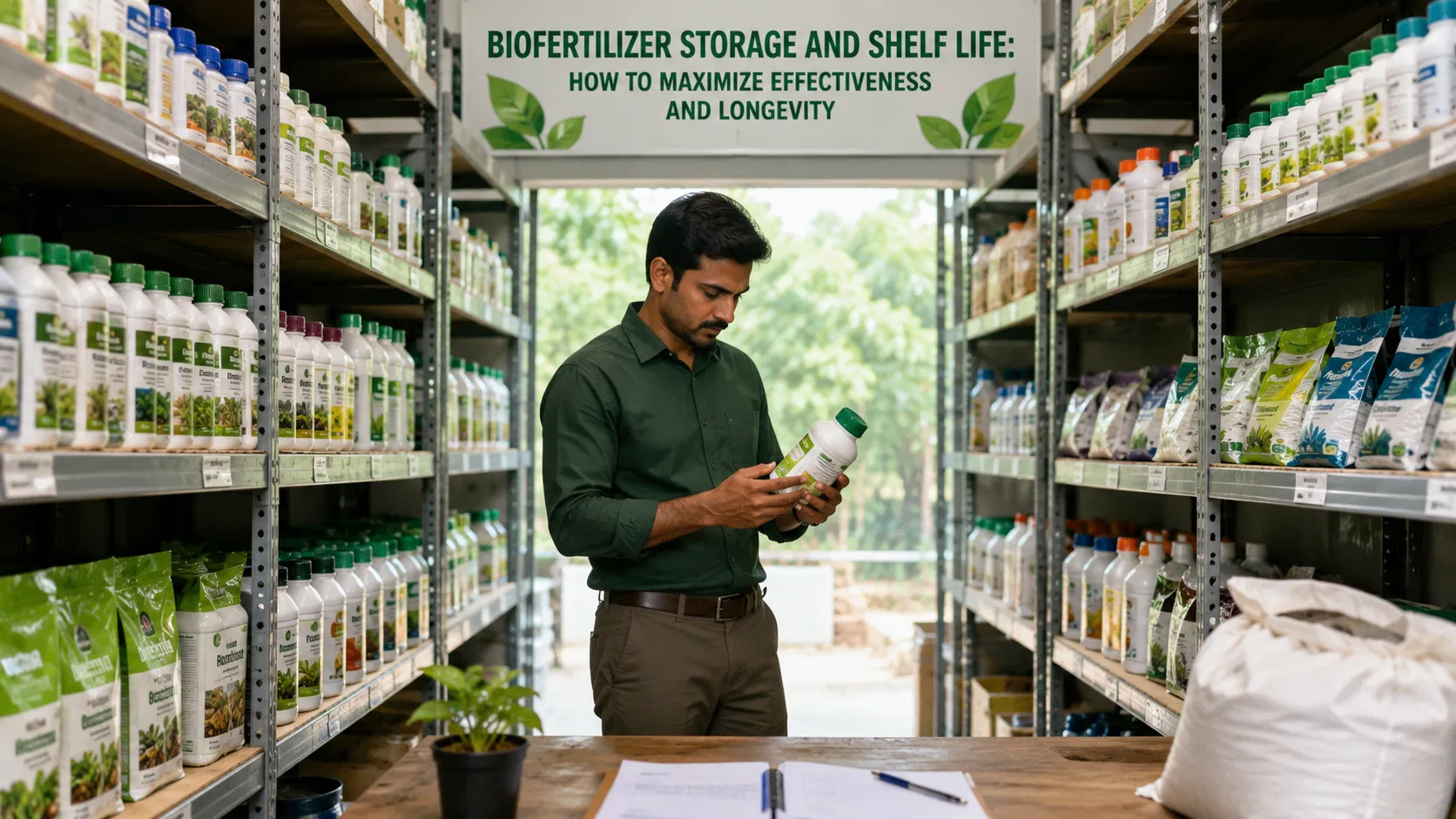
Biofertilizers contain living microorganisms, so quality declines when products are exposed to heat, sunlight, contamination, damaged packaging, or storage beyond the expiry date. Correct storage protects microbial viability from the retailer to the field.
Why Shelf Life Matters
The performance of bio-fertilizers depends on the number and activity of beneficial organisms at application. A packet may look normal even after microbial activity has declined, making temperature history and expiry dates important.
Main Factors Affecting Shelf Life
Temperature
High temperature speeds microbial decline. Keep products away from metal roofs, engines, hot walls, and direct sun. Some formulations are also damaged by freezing, so always follow the label range.
Sunlight
Ultraviolet radiation and heat can damage microorganisms. Keep products inside cartons or closed cupboards.
Moisture
Water entering dry formulations may cause contamination or instability. Damaged seals can also change product quality.
Packaging
Punctured packets, swollen containers, leaking bottles, and broken seals should be rejected.
Storage Do's
- Store in a cool, shaded, dry, ventilated place.
- Keep products in original sealed packaging.
- Check manufacture and expiry dates.
- Use older stock first.
- Separate microbial products from pesticides and disinfectants.
- Record batch numbers.
- Transport in covered vehicles.
Storage Don'ts
- Do not store near heaters, engines, or windows.
- Do not leave packets in vehicles.
- Do not open packs before they are needed.
- Do not use expired products.
- Do not transfer into unlabelled containers.
- Do not mix different batches.
How Storage Differs From Mineral Fertilizers
Mineral fertilizers may clump during poor storage, but biofertilizers face the additional risk that living organisms can die. Appearance alone does not confirm microbial quality.
Storage Before Seed Treatment
Keep the product sealed until the day of seed treatment. Prepare only the quantity needed for immediate use. Treated seed should generally be dried briefly in shade and sown soon afterward.
Can an Opened Pack Be Stored?
It is better to use the full pack after opening. When partial use is unavoidable, close it tightly, mark the opening date, and follow manufacturer guidance. Never return contaminated product to the original pack.
Mixing With Compost
For soil application, microbial products may be mixed with mature compost or well-decomposed manure. The carrier must be cool and slightly moist. Do not prepare the mixture far in advance unless the label permits it.
Warning Signs
- Expired date
- Broken or swollen package
- Leakage or unusual separation
- Unexpected odour
- Visible contamination
- Missing batch information
- Retail storage in direct sunlight
Warehouse and Transport Practices
- Use shelves above the floor.
- Monitor room temperature.
- Keep cartons away from external walls.
- Rotate stock by expiry date.
- Train staff to identify microbial inputs.
- Inspect packaging regularly.
Micronutrient Products Are Different
Mineral micronutrients and microbial products have different stability requirements. Do not assume they can be stored or mixed in the same way.
Final Thoughts
Biofertilizer shelf life depends on protection from heat, sunlight, moisture, contamination, and delayed use. Buy fresh stock, keep packages sealed, and apply before expiry so active microorganisms reach the crop in good condition.