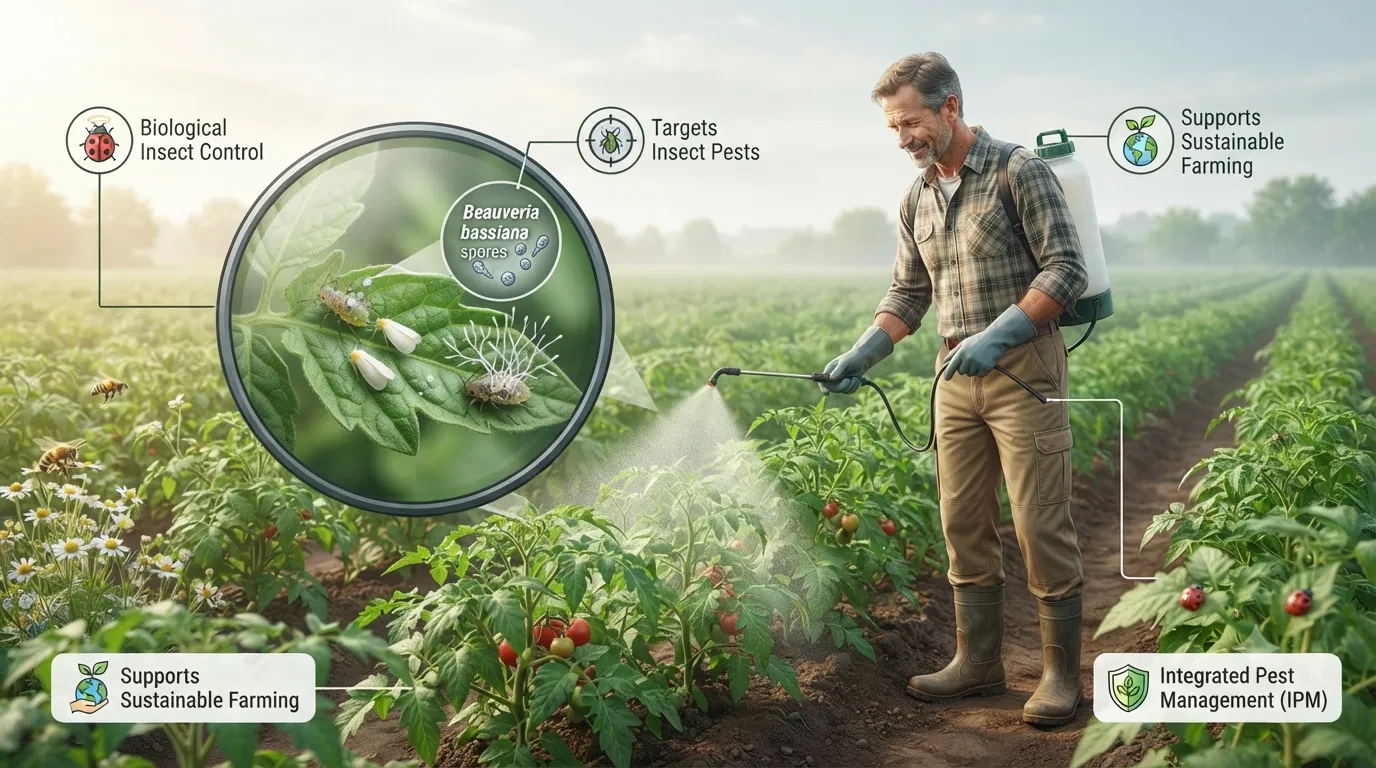
When insect pests start damaging crops, ornamental plants, or stored products, growers need a solution that works without creating long-term chemical resistance or harming beneficial insects. That is where Beauveria bassiana for insect pest management stands out. This naturally occurring entomopathogenic fungus has become one of the most valuable tools in modern biological control, offering a sustainable way to suppress a wide range of insect pests.
Unlike conventional insecticides that rely on direct toxicity, Beauveria bassiana infects insects through contact, grows inside the host, and eventually kills it. Because of this unique mode of action, it fits well into integrated pest management programs and helps reduce dependence on synthetic chemicals.
What Is Beauveria bassiana?
Beauveria bassiana is a naturally occurring soil fungus found in many environments around the world. It is known as an entomopathogenic fungus, meaning it can infect and kill insects. In commercial agriculture, it is formulated into biopesticides and used against pests in vegetables, fruits, greenhouse crops, turf, and even some stored-product systems.
One of the biggest advantages of Beauveria bassiana is its broad host range. It can target many different insect species, including:
- Whiteflies
- Aphids
- Thrips
- Mealybugs
- Beetles
- Caterpillars
- Termites
- Some flies and weevils
Because it acts biologically rather than chemically, it is often used as part of an eco-friendly pest management strategy.
How Beauveria bassiana Works Against Insect Pests
The infection process is what makes this fungus so effective. After spores come into contact with the insect's outer body, they attach to the cuticle and begin to germinate. The fungus then penetrates the insect's exoskeleton, spreads inside the body, and disrupts vital functions.
The infection cycle includes these key steps:
- Spore contact: The fungal spores land on the insect.
- Attachment and germination: The spores begin growing under favorable conditions.
- Penetration: The fungus breaks through the insect cuticle.
- Internal growth: It multiplies inside the host and weakens the insect.
- Death: The insect dies from infection and tissue destruction.
- Spore production: Under suitable humidity, new spores may form on the dead insect, allowing further spread.
This process takes time, so Beauveria bassiana is not a fast knockdown insecticide. Instead, it provides steady control, making it especially useful in preventive and long-term management programs.
Beauveria bassiana offers a biological, targeted, and sustainable approach to insect pest control without the heavy environmental burden of many synthetic pesticides.
Benefits of Beauveria bassiana for Insect Pest Management
Growers and pest managers choose Beauveria bassiana because it delivers several important benefits. It is especially valuable where resistance, residue concerns, and environmental safety are major priorities.
1. Effective against many pest species
Its broad activity makes it a practical option for managing multiple pests in one system. This is especially useful in greenhouse and high-value crop production.
2. Compatible with integrated pest management
Beauveria bassiana works well alongside cultural controls, biological predators, and selective insecticides. This makes it a strong fit for integrated pest management programs.
3. Lower risk of resistance
Because it has a different mode of action from conventional chemicals, it can help reduce resistance pressure in pest populations.
4. Reduced impact on beneficial organisms
When used correctly, it is generally less disruptive to pollinators, predators, and parasitoids than broad-spectrum insecticides.
5. Suitable for organic and sustainable systems
Many formulations are allowed in organic production or regenerative farming systems, depending on local regulations and product approval.
Best Conditions for Successful Use
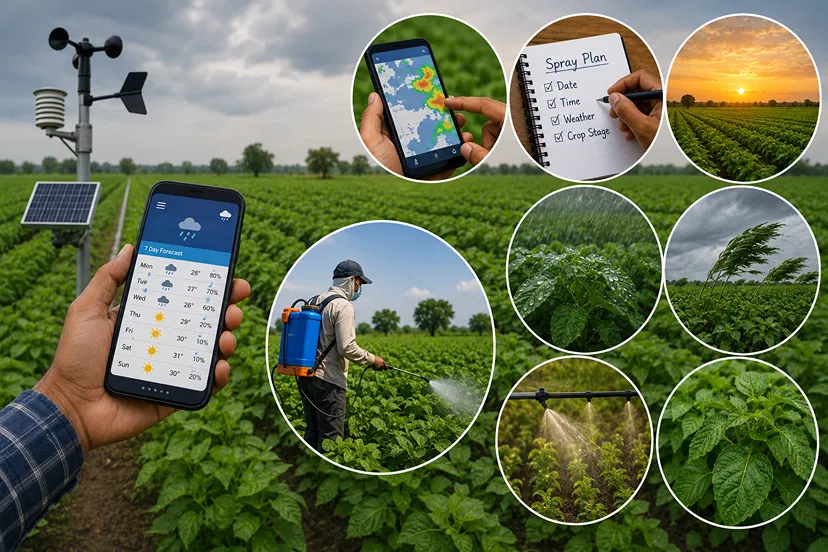
To get the best results from Beauveria bassiana insect control, environmental conditions and application timing matter. The fungus needs specific conditions to infect pests effectively.
- Humidity: High humidity improves spore germination and infection success.
- Temperature: Moderate temperatures are usually best, depending on the product label.
- Direct contact: The spores must reach the pest, so thorough coverage is essential.
- Early pest pressure: Applications work best when pest populations are still low to moderate.
- Low UV exposure: Sunlight can reduce spore viability, so evening or shaded applications may help.
Because Beauveria bassiana is a living biological agent, storage, handling, and application practices are critical. Always follow label directions for mixing, spray volume, timing, and reapplication intervals.
Common Uses in Crop Protection
Beauveria bassiana is used across a wide range of crops and pest situations. Its versatility makes it a useful option in both open-field and protected cultivation.
Greenhouse crops
Greenhouses often provide favorable humidity levels for fungal activity, making Beauveria bassiana particularly effective against whiteflies, aphids, thrips, and fungus gnats.
Vegetable production
Vegetable growers use it to manage pests that feed on leaves, stems, and fruit, helping reduce crop damage and market losses.
Fruit and orchard systems
It can be incorporated into orchard spray programs to suppress certain beetles, weevils, and other insect pests.
Stored-product and structural pest control
Some formulations are used against pests in storage facilities or around structures, depending on product registration and label approval.
Application Tips for Better Results
Using Beauveria bassiana successfully is not just about choosing the right product. It also depends on smart application practices. A well-timed application can make a major difference in pest suppression.
- Apply when target pests are active and present on plant surfaces.
- Ensure complete coverage, especially on undersides of leaves and hidden pest sites.
- Avoid tank mixes that may reduce fungal viability unless compatibility is confirmed.
- Reapply as recommended, especially during ongoing pest pressure.
- Monitor pest populations before and after treatment to evaluate performance.
In many cases, Beauveria bassiana works best as a preventative or early intervention tool rather than a rescue treatment during severe infestations.
Limitations to Keep in Mind
Although Beauveria bassiana is highly useful, it is not a one-size-fits-all solution. Understanding its limitations helps set realistic expectations and improve overall pest control outcomes.
- It acts more slowly than chemical insecticides.
- Performance can drop under dry conditions.
- UV light can reduce effectiveness after spraying.
- It may require repeated applications for ongoing control.
- Success depends on good coverage and proper timing.
These limitations do not reduce its value; they simply highlight the importance of using it as part of a broader pest management strategy.
Why Beauveria bassiana Matters in Modern Agriculture
As growers face increasing pressure to reduce chemical inputs, protect beneficial insects, and manage resistance, Beauveria bassiana for insect pest management has become more relevant than ever. It supports more sustainable farming while still delivering meaningful pest suppression.
Its role is especially important in systems where residue limits, consumer demand, and environmental stewardship all matter. By combining Beauveria bassiana with monitoring, sanitation, resistant varieties, and selective controls, growers can build a stronger and more resilient pest management program.
Conclusion
Beauveria bassiana is more than just a biological pesticide. It is a practical, science-based tool that helps growers manage insect pests with less environmental impact and less reliance on conventional chemicals. When used under the right conditions and as part of an integrated pest management plan, it can deliver consistent, sustainable results.
If you are looking for a natural way to improve crop protection, reduce pest pressure, and support a healthier growing system, Beauveria bassiana for insect pest management deserves a serious place in your strategy.