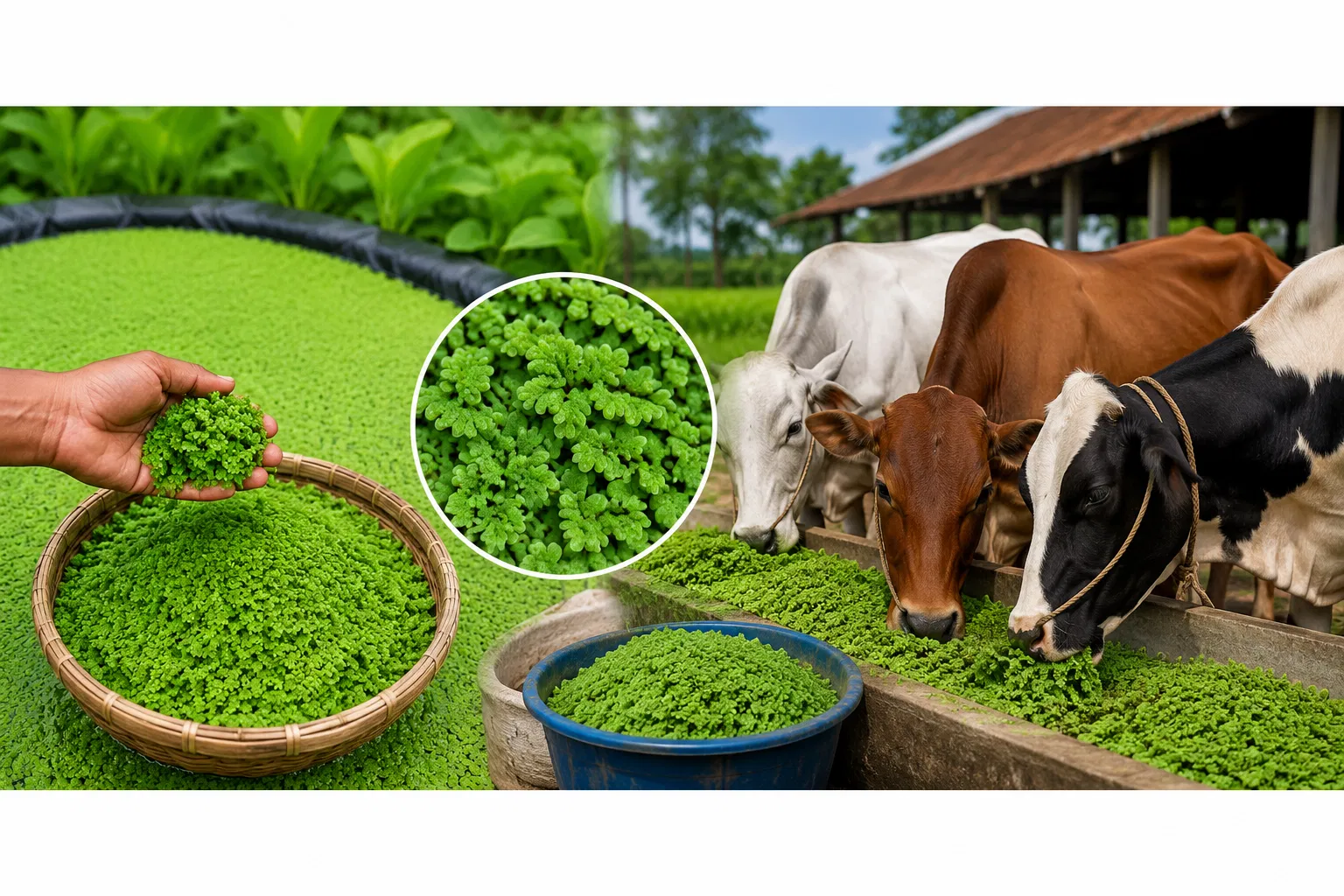
Feeding cattle profitably is one of the biggest challenges for livestock farmers, especially when conventional protein sources keep getting more expensive. If you are looking for a natural, affordable, and highly nutritious alternative, azolla as cattle feed is worth serious attention. This tiny floating fern may look simple, but it can deliver impressive nutritional value and help reduce feed costs without compromising animal health and productivity.
Azolla has become increasingly popular among farmers who want a sustainable cheap protein source for cattle. It grows quickly, requires minimal land, and can be cultivated in small ponds or tanks. More importantly, it contains valuable protein, minerals, and vitamins that support growth, milk production, and overall livestock performance.
What Is Azolla?
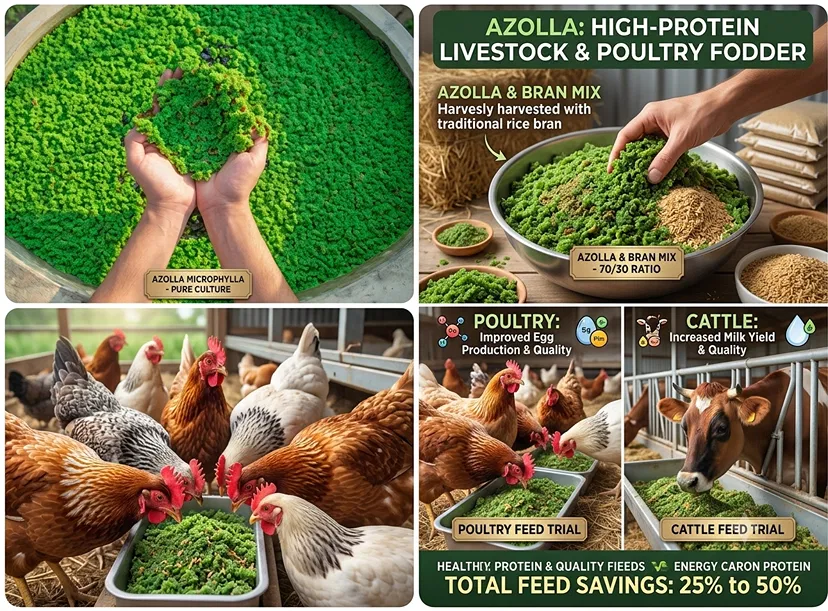
Azolla is a free-floating aquatic fern that thrives on water surfaces. It grows in a symbiotic relationship with nitrogen-fixing algae, which helps it accumulate nutrients naturally. Because of this, azolla is often called a "green gold" crop in animal nutrition.
For cattle farmers, azolla is attractive because it can be harvested frequently and used fresh as feed. It is especially useful in areas where commercial protein feeds such as soybean meal, groundnut cake, or cottonseed cake are too costly or hard to source consistently.
Why Use Azolla as Cattle Feed?
One of the biggest reasons farmers are turning to azolla is its nutrient profile. Fresh azolla can contain:
- Protein: often around 20% to 30%
- Minerals: including calcium, iron, phosphorus, and magnesium
- Vitamins: such as vitamin A and several B vitamins
- Fiber: helpful for rumen function when fed properly
This makes azolla a strong supplement for cattle feed, particularly for dairy cows, calves, and growing animals. While it should not replace all conventional feed, it can significantly reduce dependence on expensive protein ingredients.
Azolla is not just a feed ingredient; it is a cost-saving strategy for livestock farmers seeking better nutrition on a budget.
Benefits of Azolla for Cattle
1. Low-Cost Protein Source
Protein feed is often the most expensive part of a cattle ration. Azolla offers a budget-friendly alternative that can be grown on-farm with relatively low input costs. Once the growing system is set up, farmers can harvest it regularly and reduce feed expenses.
2. Supports Milk Production
Dairy farmers often use azolla as a supplement to improve milk yield and quality. When combined with a balanced ration, azolla can help meet the protein needs of lactating cows, which may lead to better performance.
3. Improves Weight Gain
For calves and fattening cattle, azolla can support healthy growth when included as part of a well-planned feeding program. Its nutrient content contributes to muscle development and overall body condition.
4. Easy to Produce
Azolla can be grown in shallow pits, cement tanks, or plastic-lined beds. It does not require large farmland, making it practical for smallholder farmers and backyard livestock systems.
5. Environmentally Friendly
Unlike many commercial feed ingredients, azolla is sustainable and can be cultivated using organic manure and minimal resources. It helps farmers produce feed locally, reducing dependence on external suppliers.
How to Feed Azolla to Cattle
Azolla should be introduced gradually into the ration so cattle can adapt to it. It is best used as a supplementary feed rather than the sole feed source.
Feeding Recommendations
- Start with small quantities and increase slowly
- Mix fresh azolla with regular fodder or concentrate feed
- Feed it clean and fresh to maintain quality
- Ensure cattle always have access to roughage and clean water
For dairy cows, azolla is often mixed with other feed ingredients or given alongside green fodder. Calves may benefit from smaller amounts, while adult cattle can handle larger supplemental portions depending on the total diet.
How to Grow Azolla for Livestock Feed
One of the best parts about using azolla as cattle feed is that farmers can grow it themselves. A simple azolla unit can be established with basic materials.
Basic Requirements
- Shallow water bed or tank
- Partial shade
- Clean water
- Organic manure or nutrient source
- Starter azolla culture
Simple Cultivation Steps
- Prepare a shallow pit or tray and line it if necessary.
- Add a thin layer of soil and water to create a suitable bed.
- Introduce organic nutrients, such as cow dung slurry, in controlled amounts.
- Release the azolla starter culture into the water surface.
- Maintain moisture, shade, and cleanliness.
- Harvest regularly, usually every few days, to prevent overcrowding.
With proper management, azolla can multiply rapidly and provide a steady supply of fresh feed. Clean water and consistent nutrient management are essential to avoid contamination and poor growth.
Precautions When Feeding Azolla to Cattle
Although azolla has many advantages, it should be used wisely. Feeding too much at once or using contaminated azolla can cause problems.
- Do not overfeed: Introduce it gradually to avoid digestive upset.
- Use clean cultivation methods: Avoid polluted water or unsafe waste materials.
- Balance the ration: Azolla works best when combined with other feeds.
- Monitor animal response: Watch for changes in intake, health, or manure consistency.
Like any feed ingredient, quality matters. Fresh, clean, and properly grown azolla gives the best results.
Is Azolla a Complete Replacement for Cattle Feed?
No, azolla should not be considered a complete replacement for all cattle feed. It is best viewed as a protein-rich supplement that can reduce feeding costs and improve nutritional balance. Cattle still need adequate roughage, energy sources, minerals, and water to remain healthy and productive.
When integrated into a broader feeding plan, azolla can be a valuable tool for lowering expenses while maintaining performance. That is why it is especially popular among dairy farmers and small-scale livestock producers seeking affordable nutrition solutions.
Conclusion
Azolla as cattle feed offers farmers a practical way to cut costs and provide a reliable source of natural protein. It is easy to grow, rich in nutrients, and highly useful as part of a balanced ration for dairy cows, calves, and other livestock. For farmers struggling with expensive feed prices, azolla can be a smart and sustainable solution.
If you want to improve herd nutrition while keeping feed expenses under control, consider starting a small azolla production system on your farm. With proper management, this low-cost feed ingredient can become a valuable part of your livestock feeding strategy and help support better productivity over time.