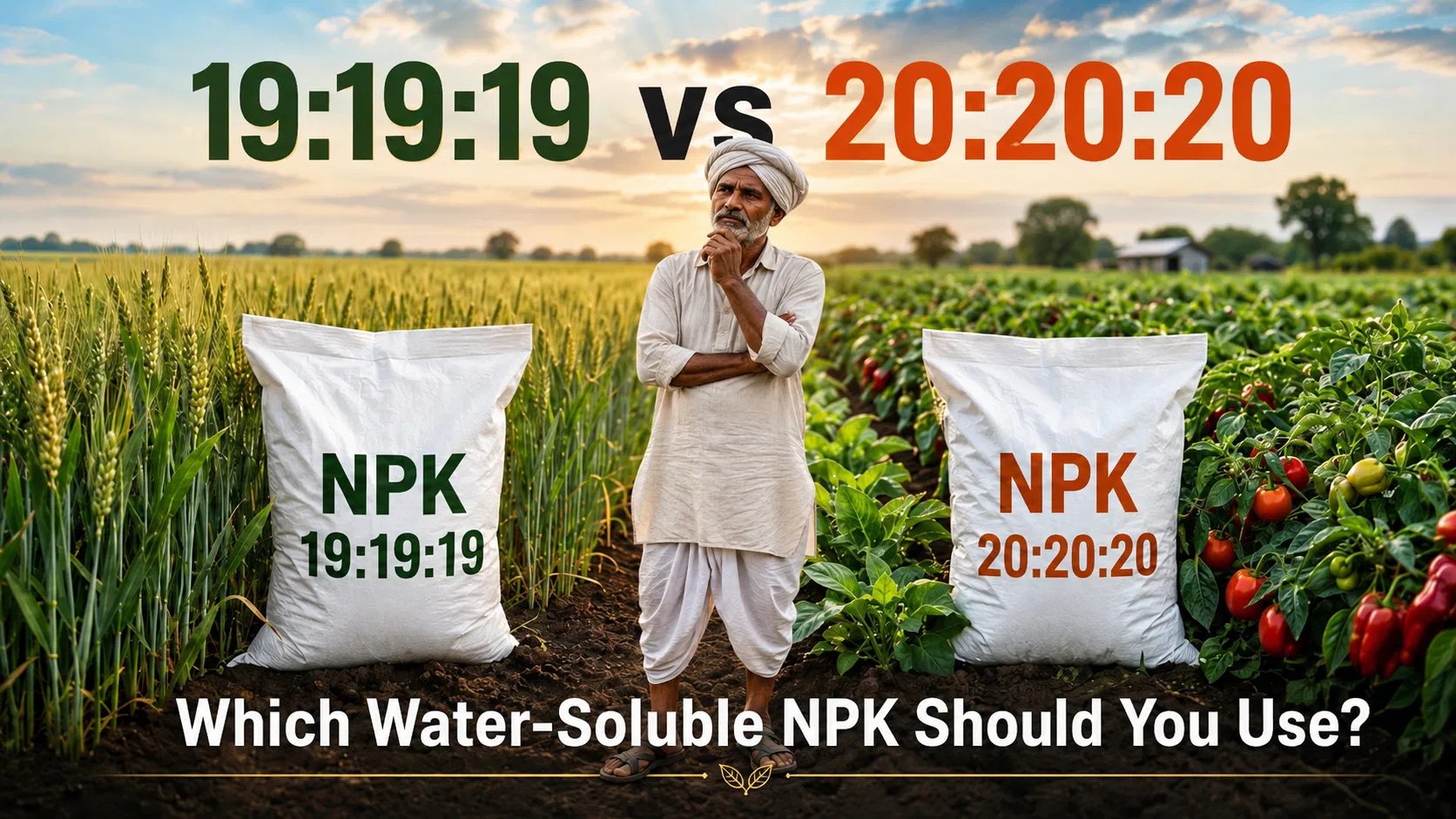
When plants need a fast, balanced boost, water-soluble NPK fertilizers often become the go-to choice. Two of the most popular options are 19-19-19 and 20-20-20. At first glance, they look almost identical—and in many cases, they perform very similarly. But if you are trying to decide which water-soluble NPK fertilizer is better for your crops, garden, or greenhouse, the small difference between them can matter more than you think.
Choosing the right fertilizer is not just about picking a number. It is about matching nutrient strength, crop stage, growing conditions, and application goals. In this guide, we will break down the difference between 19-19-19 and 20-20-20 so you can choose the right option with confidence.
What Do 19-19-19 and 20-20-20 Mean?
Both fertilizers are balanced NPK fertilizers, which means they contain equal proportions of nitrogen (N), phosphorus (P), and potassium (K).
- 19-19-19 contains 19% nitrogen, 19% phosphorus, and 19% potassium.
- 20-20-20 contains 20% nitrogen, 20% phosphorus, and 20% potassium.
The difference is simple: 20-20-20 is slightly more concentrated. That extra 1% of each nutrient may seem minor, but it can affect feeding rates, cost efficiency, and the risk of over-application.
19-19-19 vs 20-20-20: Key Differences
1. Nutrient Concentration
20-20-20 has a slightly higher nutrient content, so it delivers a little more feeding power per application. This can be useful when you want stronger nutrition in a smaller dose.
2. Application Flexibility
19-19-19 is often preferred when growers want a bit more control. Because it is slightly less concentrated, it may be easier to use in situations where plants are sensitive or feeding programs need a gentler approach.
3. Cost Efficiency
In many cases, 20-20-20 may offer slightly better nutrient value because you get more active ingredients per kilogram or pound. However, actual value depends on pricing, brand quality, and crop requirements.
4. Risk of Overfeeding
Because 20-20-20 is stronger, it can increase the chance of fertilizer burn if mixed too heavily or applied too often. For beginners or delicate crops, 19-19-19 may feel safer.
When Should You Use 19-19-19?
19-19-19 water-soluble fertilizer is a smart choice when you want balanced nutrition without pushing concentration too high. It works well in a variety of growing settings.
- Young plants and seedlings that need gentle feeding
- Indoor plants with controlled nutrition requirements
- Greenhouse crops where precise feeding is important
- Regular maintenance programs for vegetables, ornamentals, and fruit crops
- Sensitive plants that may react to stronger nutrient solutions
If your crop is already receiving steady nutrition and you want a balanced top-up, 19-19-19 is often enough to support healthy growth without overdoing it.
When Should You Use 20-20-20?
20-20-20 fertilizer is ideal when you need slightly stronger balanced feeding and want a universal fertilizer that works across many crops.
- Fast-growing vegetables that need steady nutrient support
- Flowering ornamentals requiring balanced growth
- Fruit and vegetable transplants establishing quickly
- Hydroponic or fertigation systems where precise solubility matters
- General crop nutrition when soil tests show balanced deficiency correction is needed
Because it is a little more concentrated, 20-20-20 can be a good choice for growers who are comfortable adjusting application rates and monitoring plant response closely.
Which One Is Better for Plants?
There is no universal winner. The better fertilizer depends on what your plants need and how you feed them.
Choose 19-19-19 if you want slightly milder feeding and a lower risk of over-application.
Choose 20-20-20 if you want a slightly stronger, more concentrated balanced fertilizer.
For most growers, the practical difference is not dramatic. Both fertilizers are useful, both are balanced, and both can support healthy vegetative growth. The right choice comes down to crop sensitivity, application method, and your nutrient management strategy.
How to Decide Between 19-19-19 and 20-20-20
Ask yourself these questions before choosing a water-soluble NPK fertilizer:
- What stage are the plants in? Seedlings and transplants often do better with gentler feeding.
- How sensitive is the crop? Delicate plants may respond better to 19-19-19.
- Are you using fertigation or foliar feeding? More concentrated products may require tighter control.
- Do you need a stronger feeding program? If yes, 20-20-20 may be the better fit.
- What does your soil or water test show? Nutrient management should always start with data when possible.
If you are unsure, start with the lower-risk option and monitor plant growth, leaf color, and overall vigor. Adjust gradually instead of making large jumps in dosage.
Best Practices for Using Water-Soluble NPK Fertilizers
Whether you choose 19-19-19 or 20-20-20, correct use matters more than the number on the label.
- Always follow label instructions for dilution and application rate.
- Dissolve completely before applying to avoid clogging and uneven feeding.
- Apply consistently rather than overloading plants in one feeding.
- Test on a small area first if you are using a new fertilizer brand or crop.
- Monitor plant response for changes in color, growth rate, and leaf quality.
Water-soluble fertilizers are powerful tools, but they work best when paired with careful observation and proper timing.
Common Mistakes to Avoid
Even balanced fertilizers can cause problems if used incorrectly. Avoid these common mistakes:
- Using too much fertilizer because the product is “balanced”
- Ignoring crop stage and applying the same rate to all plants
- Mixing with incompatible products without checking solubility and compatibility
- Feeding stressed plants too heavily before they recover
- Assuming 20-20-20 is always better just because it has slightly more nutrients
Balanced NPK fertilizers are most effective when they are used as part of a broader nutrition plan, not as a one-size-fits-all solution.
Final Verdict: 19-19-19 vs 20-20-20
If you want a simple answer, here it is: 19-19-19 is the gentler option, and 20-20-20 is the slightly stronger option. That small difference can matter in precision feeding, but both are excellent water-soluble NPK fertilizers for general plant nutrition.
For sensitive crops, seedlings, or growers who want a safer margin, 19-19-19 is often the better pick. For more robust feeding programs, hydroponics, or situations where a little more nutrient strength is useful, 20-20-20 may be the better fit.
The best fertilizer is the one that matches your plants, your system, and your goals. Start with your crop needs, apply carefully, and let the plants guide your next step.
Need the most reliable results? Choose the product that fits your feeding schedule, follow the recommended dosage, and keep monitoring plant response. That is how balanced nutrition turns into strong, healthy growth.