Wet rot is the fastest-moving disease a chilli grower is likely to meet. After a long wet spell, shoot tips and flowers that looked healthy in the morning can be soft, brown and hanging by the next day. It strikes only the tender parts of the plant, which happens to be exactly where the next flush of fruit was going to come from, so the damage lands on yield rather than on foliage. The disease is entirely weather-driven and often stops on its own once dry conditions return, but during a prolonged monsoon break it can strip a crop of flowers and young fruit repeatedly.
Symptoms
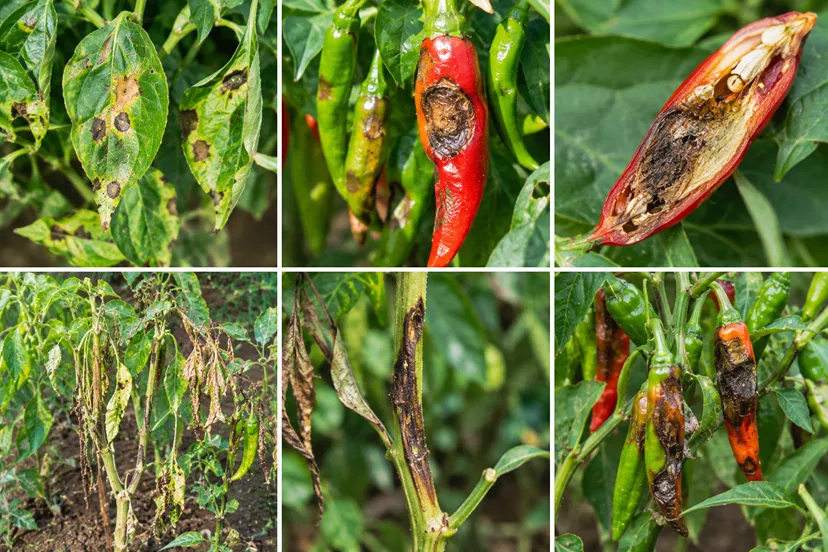
- Soft, water-soaked, wet-looking lesions on tender shoot tips, flower buds, flowers and young fruits
- Rapid collapse of the affected shoot, which droops and hangs within a day or two of infection starting
- Dense fungal growth on the rotted surface bearing whisker-like structures, seen as dark pin-heads on fine silvery-white stalks
- Flowers rotting first, with the infection then travelling down the flower stalk into the shoot
- Young fruits rotting from the calyx end, turning soft and dropping while still small
- Rot that stops abruptly where the stem turns woody, since the fungus attacks only soft tender tissue
- A foul, wet smell around affected shoots, quite unlike the dry lesions of other chilli diseases
Causes
- Choanephora cucurbitarum, a fast-growing opportunistic fungus that lives on decaying organic matter and turns pathogenic when conditions suit it
- Prolonged rain and humidity above 90 per cent with warm temperatures, which is the single condition the disease depends on; without free water on the plant it cannot establish
- Water sitting on flowers and shoot tips from heavy dew, continuous rain or overhead irrigation
- Ageing and senescing flowers and petals left on the plant, which the fungus colonises first before moving into healthy tissue
- Wounds from hail, strong wind, insect feeding or mechanical damage during intercultural operations, which give the fungus its entry point
- Dense canopies with poor air movement, where the foliage stays wet for long hours after rain
- Excess nitrogen, which produces the soft succulent growth the fungus attacks most readily
- Decaying crop residue, weeds and organic matter in and around the field, where the fungus survives between outbreaks
How to Identify
The fungal growth itself is the confirming sign and nothing else in chilli resembles it. Hold a rotted shoot or flower in good light and look for a fuzzy layer carrying tiny dark heads on fine, silvery, hair-like stalks, which give the disease its whiskered appearance. If those are present, the diagnosis is settled.
The texture is the other clear marker. Wet rot is soft, wet and slimy, quite different from anthracnose, which produces dry sunken lesions with concentric black rings on the fruit. It is also confined to tender tissue and stops where the stem hardens, which separates it from Phytophthora stem blight, where the lesion girdles the stem at the collar and the whole plant wilts and dies.
Timing helps too. Wet rot appears within a day or two of a heavy wet spell and concentrates on flowers, buds and growing tips rather than spreading evenly across the plant. Inspect the crop immediately after continuous rain, focusing on the flowering zone and the youngest growth, and check again two days later since fresh infections keep appearing as long as the canopy stays wet.
Control Methods
Chemical Control
1. Picoxystrobin 6.78% + Tricyclazole 20.33% w/w SC
This combination brings together two unrelated modes of action. Picoxystrobin is a strobilurin that blocks electron transfer in the fungal mitochondria, cutting off energy production and halting growth. Tricyclazole blocks melanin biosynthesis, which the fungus needs to build the pressure required to push through the plant surface, so treated spores cannot penetrate the tissue at all. The formulation moves systemically and translaminarly, spreads through the leaf wax layer and redistributes across the canopy, which matters on a crop where flowers and shoot tips are difficult to coat evenly. It is labelled for wet rot in chilli along with anthracnose and powdery mildew, so a single spray covers the other two diseases likely to be active in the same wet weather.
Product Recommendation
When and How to Spray
Timing decides the value of the spray with this disease. Because infection follows wet weather within a day or two and the fungus works faster than it can be cured, apply preventively when a prolonged wet spell is forecast or as soon as the first affected shoots appear, rather than waiting for the rot to spread. Direct the spray into the flowering zone and the upper growing points where infection begins, and use enough water to wet the tender growth thoroughly.
Since this is the only chemistry registered for wet rot in chilli, resistance management deserves attention. Picoxystrobin belongs to the strobilurin group, which loses effectiveness when used repeatedly, so keep to two or three applications in a season at most and do not spray it back to back. Where anthracnose or powdery mildew is being treated in the same crop with a strobilurin-containing product, count those sprays towards the same limit. Cultural measures have to carry more of the load here than they would for a disease with several registered options.
Cultural Control
- Open up the canopy with wider spacing and staking so air moves through the crop and the foliage dries quickly after rain, which removes the condition the fungus depends on
- Irrigate through drip rather than overhead sprinklers, and water in the morning so nothing stays wet on flowers and shoot tips overnight
- Cut out affected shoots well below the rotted portion into healthy tissue, and carry them out of the field to destroy rather than dropping them between rows
- Pick off spent flowers and dropped petals where practical, since ageing flower tissue is where the fungus establishes before moving into the plant
- Stay out of the crop for intercultural work and harvesting while the foliage is wet, because fresh wounds on wet tissue are exactly what the fungus needs
- Clear decaying plant residue, weeds and organic debris from the field and its borders, where the fungus lives between outbreaks
- Keep nitrogen at the recommended dose and split it, since lush soft growth is far more susceptible than hardened tissue
- Maintain proper drainage so water does not stand in the field during the monsoon
- Manage insect pests that chew and puncture tender growth, as their feeding wounds open the way for infection
Conclusion
Wet rot is a weather disease before it is a fungal one. It needs prolonged wetness on soft tissue to take hold, and it fades once the canopy starts drying, which means most of the control comes from managing moisture rather than from spraying. Open the canopy, shift to drip irrigation, stay out of a wet crop, and cut away affected shoots as soon as the whiskered growth appears. Keep a picoxystrobin and tricyclazole spray ready for the forecast wet spell and apply it before the rot spreads rather than after, remembering that it is the only registered option and needs to be used sparingly. Handled this way, a long monsoon break costs a few shoots rather than a whole flush of fruit.
Disclaimer: Always confirm current label registration, approved dosage, water volume, and pre-harvest interval (PHI) for your state before using any product, since labels are periodically revised by regulatory authorities.
This guide is a general advisory. Do your own research and verification before using any product. Always confirm suitability for your crop stage, region, and field conditions before making any purchase, spray, or crop-management decision.