Water is too valuable to waste, especially when every drop can make a difference in crop health, landscape performance, and long-term savings. A well-designed trickle irrigation system delivers water slowly and directly to the root zone, helping plants thrive while reducing runoff, evaporation, and unnecessary labor. Whether you manage a garden, orchard, vineyard, or commercial landscape, understanding how to design and maintain a trickle irrigation system is key to getting reliable results season after season.
What Is a Trickle Irrigation System?
A trickle irrigation system, often called drip irrigation, is a low-pressure method that releases water gradually through emitters, tubing, or micro-sprayers. Instead of flooding an entire area, the system targets the base of each plant or a specific root zone. This makes it one of the most efficient irrigation methods available.
Because water is applied slowly, soil has time to absorb moisture without excess loss. That means healthier plants, better root development, and more consistent irrigation performance in a wide range of conditions.
Why Trickle Irrigation Is Worth Considering
Trickle irrigation has become a popular choice for both homeowners and professional growers because it solves many common watering problems. Compared with overhead sprinklers, it offers several important advantages:
- Water efficiency: Delivers moisture directly where plants need it most.
- Reduced evaporation: Less water is lost to sun and wind.
- Lower weed growth: Dry areas between plants discourage weeds.
- Healthier plants: Leaves stay drier, reducing disease pressure.
- Flexibility: Works well in gardens, orchards, greenhouses, and slopes.
- Labor savings: Automates watering and reduces manual work.
“The best irrigation system is not the one that uses the most water, but the one that uses water exactly where it is needed.”
Key Components of a Trickle Irrigation System
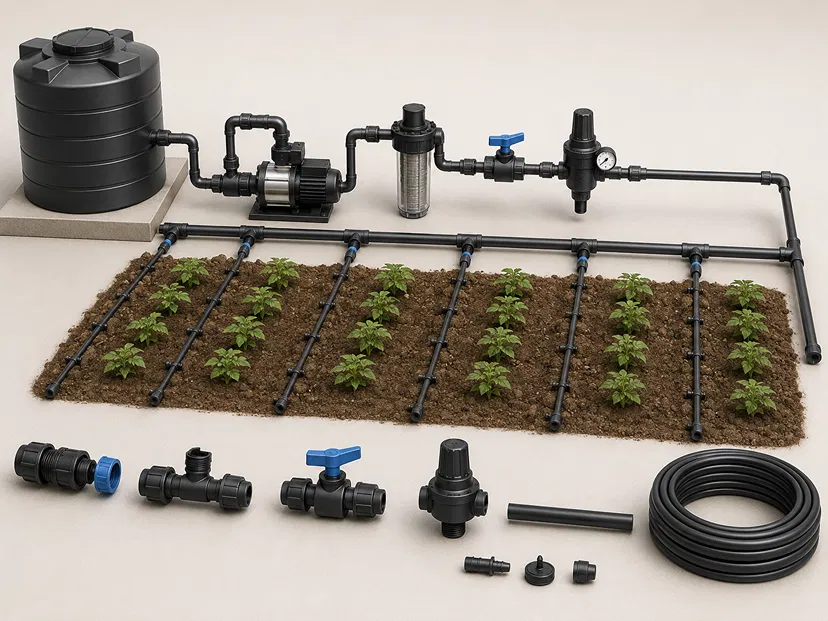
Before designing a system, it helps to understand the main parts. A successful trickle irrigation setup depends on each component working together.
1. Water Source
This can be a municipal supply, well, pond, tank, or rainwater harvesting system. The source must provide enough flow and pressure for the full system.
2. Filter
Filtering is essential because tiny emitters can clog easily. A good filter removes sand, debris, and organic material before water enters the lines.
3. Pressure Regulator
Trickle systems operate at low pressure. A pressure regulator helps protect tubing and emitters from damage while keeping water output consistent.
4. Mainline and Submain Tubing
These larger pipes carry water from the source to different zones in the landscape or field.
5. Drip Tubing or Emitters
These deliver water at a controlled rate. Some systems use built-in emitters, while others use separate drip emitters or microtubes.
6. Fittings, Valves, and Timers
These parts control distribution, allow zone management, and automate watering schedules. A timer is especially useful for maintaining consistency.
How to Design a Trickle Irrigation System
A good design starts with a clear plan. The goal is to match water delivery to plant needs, soil type, and site conditions.
Step 1: Assess the Site
Begin by identifying:
- Plant types and spacing
- Soil texture and drainage
- Slope or elevation changes
- Available water pressure and flow rate
- Sun exposure and wind conditions
Sandy soil may require shorter, more frequent watering cycles, while clay soil often needs slower application to avoid runoff. Sloped areas may need pressure-compensating emitters for even distribution.
Step 2: Group Plants by Water Needs
Not all plants need the same amount of water. Grouping plants with similar irrigation requirements into zones improves efficiency and prevents overwatering or underwatering.
Step 3: Calculate Flow Requirements
Every emitter and line in the system contributes to total flow demand. Make sure the water source can support the combined output of each irrigation zone. If flow is too high for the supply, pressure will drop and performance will suffer.
Step 4: Choose the Right Emitter Type
Select emitters based on plant size, root spread, and soil conditions:
- Point-source emitters: Best for individual plants, trees, and shrubs.
- Inline drip tubing: Ideal for rows, beds, and dense plantings.
- Micro-sprayers: Useful for wider root zones or ground cover areas.
For many installations, pressure-compensating emitters are a smart choice because they maintain consistent flow across uneven terrain or long runs.
Step 5: Plan Line Layout Carefully
Keep tubing runs efficient and direct. Avoid sharp bends, unnecessary loops, and excessive length. Place emitters near the active root zone, not too close to the stem or trunk.
It is also important to account for future plant growth. What seems adequate today may need adjustment as roots spread and canopies expand.
Step 6: Add Automation
A timer or smart controller improves reliability and helps maintain proper moisture levels. Set schedules based on weather, season, and plant demand rather than a fixed routine year-round.
Installation Best Practices
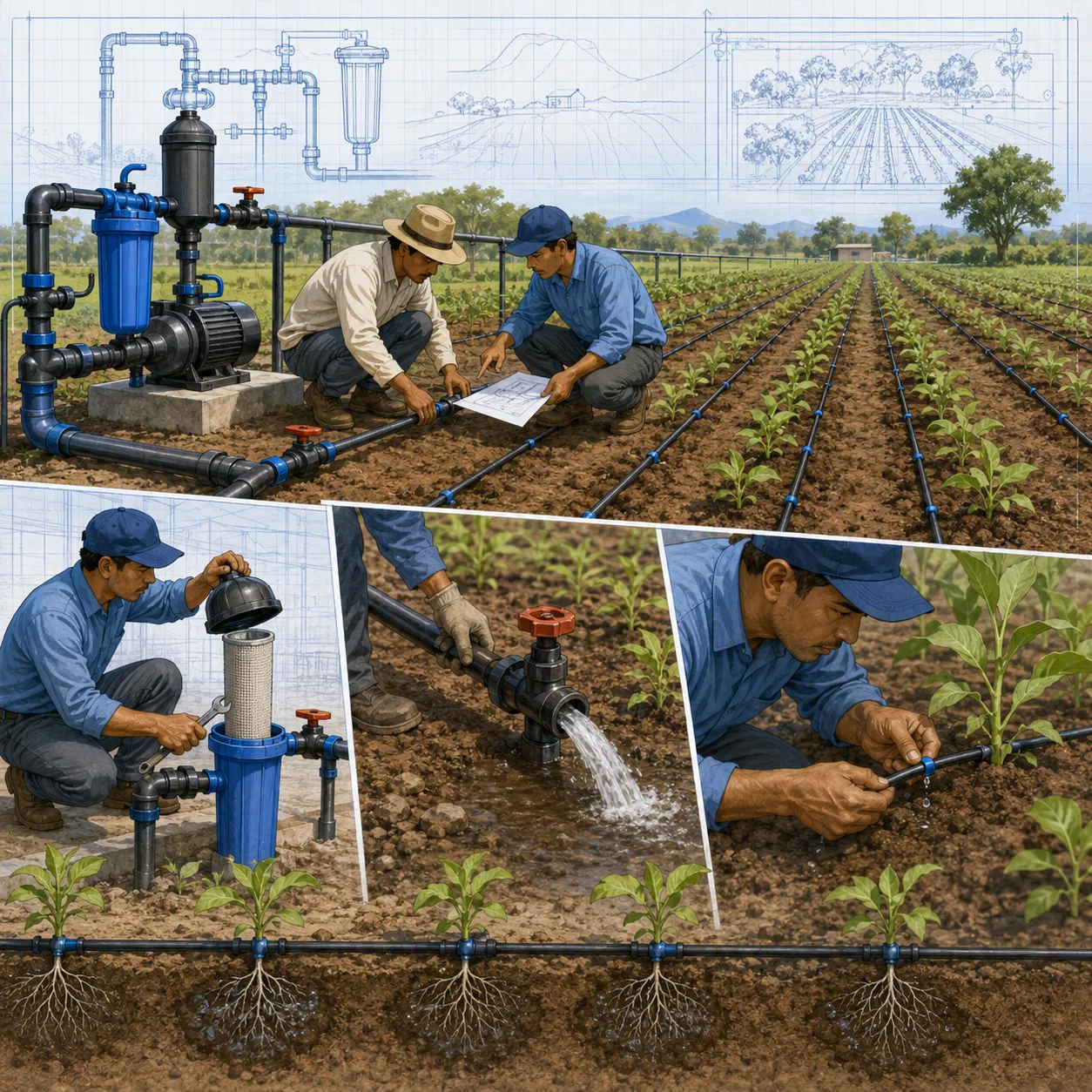
Even the best design can fail if installation is rushed. Following a few best practices helps ensure long-term performance:
- Flush lines before final emitter installation to remove debris.
- Use the correct tubing diameter for the zone size.
- Secure tubing properly to prevent shifting.
- Test each zone before covering or burying lines.
- Label zones and components for easier maintenance later.
When installing around trees or perennial plants, leave room for growth and avoid placing emitters directly against the trunk. For garden beds, consider a layout that allows easy access for inspection and repairs.
Maintenance Tips for Long-Term Efficiency
A trickle irrigation system only performs well when it is maintained regularly. Since emitters are small, even minor problems can affect watering uniformity.
Inspect the System Frequently
Check for leaks, disconnected tubing, clogged emitters, and dry spots. A quick visual inspection can prevent larger problems later.
Clean Filters on Schedule
Filters should be cleaned regularly, especially if the water source contains sediment or organic matter. Dirty filters reduce flow and increase clogging risk.
Flush the Lines
Flush mainlines and drip lines periodically to remove buildup. This is especially important at the start and end of the season.
Watch for Pressure Problems
Low pressure may indicate a clog, leak, or undersized system. High pressure can damage emitters and cause uneven watering. Both issues should be corrected promptly.
Replace Damaged Components
Tubing, connectors, emitters, and valves wear out over time. Replace cracked or brittle parts as soon as they are found to maintain system integrity.
Adjust for Seasonal Changes
Water demand changes throughout the year. Reduce watering during cooler months and increase frequency during hot, dry periods. Smart controllers can help make these adjustments automatically.
Common Problems and How to Prevent Them
Like any irrigation system, trickle irrigation can face performance issues. The most common include:
- Clogged emitters: Prevent with filtration and flushing.
- Uneven watering: Use proper zoning and pressure regulation.
- Leaks in tubing: Inspect regularly and repair damaged lines.
- Overwatering: Use timers and monitor soil moisture.
- Underwatering: Confirm emitter output and line coverage.
Most issues are easy to prevent with good design, clean water, and routine inspection. Small maintenance habits can make a major difference in system reliability.
Best Applications for Trickle Irrigation
Trickle irrigation is especially effective in places where precision watering matters most. Common uses include:
- Vegetable gardens
- Orchards and vineyards
- Greenhouses and nurseries
- Landscape beds and shrubs
- Container plantings
- Sloped or uneven terrain
In each of these settings, the system helps conserve water while improving plant health and productivity.
Conclusion
A well-planned trickle irrigation system is one of the smartest investments you can make for efficient, reliable watering. With the right design, quality components, and regular maintenance, it can deliver consistent moisture while saving water, time, and money. The key is to match the system to your site, keep it clean, and adjust it as conditions change.
If you want stronger plants and lower water waste, now is the time to evaluate your irrigation setup and build a system that works with your landscape, not against it.