When disease pressure rises in the field, choosing the right biocontrol product can make all the difference. Two of the most trusted names in sustainable crop protection are Trichoderma and Pseudomonas. Both are powerful, both are widely used, and both can help reduce dependence on chemical fungicides. But when it comes to Trichoderma vs Pseudomonas, which one should you choose?
The answer depends on your crop, your target disease, your soil conditions, and your overall management goals. In this guide, we'll break down how each biocontrol works, where it excels, and how to decide which one fits your farm best.
What Is Trichoderma?
Trichoderma is a beneficial fungus commonly used as a biocontrol agent in agriculture. It lives in the soil and around plant roots, where it helps protect crops from harmful fungi and some soil-borne pathogens.
Trichoderma is valued for its ability to:
- Compete with disease-causing fungi for space and nutrients
- Attack pathogen cell walls through mycoparasitism
- Stimulate root growth and improve plant vigor
- Enhance nutrient uptake and stress tolerance
Because it colonizes the root zone effectively, Trichoderma is often used as a seed treatment, soil application, or transplant dip.
What Is Pseudomonas?
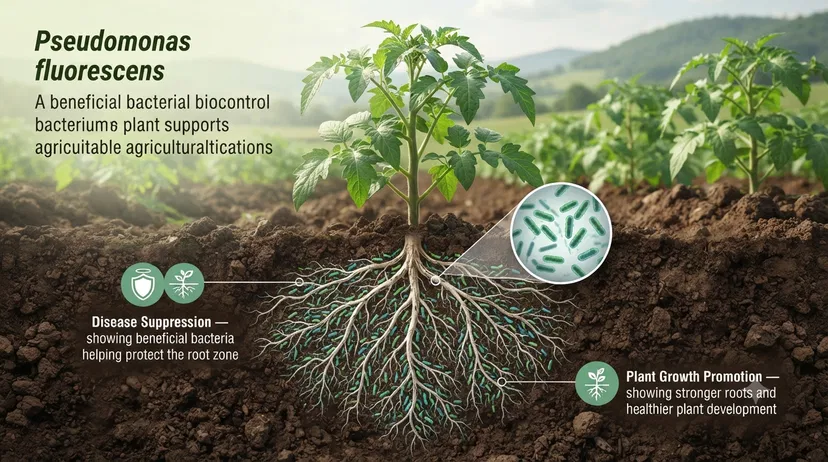
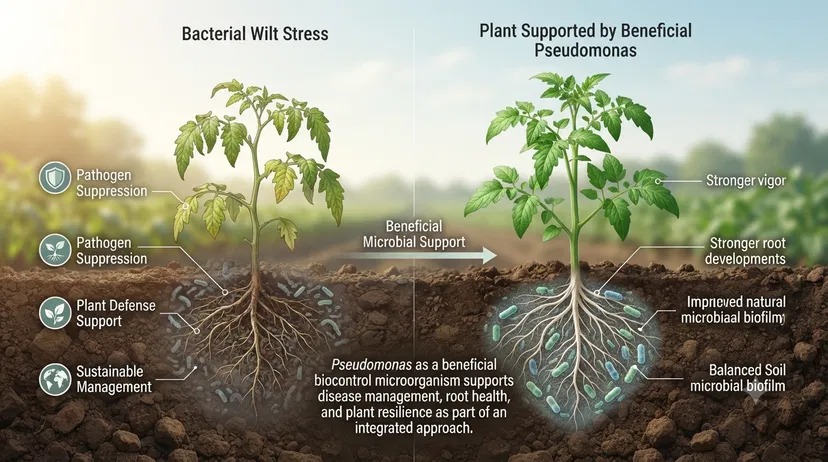
Pseudomonas refers to a group of beneficial bacteria, especially strains like Pseudomonas fluorescens, that are used as biocontrol agents. These bacteria are known for their ability to suppress plant pathogens and support healthier root environments.
Pseudomonas works by:
- Producing natural antibiotics and antifungal compounds
- Outcompeting harmful microbes in the rhizosphere
- Improving nutrient availability through root colonization
- Triggering systemic resistance in plants
Pseudomonas is especially effective when applied to roots, seeds, or nursery media, where it can establish early and protect young plants from infection.
Trichoderma vs Pseudomonas: Core Differences
Although both are biocontrol agents, Trichoderma and Pseudomonas are not interchangeable. Their biology, mode of action, and field performance differ in important ways.
1. Microbe Type
- Trichoderma: Beneficial fungus
- Pseudomonas: Beneficial bacterium
This difference matters because fungi and bacteria thrive under different environmental conditions and may perform better in different soils and climates.
2. Target Pathogens
Trichoderma is especially effective against soil-borne fungal pathogens such as:
- Fusarium
- Rhizoctonia
- Pythium
- Sclerotinia
Pseudomonas also suppresses several fungal and bacterial diseases, including root rot and damping-off organisms. Certain strains are particularly useful in nursery production and early plant protection.
3. Mode of Action
Trichoderma tends to work through direct attack, competition, and root stimulation. Pseudomonas mainly works through antibiotic production, competition, and induced resistance.
In simple terms: Trichoderma is often more aggressive in the root zone, while Pseudomonas is often more chemical in its suppression strategy through natural metabolites.
4. Environmental Preferences
Trichoderma generally performs well in a wide range of soils, especially where organic matter is present. Pseudomonas can be more sensitive to environmental stress, though strong strains are available that colonize roots effectively.
Factors such as soil temperature, moisture, pH, and native microbial populations can influence performance for both products.
Which Biocontrol Works Better for Which Situation?
There is no universal winner in the Trichoderma vs Pseudomonas comparison. The best choice depends on the problem you are trying to solve.
Choose Trichoderma if:
- You are dealing with soil-borne fungal diseases
- You want stronger root-zone colonization
- Your crop benefits from improved root development
- You need a biocontrol with broad use in field, greenhouse, or nursery systems
Trichoderma is often the go-to option for crops facing chronic root rot, wilt, and seedling disease pressure.
Choose Pseudomonas if:
- You need early protection for seeds or transplants
- You want a bacterial antagonist that produces antifungal metabolites
- You are managing damping-off or nursery diseases
- You want to support systemic resistance in young plants
Pseudomonas can be a smart choice in propagation systems, especially where rapid root colonization is essential.
Advantages of Trichoderma
Trichoderma is popular because it offers more than disease suppression. It can actively support plant growth and soil health.
- Strong biocontrol activity against many fungal pathogens
- Root growth stimulation that can improve plant establishment
- Better nutrient uptake through healthier root systems
- Good compatibility with many integrated pest management programs
- Useful in soil and seed applications
For growers seeking a dual-purpose solution for both protection and plant vigor, Trichoderma is often a top pick.
Advantages of Pseudomonas
Pseudomonas is also a powerful biocontrol tool, particularly in systems where early root protection is critical.
- Produces natural antibiotics that inhibit pathogens
- Excellent rhizosphere colonizer in many conditions
- Supports induced resistance in crops
- Effective in nursery and seedling stages
- Can complement other biological inputs
Because it can act quickly in the root zone, Pseudomonas is often used as part of a preventative strategy rather than a curative one.
Can You Use Trichoderma and Pseudomonas Together?
In many cases, yes. A combined biocontrol strategy can offer broader protection than either organism alone, especially when the formulation and application timing are well designed.
Using both may help if you want:
- Broader disease suppression
- Improved root health and plant establishment
- Better resilience under disease pressure
- A stronger integrated crop management plan
That said, compatibility matters. Not all strains or formulations work well together, so product labels and technical guidance should always be checked before tank-mixing or co-applying.
Application Tips for Better Results
Even the best biocontrol agent will underperform if applied poorly. To get the most from Trichoderma or Pseudomonas, focus on timing, placement, and conditions.
- Apply early before disease pressure becomes severe.
- Target the root zone for maximum colonization and protection.
- Use the correct dosage as recommended by the product label.
- Avoid harsh chemical interference that may reduce microbial survival.
- Support soil health with organic matter and good irrigation management.
Biocontrol products work best when they are part of a broader crop health program, not used in isolation.
Final Verdict: Trichoderma or Pseudomonas?
If your main problem is soil-borne fungal disease and you want a product that also promotes root growth, Trichoderma is often the stronger choice. If your priority is early root protection, especially in nursery or seedling systems, Pseudomonas may be the better fit.
In reality, the smartest choice is not always one or the other. Many successful growers use them strategically, based on crop stage, disease risk, and environmental conditions. The best biocontrol agent is the one that matches your production goals and fits your integrated disease management plan.
Bottom line: Trichoderma and Pseudomonas are both excellent biocontrol options, but the right choice depends on your crop's needs. Start with your target disease, then select the microbe that offers the strongest fit for prevention, root health, and long-term sustainability.
If you want better plant protection with fewer chemical inputs, evaluating both Trichoderma and Pseudomonas is a smart place to begin.