Integrated Disease Management (IDM) in Chrysanthemum: A Complete Guide for Farmers
Chrysanthemum (sevanthi, shevanti, samanthi) is planted in the rains and flowers in the cool season, and its diseases follow that calendar. Septoria leaf spot climbs the plant from the lowest leaves through the monsoon until the buds rot; Fusarium wilt and stem rot come in with the cuttings and kill plants in the rows; powdery mildew and rust arrive as the nights cool at flowering; and in the polyhouse, Botrytis, white rust and the bacterial rots that spread at pinching turn a cut-flower bed into waste in a week. The viruses, viroid and phytoplasma that stunt the plant have no cure at all and travel in the suckers and on the knife.
Chrysanthemum is also a crop with no registered fungicide of its own: the central label list carries no chrysanthemum claim, and the only ornamental claims are a few rose and nursery uses. The disease programme therefore rests on clean, indexed planting material, cutting dips, bed hygiene, drainage, ventilation and bio-agents, with the university-recommended sprays used early and on local advice. This guide covers the major fungal, bacterial, viral and phytoplasma diseases of field and polyhouse chrysanthemum in India, how to recognise each one, the weather and mistakes that bring it on, and the doses recommended by state and national institutes. The insect, mite and nematode pests, including the thrips and leafhoppers that carry the viruses, are in our IPM in chrysanthemum guide.
How Chrysanthemum Disease Control Is Built
Four facts shape disease control in chrysanthemum. First, the crop is raised from cuttings and suckers, so the diseases that matter most, Fusarium wilt, stem rot, white rust, stunt viroid, virus B and phytoplasma, arrive in the planting material; a clean mother stock does more than any spray. Second, the foliar diseases are driven by wet leaves: Septoria, ray blight, Botrytis and bacterial leaf spot all spread by splash and survive on debris, so drip irrigation, spacing, ventilation and clean-up are the base of the programme. Third, there is no central registered recommendation on chrysanthemum for any fungicide, bactericide or bio-fungicide. The ornamental claims that exist are on rose (carbendazim, sulphur 40 SC, lime sulphur and bupirimate for powdery mildew; captan for black spot) and a captan nursery drench on ornamentals for damping-off; every dose in the state packages for chrysanthemum, from mancozeb and carbendazim to azoxystrobin and the tebuconazole mixtures, is a university recommendation rather than a label claim, and the blog says so where it gives one. Fourth, several chemicals in older chrysanthemum leaflets are gone: benomyl, tridemorph, fenarimol and the mercury dip Emisan were banned in 2018, dinocap (Karathane) in 2023, and captafol sprays are not permitted. The state disease pages are on the state agricultural university's chrysanthemum disease page and the Kerala agricultural university's chrysanthemum crop doctor.
Major Diseases of Chrysanthemum at a Glance
DiseaseWhat you seeHow it spreadsWeather it likes
Septoria leaf spot (Septoria chrysanthemella, S. chrysanthemi)Dark brown to black spots on the lowest leaves, often with yellow margins, merging; dead leaves hang on the stem; buds rot at floweringRain splash; debrisCool wet monsoon weather
Alternaria and Cercospora leaf spots (Alternaria spp., Cercospora chrysanthemi)Brown spots with rings or grey centres on older leaves, leaf dropSplash; debrisHumid weather
Powdery mildew (Oidium chrysanthemi, Erysiphe cichoracearum)White powdery coating on leaves; leaves yellow and dry; plants stunted and fail to flowerWindHumid days, cool nights, low light; polyhouse
Brown rust (Puccinia chrysanthemi)Brown blister-like pustules under the leaves bursting into brown powder; weak plants, poor bloomWind-blown spores; debrisCool humid weather; early spring
White rust (Puccinia horiana)Sunken yellow to brown spots on the upper surface with buff to white pustules underneath; leaves shrivel and brownWind; infected cuttingsCool wet weather; polyhouse stock
Fusarium wilt (Fusarium oxysporum f.sp. chrysanthemi)Leaves yellow then brown from the base upward, often one side first; stunted plants, few flowers; brown vessels in the split stemSoil; infected cuttingsDry weather, low soil moisture, reused beds
Stem rot (Fusarium solani)Dark streaks at the stem base as buds open, inner stem discoloured, one-sided yellowing, cuttings and stock plants collapseCuttings; soil; wet bedsRainy weather
Root rot (Pythium spp.)Sudden wilting and drying; roots rotted, black lesion girdling the lower stemSoil; waterWaterlogging, heavy rain, over-irrigation
Botrytis blight, grey mould (Botrytis cinerea)Brown water-soaked spots on petals and leaves, stem cankers, grey-brown fuzzy spore massesAir; debrisDays of drizzle; humid closed polyhouse
Ray blight (Didymella ligulicola)Tiny dark pink spots on one side of the petals spreading to browning and rotting of the flower head; stem droops below itSplash; cuttingsWet flowering weather
Bacterial leaf spot and soft rot (Pseudomonas cichorii, Erwinia chrysanthemi)Dark brown to black spots that dry brittle and crack, running up one side of the plant; wilting on bright days, hollow brown-streaked stemsWater; tools and hands at pinchingHumid weather
Phytoplasma (aster yellows)Small leaves, witches' broom, green or leafy flowers, yellowing, stunted bushy plantsInfected cuttings; leafhoppersThrough the crop
Bud necrosis and spotted wilt virusesVein necrosis, dead spots on leaves, browning petals, stem necrosis, plant deathThrips; infected cuttingsDry weather when thrips build
Chrysanthemum stunt viroid and virus B (mosaic)Stunted plants, pale leaves, early uneven flowering, small irregular flowers, poor rooting of cuttings; mottling and ring spotsCuttings; knives and hands; aphids (virus B)Through the crop
Disease by Disease: What to Do and When
1. Septoria leaf spot and the other leaf spots
Septoria is the disease of the rainy-season field crop. Dark brown to black spots, often with a yellow margin, appear on the lowest leaves in July, run together, and the dead leaves hang on the stem while the spots climb the plant; at flowering the buds are infected and rot completely. Alternaria and Cercospora leaf spots look similar on older leaves and are managed the same way. All three spread by rain splash from debris on the bed.
Plant on raised beds at full spacing, water at the base early in the day, and never irrigate so that the leaves stay wet overnight.
Pick and burn spotted lower leaves as they appear; remove all debris after the crop.
Carbendazim 50 WP 1 g per litre (200 g per acre in 200 litres) or mancozeb 75 WP 2 to 3 g per litre (600 g per acre) is the state recommendation, sprayed from the first spots at 15-day gaps through the monsoon; azoxystrobin 1 ml per litre or difenoconazole 0.5 ml per litre are the cut-flower alternatives. None carries a chrysanthemum claim. Katyayani KZEB M-45 lists flowers among its crops.
Benomyl and captafol in older leaflets are banned and not to be used.
2. Powdery mildew
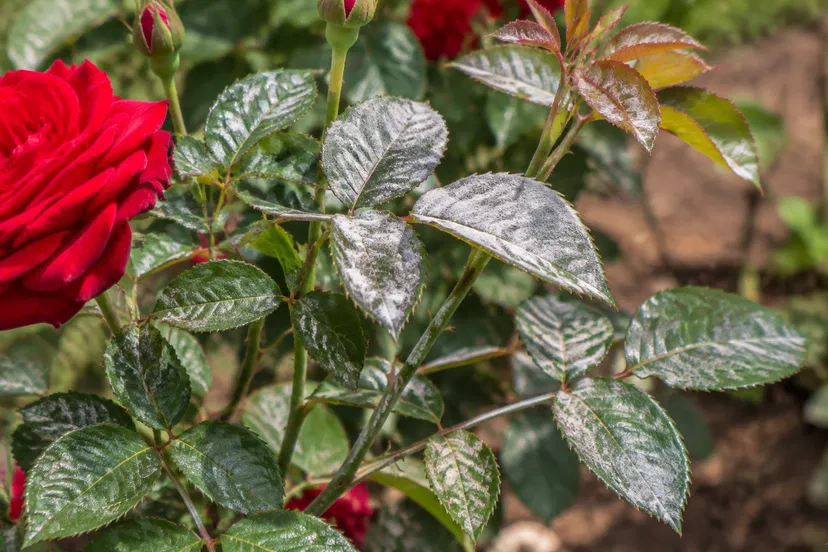
Powdery mildew comes as the nights cool at flowering and in any polyhouse that is kept closed and humid. A white powdery coating spreads over the leaves, the leaves yellow and dry, and infected plants stay stunted and fail to flower; older plants suffer most. Humid days with cool nights, low light and a large day-night temperature swing favour it.
Space the plants, ventilate the polyhouse and keep the foliage dry; prune out the first affected shoots.
Wettable sulphur 80 WP 2 g per litre (400 g per acre) at the first patches, repeated at 10 to 15 days and not in hot afternoons; sulphur 40 SC and lime sulphur carry the rose powdery mildew claim.
Carbendazim 50 WP 1 g per litre is the state alternative and carries the rose powdery mildew claim at 0.5 g per litre; Crystal Bavistin lists rose. Azoxystrobin 1 ml per litre is the cut-flower recommendation.
An Ampelomyces quisqualis spray at 5 ml per litre in humid weather is the biological option; Katyayani Mildew Mantra lists roses.
Dinocap (Karathane), still printed in several leaflets, was banned in 2023.
Why this fungus likes the cool season on flowers and vegetables alike is explained in our powdery mildew in winter crops post.
3. Brown rust and white rust
Two rusts attack chrysanthemum. Brown rust, the traditional field disease, forms brown blister-like pustules on the leaf underside that burst into brown powder, weakens the plant and spoils the bloom, and is worst in cool humid weather and early spring. White rust is the newer and more serious one: sunken yellow to brown spots on the upper leaf surface with buff to white pustules underneath, leaves that shrivel and brown, and a fungus that travels in cuttings and has been recorded on commercial polyhouse stock in Karnataka since 2015. It is a quarantine disease and should be reported to the horticulture department when seen.
Inspect new cuttings leaf by leaf; never take cuttings from a plant with pustules; remove affected leaves and destroy heavily infected plants.
Keep the polyhouse dry and ventilated; avoid overhead watering.
Wettable sulphur 2 g per litre (400 g per acre) is the state recommendation for brown rust at the first pustules, repeated weekly in humid weather.
For white rust, azoxystrobin 1 ml per litre or trifloxystrobin plus tebuconazole 0.75 g per litre at 7-day gaps is the cut-flower recommendation; Bayer Luna Experience lists rose at 180 to 200 ml per acre with a 7-day waiting period. Neither has a chrysanthemum claim.
In a national horticulture institute's screening, Arka Yellow Gold, Mayur and NBRI Little Kusum stayed resistant to white rust while Marigold, Sunil and Punjab Gold were susceptible; worth weighing when choosing stock for a white rust area.
The rust fungi on the other main flower crop are covered in our post on rose rust disease.
4. Fusarium wilt and stem rot
Fusarium wilt is the plant killer of reused beds. The leaves yellow and brown from the base upward, often on one side first, the plant stays stunted with few or no flowers, and the split stem shows brown blocked vessels; in the early stage the plant may recover at night and droop again by noon. It is soil-borne and travels in cuttings, and it is worst in dry weather and low soil moisture. Stem rot, caused by a second Fusarium, shows in cuttings, stock plants and flowering plants in the rains as small dark streaks at the stem base when the buds open, a discoloured inner stem and one-sided yellowing, often with no outside sign until the plant collapses.
Take cuttings only from healthy, indexed mother plants; rogue wilted plants with their soil; rotate the bed out of chrysanthemum for a season.
Dip rooted cuttings in Pseudomonas fluorescens 2 g per litre or thiram 1.5 g per litre before planting; Trichoderma 4 g per kg of soil mix in the nursery.
Enrich the bed with Trichoderma at 2 kg per acre mixed into FYM and keep the beds moist but never waterlogged; Multiplex Nisarga lists flowers for Fusarium wilt and root rot at this dose.
Carbendazim 50 WP 1 g per litre as a soil drench (200 g per acre in 200 litres) at the first wilted plant, or 2 g per litre for stem rot, is the state recommendation; trifloxystrobin plus tebuconazole 0.75 g per litre drench is the cut-flower alternative, both without a chrysanthemum claim.
The mercury dip Emisan in older Tamil leaflets is banned.
How a soil-borne wilt builds up and how a bed is brought back is in our post on root rot and wilt management.
5. Root rot and damping-off
Pythium root rot takes the plants that stand in water. After heavy rain or over-irrigation the plant wilts and dries suddenly, the feeder roots and then the main roots are rotted, and a black lesion girdles the lower stem. In the nursery the same water moulds damp off cuttings in a soggy tray. Raised beds, drainage, soil solarisation and removal of affected plants come first; copper oxychloride 2.5 g per litre poured around the plants or difenoconazole 0.5 ml per litre as a drench is the state recommendation, and captan 75 WP at 2.5 g per litre carries the registered nursery damping-off drench claim on ornamentals, the one chemical claim that covers a chrysanthemum nursery bed. Trichoderma or Pseudomonas in the rooting medium and the bed is the biological base.
The nursery routine is in our post on damping-off in nurseries.
6. Botrytis blight and ray blight
Both are flower diseases of wet weather and closed polyhouses. Botrytis, the grey mould, gives brown water-soaked spots on petals and leaves, cankers on the stem and grey-brown fuzzy spore masses on anything that stays wet for a few days of drizzle; a bunch cut with a hidden Botrytis spot rots in the box. Ray blight begins as tiny dark pink spots on one side of the petals, spreads to browning and rotting of the flower head and moves into the stem, which droops below it.
Space the plants, ventilate, keep the polyhouse towards the lower end of the 70 to 85 per cent humidity range, and never water over the flowers; water early so the canopy dries.
Remove spent flowers, fallen petals and affected heads every day; cut flowers dry and cool them fast.
Carbendazim 1 g per litre or copper oxychloride 2 g per litre is the national pocket guide's recommendation for Botrytis; the leaf spot fungicides above cover ray blight; a Bacillus subtilis spray at the pack rate in humid weather is the biological option. Avoid overhead irrigation.
7. Bacterial leaf spot and soft rot
Bacterial leaf spot gives small dark brown to black spots on the lower leaves that enlarge irregularly, dry brittle and crack, and can run up one side of the plant into the flowers; bacterial soft rot gives plants that wilt on bright days, brown brittle stem tips and hollow stems with brown streaks to the base. Both bacteria survive in water, soil and other hosts, enter through wounds and spread on hands and knives at pinching and disbudding, so a polyhouse where every plant is pinched in a morning is where they move fastest. Destroy affected plants, sterilise the bed before replanting, use disease-free cuttings, disinfect knives between plants and keep pinching to dry days. A streptomycin plus tetracycline spray at 0.1 g per litre (1 g in 10 litres) is the national recommendation; no bactericide carries an ornamental claim.
8. Phytoplasma, viruses and stunt viroid
These cannot be cured and are managed entirely through clean stock. Phytoplasma gives small leaves, witches' broom, green or leafy flowers and stunted bushy plants, and travels in cuttings and on leafhoppers. Bud necrosis and spotted wilt viruses, carried by thrips, give vein necrosis, dead leaf spots, browning petals and stem death. Chrysanthemum stunt viroid gives stunted pale plants, early uneven flowering, small irregular flowers and cuttings that root poorly, and passes from plant to plant on the knife and the hands. Virus B gives mottling and ring spots and travels in cuttings and on aphids; in a national institute's survey most commercial cultivars in the hills carried it.
Buy or raise cuttings only from indexed, virus-free mother stock; meristem culture and heat treatment are how clean stock is produced.
Rogue stunted, bushy, mottled or necrotic plants as soon as they are seen, with their neighbours if the symptom is spreading.
Sterilise knives and hands between plants at pinching and disbudding; work the clean beds first.
Keep weeds and old chrysanthemum plants away from the mother bed; control thrips with blue sticky traps and neem and leafhoppers and aphids with yellow traps and neem, as set out in the IPM guide.
Registered Status of Fungicides Used on Chrysanthemum
ProductDisease on chrysanthemumUniversity doseRegistered status
Carbendazim 50% WPLeaf spots, powdery mildew, wilt and stem rot drench, Botrytis1 g per litre spray or drench; 2 g per litre for stem rotRose: powdery mildew 0.5 g per litre; no chrysanthemum claim
Mancozeb 75% WPSeptoria and other leaf spots2 to 3 g per litre (600 g per acre)No ornamental claim
Wettable sulphur 80% WPPowdery mildew, brown rust2 g per litre (400 g per acre)No ornamental claim; sulphur 40 SC and lime sulphur carry the rose powdery mildew claim
Azoxystrobin 23% SCLeaf spot, powdery mildew, white rust1 ml per litreNo ornamental claim
Difenoconazole 25% ECLeaf spot, root rot drench0.5 ml per litreNo ornamental claim
Trifloxystrobin 25% + tebuconazole 50% WGWhite rust, wilt drench, root rot0.75 g per litreNo ornamental claim found
Copper oxychloride 50% WPRoot rot drench, Botrytis2 to 2.5 g per litreNo ornamental claim
Captan 75% WPNursery damping-off drench2.5 g per litre (0.25 per cent)Ornamentals: nursery damping-off drench; rose: black spot
Thiram 75% WSCutting dip1.5 g per litreNo ornamental claim
Streptomycin 90% + tetracycline 10% SPBacterial leaf spot, soft rot0.1 g per litreNo ornamental claim
Bupirimate 26.7% ECPowdery mildewRose dose 4 ml per litreRose: powdery mildew 4,000 ml per hectare, 5-day waiting period
Pseudomonas, Trichoderma, Bacillus subtilis, AmpelomycesWilt, root rot, Botrytis, powdery mildewPack rate; Pseudomonas dip 2 g per litre; Trichoderma 2 kg per acre in FYMRegistered on vegetables and other crops; no ornamental claim
No fungicide, bactericide or bio-fungicide carries a chrysanthemum claim on the central list, so no waiting period is printed for the crop. Flowers are not eaten, but pickers handle them daily, so spray after the day's picking and keep three to five days before the next.
Old Recommendations and What Is Still Allowed
Chemical in older chrysanthemum leafletsUse it was advised forStatus today
Benomyl 50 WPSeptoria leaf spot, powdery mildewBanned since 2018
CaptafolLeaf spotSpray use banned; seed dressing only
Dinocap (Karathane)Powdery mildew, rustBanned since 2023
Tridemorph, fenarimolPowdery mildewBanned since 2018
Methoxy ethyl mercury chloride (Emisan)Cutting dipBanned since 2018
Carbendazim, mancozeb, thiram, captan, copper, streptomycin plus tetracyclineLeaf spots, wilt, rots, bacterial spotRegistered; no chrysanthemum claim; state recommendations on local advice
The banned and restricted list is kept on the national spices institute's banned pesticides page; the ornamental disease descriptions are in the national floriculture institute's diagnostic pocket guide.
Clean Stock and Cutting Treatment: The Half of IDM That Costs Least
StepHowDiseases it covers
Indexed mother stockCuttings from certified or indexed, virus-free mother plants kept apart from the flowering crop and weedsStunt viroid, virus B, bud necrosis, phytoplasma, white rust, Fusarium wilt
Cutting selection5 to 7 cm terminal cuttings from vigorous plants with no spots, pustules, mottling or one-sided yellowingAll cutting-borne diseases
Rooting mediumSterile burnt rice husk, sand or cocopeat; IBA 1,000 ppm dip; Trichoderma 4 g per kg of mediumDamping-off, stem rot, root rot
Cutting dip before plantingPseudomonas fluorescens 2 g per litre or thiram 1.5 g per litre for 10 minutes; keep 24 hours between a fungicide and a bio-agentFusarium wilt, stem rot
Nursery drenchCaptan 75 WP 2.5 g per litre (the registered ornamental nursery claim) or copper oxychloride 2.5 g per litre in wet patchesDamping-off, Pythium root rot
Bed preparationSummer ploughing; solarisation under clear polythene for three weeks; FYM 10 t per acre enriched with Trichoderma 2 kg per acre and Pseudomonas; raised beds 1 m wideFusarium wilt, Pythium, stem rot, bacterial survival in soil
Tool hygieneDip knives in a disinfectant between plants at pinching and disbudding; wash hands; pinch on dry daysStunt viroid, virus B, bacterial leaf spot and soft rot
Root supportMycorrhiza such as Tapas VAM SP at planting and a humic product such as Tapas HumiQ with the first irrigationRoot growth that stands up to the soil fungi
Bio-agents for the bed are explained in our posts on Trichoderma for farmers and Pseudomonas fluorescens as a biocontrol agent.
Cultural Practices That Carry the Programme
Plant on raised beds and drain. Beds 1 m wide and 30 cm high, with drains that empty after a monsoon shower, remove most of the Pythium and stem rot risk; never let water stand at the collar.
Water at the base, early. Drip or furrow irrigation keeps the leaves dry; where sprinklers are used, run them in the morning so the canopy dries by noon.
Space and ventilate. 30 by 30 cm in the field and 15 by 15 cm in polyhouse beds, with side ventilation open whenever the weather allows, keep the humidity that powdery mildew, Botrytis and ray blight need below the threshold.
Pinch and disbud clean. Disinfect the knife between plants, pinch on a dry day, and remove spotted or mottled plants before you touch the healthy ones.
Feed in balance. Excess nitrogen gives the soft, crowded growth that mildew and Botrytis prefer; split the nitrogen, give potash at bud stage and keep the FYM well decomposed.
Keep the bed clean. Pick spotted lower leaves and spent flowers daily, weed the bunds and the polyhouse surroundings, and burn or bury all residue after the last cut.
Rotate. A season of marigold or a cereal between chrysanthemum crops breaks the Fusarium, Pythium and nematode cycle on the same bed; a polyhouse bed that cannot be rotated is solarised and re-enriched with bio-agents between crops.
Choose the variety for the problem. No released Indian variety states disease tolerance, so choose for the market first; in a white rust area, prefer stock screened as resistant and avoid the susceptible popular types. The polyhouse routines that keep a flower crop dry are in our gerbera polyhouse guide and our post on polyhouse farming in India.
Chrysanthemum Disease Calendar
StageDiseases to expectWhat to do
Mother stock and rooting (March to June)Stunt viroid, virus B, phytoplasma, white rust, stem rot and damping-off in traysIndexed stock; clean knives; sterile medium with Trichoderma; captan or copper drench in wet trays; rogue stunted or mottled plants
Bed preparationFusarium wilt, Pythium, stem rot, bacteria in soilSummer ploughing; solarisation; raised beds; FYM enriched with Trichoderma and Pseudomonas
Planting to pinching (0 to 4 weeks, June to July)Stem rot, root rot in wet weather, early Septoria on lower leavesPseudomonas or thiram cutting dip; drainage; pick spotted leaves; first carbendazim or mancozeb spray at the first spots
Vegetative (4 to 10 weeks, monsoon)Septoria and other leaf spots, bacterial leaf spot, Fusarium wilt showingLeaf spot sprays at 15-day gaps; streptomycin plus tetracycline where bacterial spot is seen; carbendazim drench on wilted patches; clean pinching
Bud initiation to colour (10 to 14 weeks)Powdery mildew, brown rust, white rust, bud rot from SeptoriaSulphur at the first mildew or rust; azoxystrobin or the tebuconazole mixture for white rust; ventilate; keep foliage dry
Flowering and harvest (October to January)Botrytis, ray blight, powdery mildew, virus and phytoplasma symptoms in the flowersRemove spent flowers daily; cut dry; carbendazim or copper for Botrytis after picking; rogue virus plants before taking ratoon suckers
Ratoon and after harvestCarry-over of leaf spot, rust and wilt on stubble; viroid and virus in saved suckersCut at ground level; remove residue; take suckers only from clean plants; rotate or solarise the bed
Products for Chrysanthemum Disease Management
Leaf spots (mancozeb, listing flowers)
Katyayani KZEB M-45
Powdery mildew and rust (listing rose)
Crystal Bavistin
Bayer Luna Experience
Katyayani Mildew Mantra
EBS Ampelomyces Quisqualis
Geolife Recover Nutri
Wilt, root rot and bed treatment (listing flowers)
Multiplex Nisarga (Trichoderma viride)
Tapas Contmold Gold (botanical bio fungicide)
Carbendazim, copper oxychloride, captan, azoxystrobin, the tebuconazole mixtures, streptomycin plus tetracycline, Pseudomonas and Bacillus subtilis packs on the site are sold for other crops or for all crops rather than flowers by name; use any grade-marked pack at the doses above. More options are under bio fungicides and sulphur 80 WG products.
The fungicide groups that work on ornamentals are compared in our post on the best fungicides for roses and ornamental plants; the principles are set out in our integrated disease management guide.
Conclusion
Chrysanthemum disease control is decided at the mother bed and at bed preparation. Indexed cuttings rooted in a sterile medium, dipped in Pseudomonas or thiram and planted on a solarised, bio-agent-enriched raised bed remove the wilt, stem rot, viroid, virus and white rust risk that no spray can later undo. After that the programme is dry leaves, a clean knife, daily removal of spotted leaves and spent flowers, ventilation, and the university-recommended sprays used early: carbendazim or mancozeb at the first Septoria spots in the monsoon, sulphur at the first mildew or rust at bud stage, the strobilurin or tebuconazole mixture at the first white rust pustule, and copper or carbendazim after picking when Botrytis threatens. With no fungicide registered on the crop and benomyl, dinocap and the mercury dip gone, the grower who starts with clean stock is the one who cuts clean flowers through the season.
Frequently Asked Questions
1. What are the major diseases of chrysanthemum?
Septoria and other leaf spots, powdery mildew, brown and white rust, Fusarium wilt, stem rot, Pythium root rot, Botrytis, ray blight, bacterial leaf spot and soft rot, phytoplasma, stunt viroid and viruses.
2. Why do the lower leaves of my chrysanthemum turn black and hang on the stem?
Generally Septoria leaf spot in the monsoon; pick the spotted leaves, water at the base and spray carbendazim 1 g per litre or mancozeb 2 to 3 g per litre.
3. Which fungicide is registered on chrysanthemum?
None. No fungicide, bactericide or bio-fungicide carries a chrysanthemum claim; the doses in this guide are state and national recommendations used on local advice.
4. How do I control powdery mildew in chrysanthemum?
Space and ventilate, and spray wettable sulphur 2 g per litre at the first white patches; carbendazim 1 g per litre or an Ampelomyces spray are the alternatives.
5. What is white rust of chrysanthemum?
A quarantine rust with white pustules under the leaves that travels in cuttings; destroy affected plants, never take cuttings from them and report it to the horticulture department.
6. How do I stop Fusarium wilt in a reused chrysanthemum bed?
Solarise the bed, enrich FYM with Trichoderma, dip cuttings in Pseudomonas 2 g per litre or thiram 1.5 g per litre, and drench carbendazim 1 g per litre on wilted patches.
7. Can stunt viroid or virus in chrysanthemum be cured?
No. Use indexed virus-free cuttings, rogue stunted or mottled plants and disinfect knives between plants at pinching.
8. Is dinocap allowed for powdery mildew on chrysanthemum?
No. Dinocap (Karathane) was banned in 2023 along with benomyl in 2018, even though older leaflets still list them.
Disclaimer: Disease details and doses here follow state and national institute recommendations; no fungicide, bactericide or bio-fungicide carries a registered claim on chrysanthemum, so every spray named is used on local advice. Follow the pack, spray after picking, and consult a local horticulture officer before use.