Identifying and Correcting Common Nutrient Deficiencies in Brinjal
Identifying and Correcting Common Nutrient Deficiencies in Brinjal
Yellow leaves, purple stems, scorched leaf edges or flowers that keep dropping are often signs that brinjal is hungry for one or more nutrients. Since the crop flowers and fruits for many months, even a small shortage can reduce fruit size and picking.
Knowing where the symptom starts on the plant and what it looks like can help farmers find the missing nutrient early and correct it before yield is lost.
Quick Answer
Common nutrient deficiencies in brinjal include nitrogen (yellow older leaves), phosphorus (purple stems and leaf undersides), potassium (scorched leaf edges), and zinc, boron and iron (small, distorted or yellow young leaves). They can generally be corrected with soil application of the right fertilizer based on a soil test, quick foliar sprays when symptoms appear, and regular use of organic manure and biofertilizers.
Why Nutrient Deficiencies Occur in Brinjal
Using only nitrogen fertilizers and ignoring other nutrients
Low organic matter in the soil
Very acidic or alkaline soil, which locks up nutrients
Waterlogging or heavy rain washing nutrients away
Long crop duration with continuous fruit picking
Quick Identification Guide
A simple rule helps: nitrogen, phosphorus, potassium and magnesium usually show signs on older leaves first, while zinc, boron, iron, calcium and sulphur usually affect young leaves and growing tips.
Nutrient
Where It Starts
Key Symptoms
Nitrogen
Older leaves
Pale to yellow leaves, stunted plants, small pale fruits
Phosphorus
Older leaves and stems
Dull green leaves, purplish stems and veins, weak roots, late flowering
Potassium
Older leaf edges
Yellow to brown scorched margins, weak stems, poor fruit shine
Magnesium
Older leaves
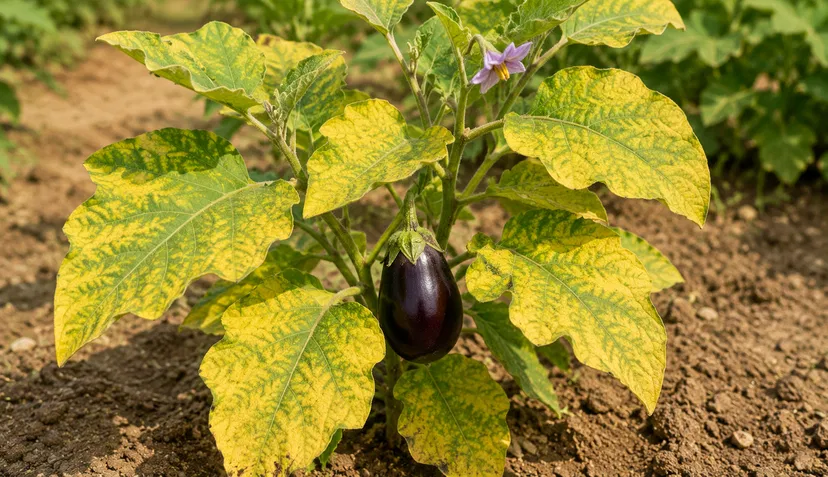
Yellowing between veins while veins stay green, early leaf drop
Calcium
Growing tips and fruits
Tip dieback, dark leathery patches at the blossom end of fruits
Sulphur
Young leaves
Even yellowing, narrow pointed leaves, slow growth
Zinc
Young leaves
Small, narrow leaves with yellow to white patches, short internodes
Boron
Young leaves and flowers
Thick, brittle, misshapen leaves, tip death, flower drop
Iron
Young leaves
Yellow leaves with green veins in a net-like pattern
Manganese
Fully grown leaves
Mottled yellowing between veins with small dark dead spots
How to Correct Nutrient Deficiencies in Brinjal
The doses below are general guidelines. Confirm the problem with a soil or leaf test where possible, as actual needs may vary with soil type, pH and local recommendations. Tapas products can be used along with these corrections to improve root health and nutrient uptake.
Deficiency
Soil Correction
Foliar Spray
Tapas Product Support
Nitrogen
Urea in split doses as per soil test; well decomposed FYM
Urea 10 g per litre of water, once every 15 days
Tapas HumiQ: 500 g per acre mixed with manure, or through drip
Phosphorus
Single superphosphate as basal dose; phosphate solubilising bacteria with manure
Best corrected through soil
Tapas VAM SP: root dip at 5 to 10 g per litre of water, or 150 g per acre through drip
Potassium
Muriate of potash in split doses as per soil test
Sulphate of potash 10 g per litre of water
Tapas HumiQ: 1 to 2 g per litre of water as foliar spray
Magnesium
Magnesium sulphate 32 kg/acre in bands near plants
Magnesium sulphate spray as per pack
Tapas HumiQ: 500 g per acre mixed with manure, or through drip
Calcium
Lime in acidic soils or gypsum in alkaline soils
Chelated calcium spray as per pack
Tapas VAM SP: root dip at 5 to 10 g per litre of water, or 150 g per acre through drip
Sulphur
Sulphur dust 10 kg/acre or single superphosphate
Not usually needed
Tapas VAM SP: root dip at 5 to 10 g per litre of water, or 150 g per acre through drip
Zinc
Zinc sulphate 20 to 25 kg/ha (about 8 to 10 kg/acre)
Zinc sulphate 5 g per litre of water
Tapas VAM SP: root dip at 5 to 10 g per litre of water, or 150 g per acre through drip
Boron
Borax 5 kg/ha (about 2 kg/acre)
Borax 1 to 2 g per litre of water
Tapas HumiQ: 1 to 2 g per litre of water as foliar spray
Iron
Ferrous sulphate 6 kg/acre in deficient soils
Chelated iron spray as per pack
Tapas HumiQ: 1 to 2 g per litre of water as foliar spray
Manganese
As per soil test
Manganese sulphate 2 g per litre of water
Tapas HumiQ: 1 to 2 g per litre of water as foliar spray
Tapas HumiQ can help make nitrogen, phosphorus, potassium and micronutrients more easily available to plants, while Tapas VAM SP extends root reach for better uptake of phosphorus, zinc and other nutrients.
Preventing Deficiencies With INM
Most deficiencies are easier to prevent than to cure. A balanced Integrated Nutrient Management plan can keep brinjal well fed through the season:
Apply well decomposed FYM at about 10 t/acre during land preparation.
Follow a balanced NPK dose based on soil test results, splitting nitrogen and potassium.
Use biofertilizers like Azospirillum, phosphobacteria and mycorrhiza (VAM) to improve nutrient uptake.
Keep soil pH near neutral for better nutrient availability.
Test soil for micronutrients once in two to three seasons.
To learn how phosphate solubilising bacteria release locked soil phosphorus, read this guide on PSB biofertilizer.
Common Mistakes to Avoid
Spraying micronutrients without confirming the deficiency
Mixing zinc with phosphate fertilizers, or boron with calcium products
Applying magnesium and potassium fertilizers together
Exceeding the recommended spray dose, which can burn leaves
Confusing virus, pest or water stress symptoms with nutrient deficiency
Conclusion
Nutrient deficiencies in brinjal can often be identified by checking whether symptoms start on older or younger leaves and what pattern they show. Timely soil correction, quick foliar sprays and a balanced INM plan can help farmers keep plants healthy and fruiting steadily. For related problems like flower drop and leaf yellowing, explore these brinjal crop guides.
Frequently Asked Questions
1. Why are brinjal leaves turning yellow?
Yellow older leaves often point to nitrogen or magnesium shortage, while yellow young leaves may indicate iron or sulphur deficiency.
2. What causes purple stems in brinjal?
Purplish stems and leaf undersides are a common sign of phosphorus deficiency.
3. Which nutrient deficiency causes flower drop in brinjal?
Boron and calcium shortage can cause flower drop, along with water stress.
4. How can I correct zinc deficiency in brinjal?
Zinc sulphate can be applied to the soil, or a zinc spray can be given when symptoms appear.
5. Are foliar sprays enough to correct deficiencies?
Sprays give quick relief, but soil correction based on a soil test gives longer-lasting results.
6. Can deficiency symptoms look like disease?
Yes, some symptoms can look like virus or pest damage, so checking carefully before treatment is important.
Disclaimer: Nutrient deficiency symptoms in brinjal can look similar to disease, pest or water stress damage. Confirm with a soil or leaf test before correcting. Doses given are general and may vary by soil, pH and location, so consult a local agriculture expert.