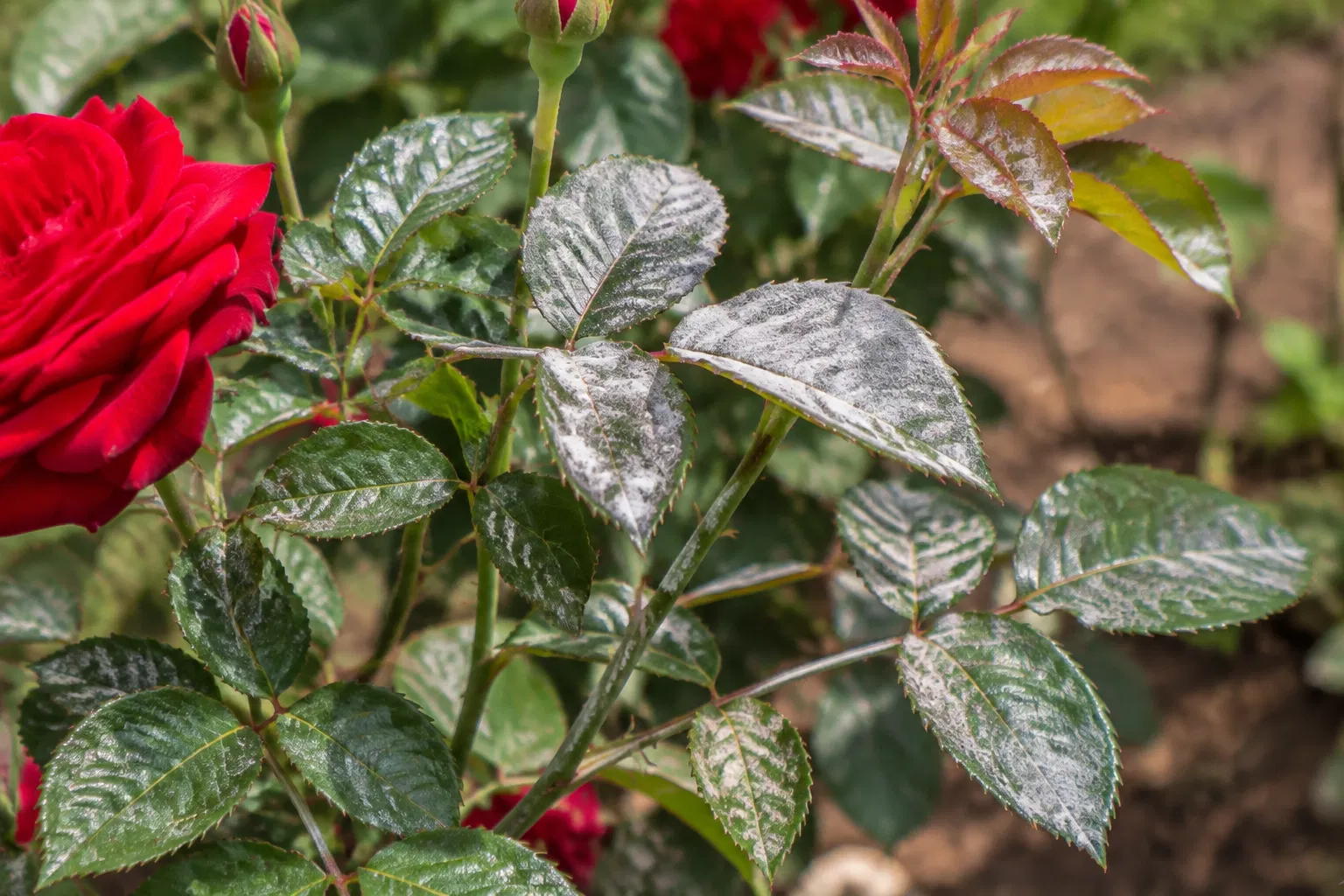
Powdery mildew control in rose matters through every flush of blooms, since the fungus Sphaerotheca pannosa targets exactly the parts a grower cares about most young leaves, buds, and stems coating them in a white, powdery growth that stunts new shoots and disfigures flowers before they open. The disease spreads fastest in warm days with cool, humid nights, so rose disease management works best as a preventive spray routine through each new flush, rather than waiting for the white coating to appear.
How to Identify Powdery Mildew in the Field
- A white to greyish, powdery or dusty coating on young leaves, shoot tips, buds, and flower stalks
- New leaves that emerge curled, crinkled, or twisted, often tinged with red or purple before the white coating appears
- Flower buds that fail to open properly or open with distorted, discoloured petals
- Stunted growth on heavily infected shoots, with leaves that stay small and puckered
- The powdery coating spreading fastest on the youngest, most tender growth first, then moving to older leaves
- Symptoms flaring up during warm days with cool, humid nights, and easing off in hot, dry, or heavily rainy weather
Cultural and Mechanical Control Measures
- Prune for airflow: Thin out crowded shoots and open up the centre of the bush so air circulates freely and leaves dry quickly after dew or rain.
- Remove infected material: Cut out and destroy visibly infected shoots, buds, and leaves as soon as they're spotted, rather than composting them on site.
- Avoid overhead watering: Water at the base of the plant instead of wetting the foliage, since prolonged leaf moisture favours spore germination.
- Balanced fertilization: Avoid excess nitrogen, which pushes soft, susceptible new growth that powdery mildew colonises fastest.
- Choose resistant varieties: Where replanting or adding new bushes, favour rose varieties bred for powdery mildew tolerance to reduce pressure over time.
- Morning sun exposure: Position or prune bushes so they get direct morning sun, which dries overnight dew faster and shortens the window spores need to infect.
1. Carbendazim 50% WP
Carbendazim is a systemic benzimidazole fungicide that moves into plant tissue and disrupts fungal cell division from within, giving both protective and curative action against an existing infection. It's absorbed through the roots or foliage and translocated toward the leaf tips, which helps it keep protecting new growth between sprays, and its systemic action means it isn't washed off by rain once absorbed.
Product Recommendations
2. Bacillus subtilis
Bacillus subtilis is a naturally occurring bacterium used as a biological fungicide that colonises the leaf and root surface, competing with powdery mildew spores for space and nutrients before they can establish an infection. It also induces systemic acquired resistance in the plant, essentially priming the rose's own defences against the pathogen. Because it works preventively rather than by direct chemical kill, it's best applied before symptoms appear, such as when treating young rose saplings ahead of planting, and fits well alongside chemical sprays in a rotation programme.
Product Recommendations
Disclaimer: Always confirm current label registration, approved dosage, water volume, and pre-harvest interval (PHI) for your state before using any product labels are periodically revised by regulatory authorities.
This guide is a general advisory. Do your own research and verification before using any product. Always confirm suitability for your crop stage, region, and field conditions before making any purchase, spray, or crop-management decision.