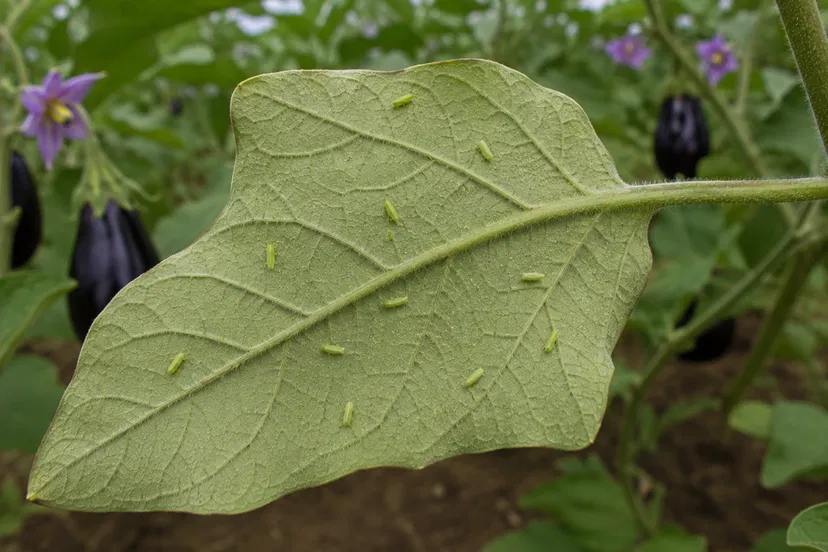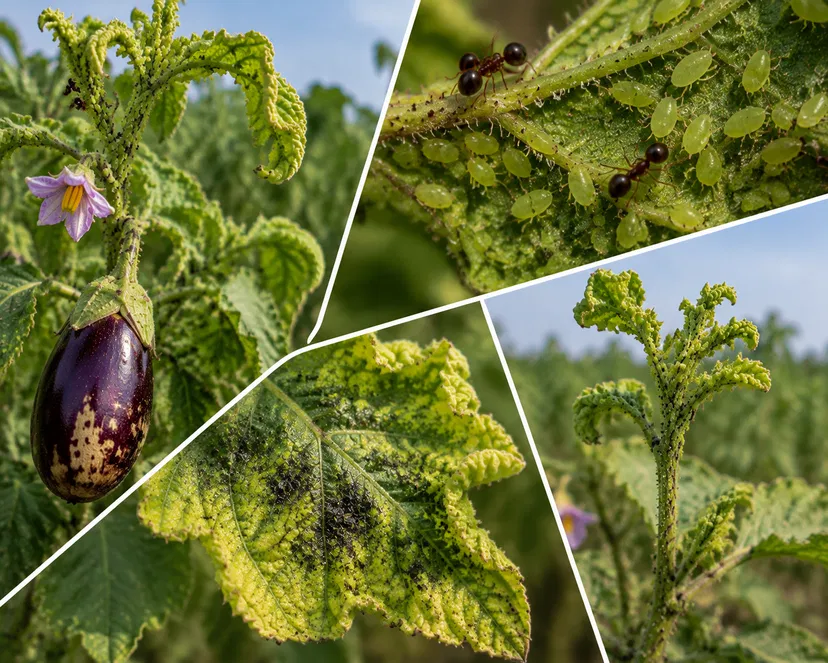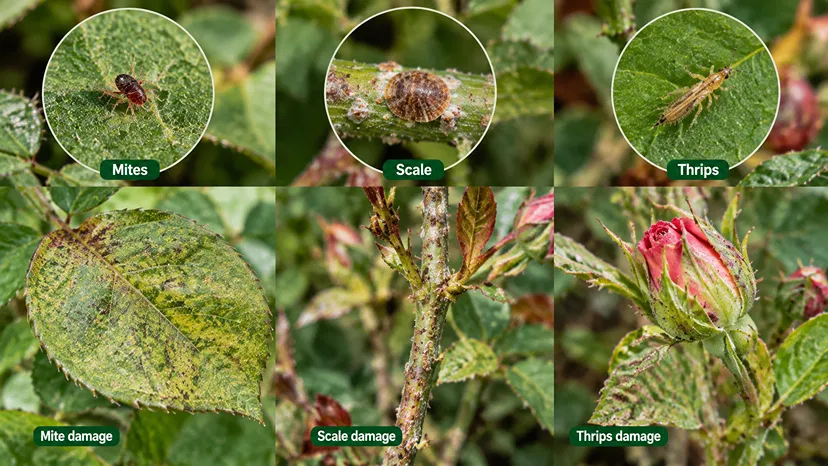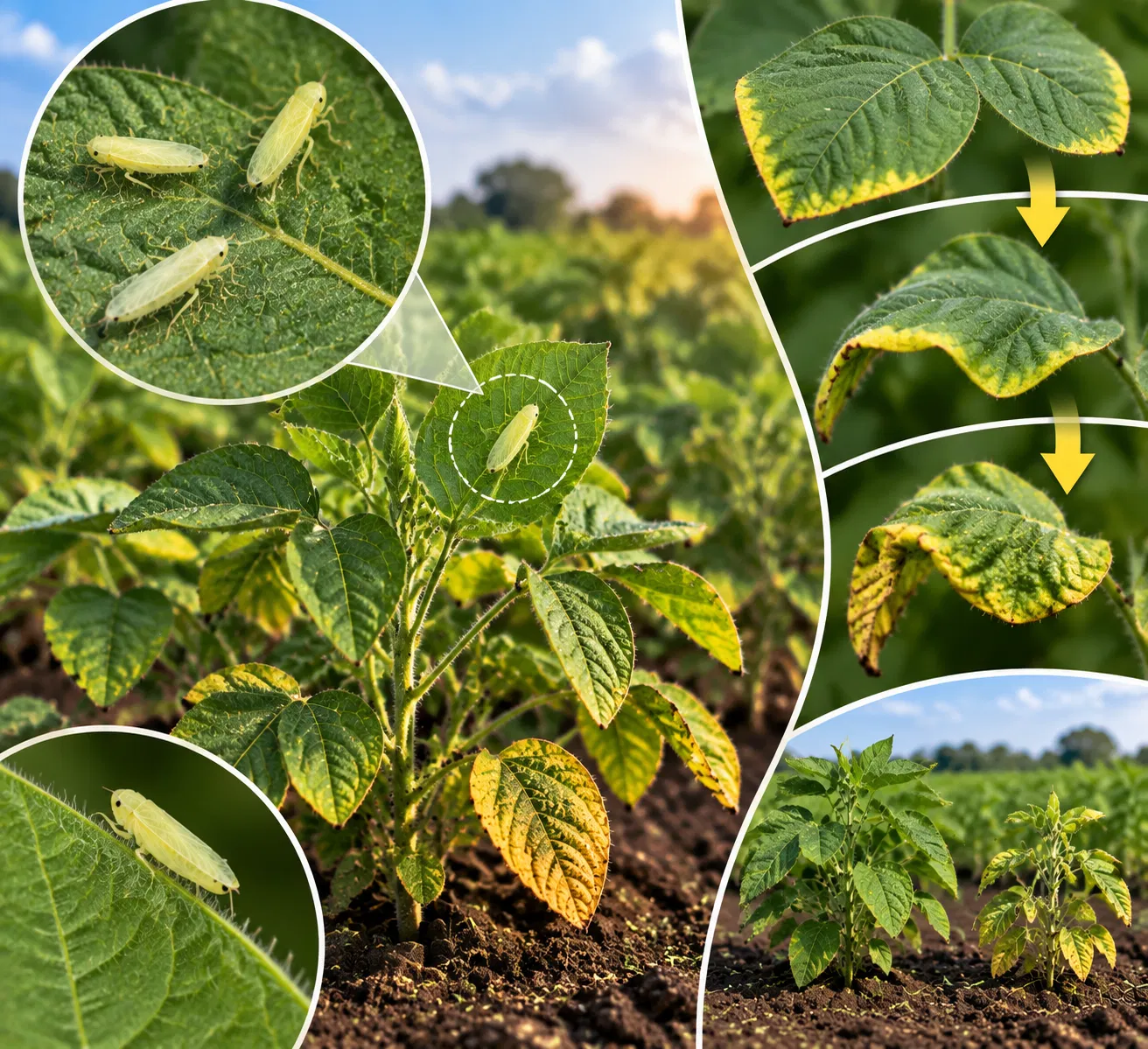
Jassids, also called leafhoppers, are small wedge-shaped insects that puncture soybean leaves and suck out the sap, leaving behind a tell-tale yellowing and curling known as hopper burn. A few jassids on a plant barely matter, but once numbers build up, they can slow growth and pull down yield quietly, often before a farmer even notices something is wrong.
Spotting Jassid Damage Early
- Pale yellow, wedge-shaped insects that move sideways and jump when disturbed
- Leaf edges turning yellow, then curling downward (hopper burn)
- Leaves feeling rough or leathery to the touch
- Stunted growth on younger plants when the attack is heavy
- Damage usually starts on lower leaves and moves upward
What Brings Jassids Into Your Crop
- Hot, humid weather right after sowing or during early vegetative growth
- Fields next to other host crops where jassids are already active
- Untreated seed with no early protection against sucking pests
- Dry spells followed by irrigation, which push new tender growth jassids prefer
- Fewer natural predators around due to overuse of broad-spectrum sprays
How to Fight Jassids in Soybean
1. Flonicamid 50% WG
Farmers often notice this one works differently from older sprays, instead of killing on contact, it stops jassids from feeding almost as soon as they touch the leaf. The insect simply stops eating and dies off over the next day or two. Because it doesn't cause an instant knockdown, some may feel it's slow, but it holds up well over time and is gentle on the pollinators and predator insects that keep other pests in check.
2. Imidacloprid 48% FS
This one goes on the seed, not the crop. Coating the seed before sowing means the young plant carries its own built-in protection as it grows, so jassids that try to feed on it in the first few weeks run into trouble immediately. It's a good fit for fields that see jassid pressure early, since it saves a spray round right when the crop is most vulnerable.
3. Thiamethoxam 30% FS
Another seed treatment option, but with a slightly wider net, along with jassids, it also helps keep aphids and whitefly from getting a foothold in the same window. Since it's absorbed by the roots as the seed germinates, the plant stays protected from the inside for several weeks without needing a foliar spray right away.
Note: A seed treatment handles the first few weeks, but if jassid numbers climb again later in the season, a foliar spray like Flonicamid may still be needed. Keeping an eye on the crop through flowering is the simplest way to catch a second wave before it does real damage.
Disclaimer: Always confirm current label registration, approved dosage, water volume, and pre-harvest interval (PHI) for your state before using any product, since labels are periodically revised by regulatory authorities.
This guide is a general advisory. Do your own research and verification before using any product. Always confirm suitability for your crop stage, region, and field conditions before making any purchase, spray, or crop-management decision.