Indian weddings are a celebration of color, fragrance, and tradition, and flowers sit at the heart of it all. From elaborate mandaps and garlands to table décor, stage backdrops, and bridal accessories, the demand for fresh blooms is massive and steady. For growers, this creates a powerful opportunity: if you choose the right flowers, you can tap into one of the most vibrant and profitable floral markets in India.
Whether you are a small farmer, a commercial flower grower, or someone planning to diversify into floriculture, focusing on the top flowers to grow for the Indian wedding market can help you maximize sales and reduce risk. The best wedding flowers are not only beautiful; they also need to be available in large quantities, handle transport well, and stay fresh during long ceremonies and hot weather.
Why the Indian Wedding Market Is So Valuable
The Indian wedding industry is known for its scale. Weddings often involve multiple events, each requiring different floral arrangements. Demand peaks during the wedding season, but flowers are also needed throughout the year for engagement ceremonies, temple decorations, receptions, and cultural functions.
Key reasons this market is attractive:
- High and recurring demand across seasons
- Strong preference for fresh, locally grown flowers
- Multiple usage points: décor, garlands, offerings, accessories, and gifting
- Premium pricing for quality blooms during peak wedding periods
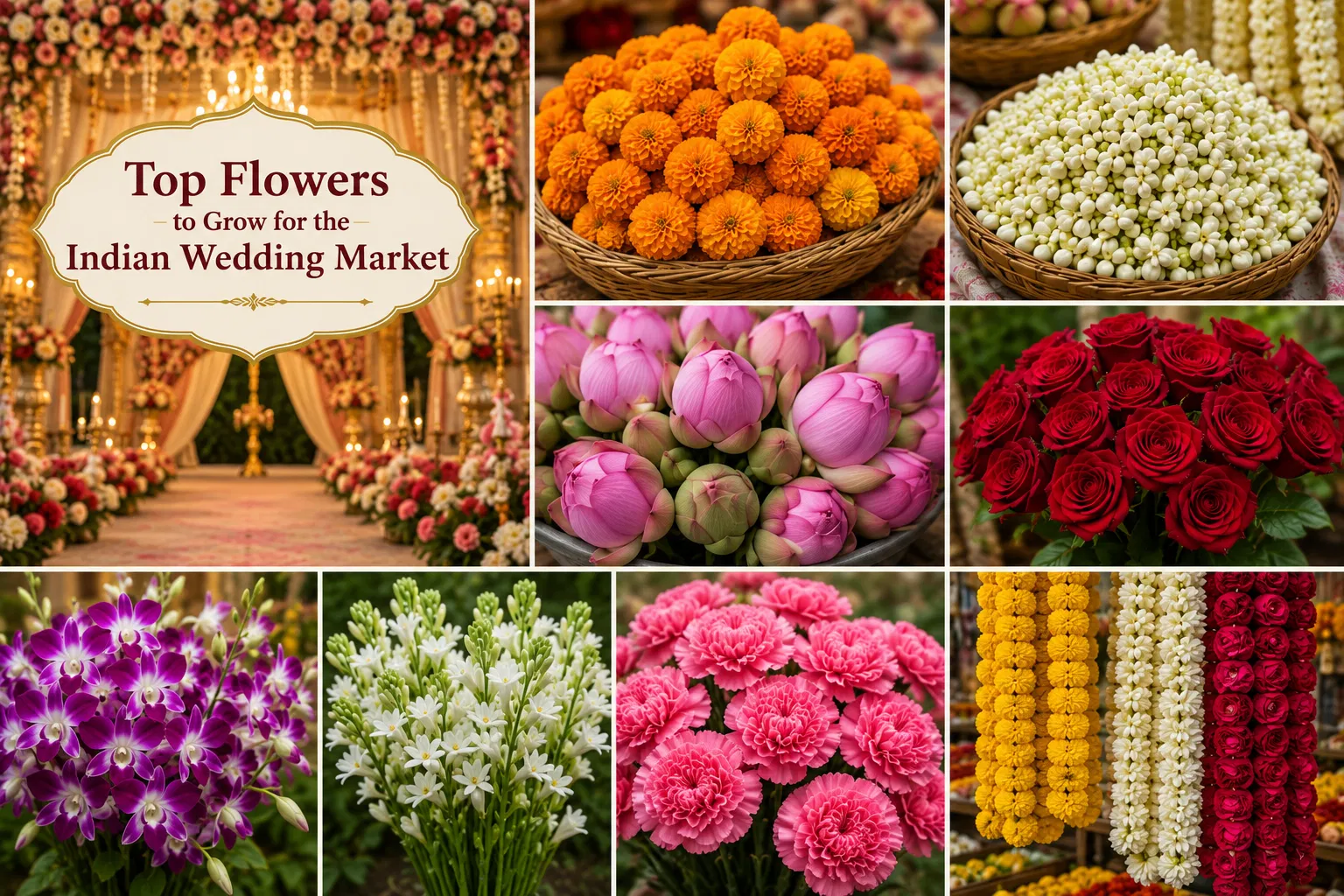
1. Marigold
Marigold is one of the most important flowers in the Indian wedding market. Its bright orange and yellow hues symbolize prosperity, purity, and celebration. Marigolds are used extensively in garlands, entrance décor, stage backdrops, and religious rituals.
Why grow marigolds:
- Very high demand in weddings and festivals
- Quick-growing and suitable for multiple harvests
- Hardy flower with good shelf life
- Preferred for bulk orders
Marigold is ideal for growers who want consistent sales with relatively low production complexity. French marigold and African marigold are especially popular in wedding arrangements.
2. Rose
Roses are timeless and continue to dominate the wedding flower market. They are used in bouquets, garlands, centerpieces, bridal décor, and luxury wedding installations. Red, white, pink, and cream roses are especially sought after for Indian weddings.
Why roses are profitable:
- High value in both traditional and premium wedding segments
- Wide color range for modern themes
- Strong demand for floral design work
- Suitable for year-round cultivation in many regions
Hybrid tea roses and spray roses are excellent choices for commercial growers targeting wedding buyers. Proper grading and post-harvest handling can significantly increase profits.
3. Jasmine
Jasmine holds deep cultural and religious significance in India. Its fragrance makes it one of the most cherished flowers for weddings, especially in hair adornments, garlands, puja rituals, and traditional ceremonies. Brides and family members often prefer jasmine for its elegance and symbolic value.
Why jasmine is in demand:
- Highly valued for fragrance and tradition
- Essential for garlands and ceremonial use
- Strong local demand in South and West India
- Can bring premium returns when supplied fresh
Jasmine requires careful harvesting and fast delivery, but its strong market appeal makes it a worthy crop for wedding-focused flower farming.
4. Tuberose
Tuberose, also known as rajnigandha, is another high-demand wedding flower in India. It is prized for its long stems, elegant white blooms, and sweet fragrance. Tuberose is used in garlands, bouquets, table arrangements, and temple-wedding décor.
Why tuberose is a smart choice:
- Excellent fragrance and visual appeal
- Popular in both traditional and modern décor
- Good vase life and transport tolerance
- Reliable demand in the wedding market
Single and double varieties of tuberose can be grown depending on market preference. It is especially valuable for growers near urban wedding hubs.
5. Chrysanthemum
Chrysanthemums are widely used in Indian weddings because they are available in many shapes, sizes, and colors. They are suitable for garlands, floral walls, stage arrangements, and decorative baskets. Their long-lasting nature makes them ideal for event use.
Why chrysanthemum works well for weddings:
- Available in numerous colors and forms
- Long shelf life after harvesting
- Strong demand for large-scale décor
- Useful for both budget and premium events
Spider mums, button mums, and standard chrysanthemums all have a place in the wedding supply chain. For growers, this flower offers excellent flexibility and market potential.
6. Gerbera
Gerbera has become increasingly popular in Indian wedding décor because of its bold colors and cheerful appearance. It is often used in bouquets, table centerpieces, floral panels, and contemporary event styling. Gerbera is especially attractive to wedding planners seeking a modern floral look.
Why gerbera is a valuable crop:
- Bright, eye-catching blooms
- High demand in premium wedding décor
- Excellent for mixed arrangements
- Good returns with greenhouse cultivation
For growers willing to invest in protected cultivation, gerbera can be highly rewarding. Its uniformity and striking color range make it a favorite in upscale wedding markets.
7. Orchids
Orchids are associated with luxury, sophistication, and exclusivity. They are increasingly used in elite Indian weddings, especially for stage décor, bridal bouquets, welcome arrangements, and designer installations. While they require more care, orchids command a premium price.
Why orchids are worth considering:
- High-value flower for luxury weddings
- Excellent visual impact
- Suitable for premium floral designers
- Strong demand in urban wedding markets
Popular varieties such as dendrobium and cymbidium are often chosen for their durability and elegance. Orchids are best suited to growers targeting high-end clients and event florists.
8. Lilies
Lilies are increasingly seen in Indian wedding arrangements because of their graceful shape and refined appearance. They are used in bridal bouquets, reception décor, aisle arrangements, and statement centerpieces. White and pink lilies are especially popular.
Why lilies appeal to wedding buyers:
- Elegant and premium look
- Strong demand in luxury events
- Good vase life when handled properly
- Useful for modern floral styling
Lilies require careful management, but they can fetch excellent margins in the wedding sector. Their blend of beauty and sophistication makes them a strong commercial crop.
9. Carnation
Carnations are one of the most practical wedding flowers for large-scale use. They are available in many colors, last well after harvesting, and are often used in garlands, bouquets, floral garlands, and decorative installations. Their ruffled petals give arrangements a full, luxurious look.
Why carnations are a reliable option:
- Long-lasting and easy to transport
- Affordable for bulk wedding orders
- Suitable for mixing with other flowers
- High demand in both urban and semi-urban markets
Carnations are especially useful for growers looking for a dependable flower that performs well in commercial distribution systems.
10. Lotus
Lotus carries deep spiritual and cultural importance in India and is often used in religious wedding rituals, traditional décor, and ceremonial offerings. While not as commonly used in bulk decorations as marigold or rose, lotus has strong symbolic value and a special place in Indian weddings.
Why lotus deserves attention:
- High cultural and religious significance
- Used in sacred rituals and décor
- Strong niche demand for traditional weddings
- Premium appeal in select markets
Growers with access to suitable water bodies or pond-based cultivation systems may find lotus a distinctive addition to their wedding flower portfolio.
What Makes a Flower Profitable for the Wedding Market?
Choosing the right flower is only part of the equation. To succeed in the Indian wedding flower market, growers should focus on the traits that buyers value most.
- Freshness: Flowers must reach the venue in peak condition
- Color consistency: Wedding planners often need matching shades
- Long shelf life: Flowers should remain attractive through events
- Availability in bulk: Large weddings require steady supply
- Transport durability: Flowers should survive handling and travel
Final Thoughts
The Indian wedding market offers huge opportunities for flower growers who know what buyers want. Marigold, rose, jasmine, tuberose, chrysanthemum, gerbera, orchids, lilies, carnation, and lotus all have strong potential depending on your region, scale, and target customer base.
If you want to build a profitable floriculture business, focus on flowers that combine beauty, fragrance, cultural relevance, and transportability. These are the blooms that keep wedding planners, florists, and families coming back season after season.
Final insight: The best flowers for the Indian wedding market are not just the most beautiful—they are the ones that consistently meet demand, fit cultural traditions, and deliver value at scale.
Start with the flowers that match your climate and market access, then build a reliable supply chain. In the Indian wedding industry, the right blooms can turn a flower farm into a thriving business.