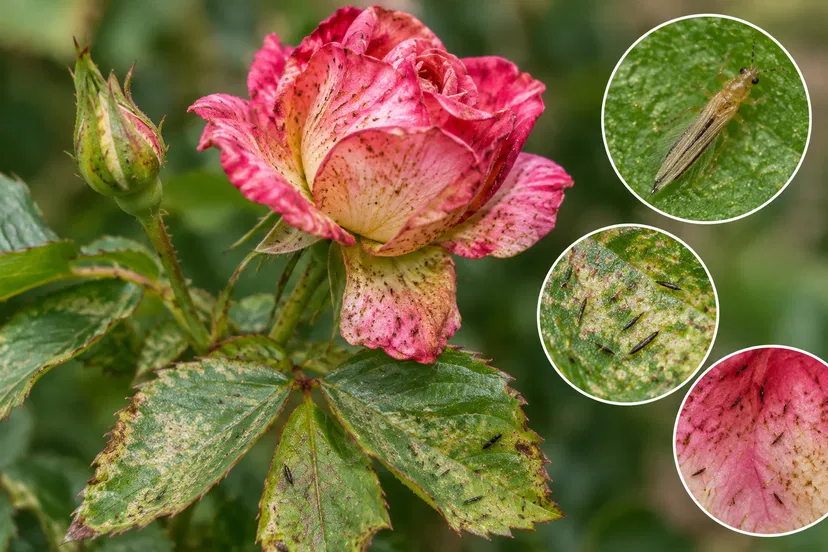
Thrips are one of the most common pests bitter gourd growers deal with, especially in hot, dry weather. They're tiny enough to go unnoticed at first, but a growing population can quickly affect leaf health, vine growth, and the appearance of the fruit itself.
Symptoms
- Silvery or bronze streaks on the upper surface of leaves
- Leaves curling upward and looking crinkled or distorted
- Rough, scarred patches on the fruit surface, affecting its appearance
- Stunted vine growth and smaller leaves at the growing tip
- Flower drop and poor fruit set under heavy infestation
Causes
- Hot, dry weather, which speeds up the thrips life cycle
- Continuous cucurbit cultivation in the same field without a break
- Overuse of broad-spectrum insecticides that wipe out natural predators
- Weeds and nearby host plants carrying a thrips population into the field
- Moisture stress, which makes the crop more attractive to thrips
How to Identify
Thrips are slender, yellowish to brown insects, usually only 1-2 mm long, which makes them hard to spot with the naked eye. Look inside curled leaves, along the leaf veins, and inside open flowers, since that's where they hide during the day. A simple way to check is to tap a flower or a suspect leaf over a sheet of white paper; if thrips are present, you'll see tiny specks moving around on the paper. On the fruit, their feeding leaves a silvery or bronzed scarring that looks different from typical insect bite marks, which helps tell thrips damage apart from other pests.
Control Methods
Chemical Control
Cyantraniliprole 10.26% OD works through both contact and systemic action, moving into the leaf tissue to stop thrips from feeding within hours of application. Because it's absorbed into the plant, it also helps against other sucking pests like whitefly and aphids that often show up alongside thrips.
Product Recommendation
Biological Control
Beauveria bassiana is a naturally occurring fungus that infects and kills thrips on contact, making it a useful option for growers who want to reduce chemical use or rotate with a non-chemical spray. It's worth noting this isn't a CIBRC-confirmed label claim specifically for bitter gourd thrips, but the product itself lists bitter gourd and thrips among its recommended uses.
Product Recommendation
Cultural Control
- Avoid moisture stress with regular, consistent irrigation
- Rotate with a non-cucurbit crop where thrips pressure has been high
- Keep field borders free of weeds that can host thrips
- Avoid excess nitrogen, which encourages soft growth thrips prefer
Mechanical Control
- Set up blue sticky traps in and around the field to catch and monitor adult thrips
- Remove and destroy heavily infested leaves and vines to reduce the population before it spreads
Product Recommendation
Conclusion
Thrips damage in bitter gourd is easiest to manage when it's caught early, before the population builds up and starts affecting fruit quality. Combining a chemical or biological spray with simple cultural steps like proper irrigation and field sanitation gives more reliable, longer-lasting control than relying on any one method alone.
Disclaimer: Always confirm current label registration, approved dosage, water volume, and pre-harvest interval (PHI) for your state before using any product, since labels are periodically revised by regulatory authorities.
This guide is a general advisory. Do your own research and verification before using any product. Always confirm suitability for your crop stage, region, and field conditions before making any purchase, spray, or crop-management decision.