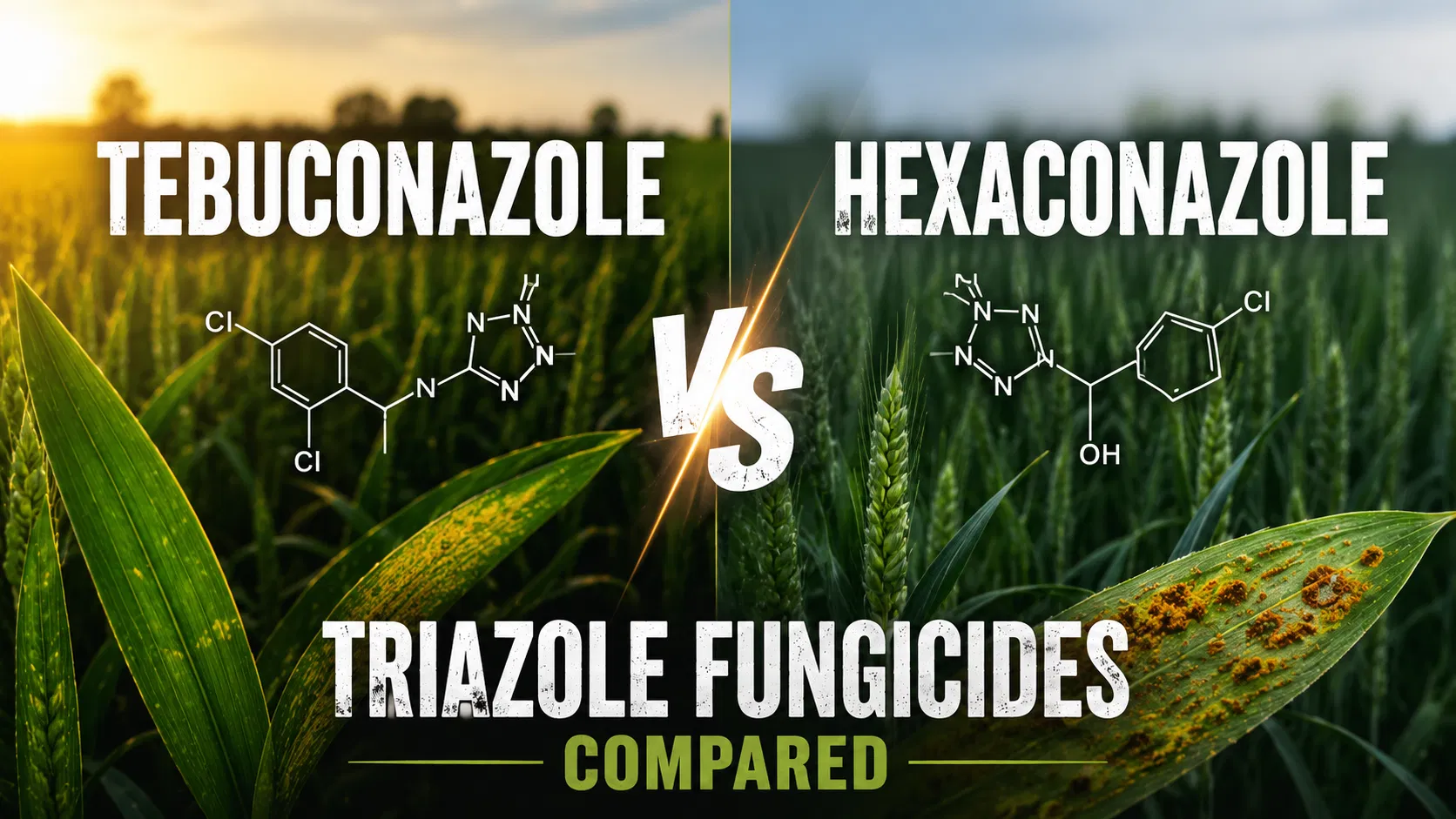
When disease pressure starts building in crops, choosing the right fungicide can make the difference between a protected harvest and a costly loss. Among the most widely used triazole fungicides, tebuconazole and hexaconazole are often compared because both offer strong systemic action, broad-spectrum control, and reliable results against fungal diseases. But while they belong to the same chemical family, they are not identical in performance, crop fit, or disease control profile.
If you are evaluating tebuconazole vs hexaconazole, understanding their strengths, limitations, and best-use scenarios will help you make a smarter crop protection decision. This guide breaks down the comparison in a simple, practical way.
What Are Tebuconazole and Hexaconazole?
Tebuconazole and hexaconazole are systemic fungicides in the triazole group, also known as demethylation inhibitors (DMIs). They work by disrupting ergosterol biosynthesis, which is essential for fungal cell membrane formation. Without proper membrane development, fungal growth slows down and eventually stops.
Because they are systemic, both fungicides are absorbed by the plant and move within tissues, providing better protection than contact-only fungicides. They are commonly used in agriculture, horticulture, and plantation crops to manage a wide range of fungal infections.
Tebuconazole vs Hexaconazole: Quick Comparison
- Chemical family: Both are triazole fungicides
- Mode of action: Systemic, ergosterol biosynthesis inhibition
- Primary use: Control of fungal diseases in crops
- Strength: Broad-spectrum disease suppression
- Main difference: Crop selectivity, disease efficacy, and performance under specific conditions
Mode of Action
Both fungicides interfere with the fungal enzyme C14-demethylase, preventing the formation of ergosterol. Since ergosterol is a key component of fungal cell membranes, the fungus cannot grow normally.
This shared mode of action means that tebuconazole and hexaconazole are effective against many of the same pathogens, including:
- Powdery mildew
- Rusts
- Leaf spots
- Blights
- Anthracnose
- Sheath and root-related fungal diseases in certain crops
However, subtle differences in formulation, mobility, and crop response can influence which one performs better in the field.
Effectiveness Against Fungal Diseases
Tebuconazole is often favored for strong activity against rusts, leaf spots, and powdery mildew across a wide range of crops. It is known for its reliable curative and protective action, making it a popular choice when disease is already visible or conditions strongly favor infection.
Hexaconazole, on the other hand, is especially appreciated in crops where powdery mildew and certain sheath diseases are major concerns. It is frequently used in horticultural and plantation crops because of its effectiveness and crop tolerance in those systems.
Bottom line: Both fungicides are effective, but tebuconazole is often considered broader in certain field applications, while hexaconazole is highly valued for targeted disease control in specific crops.
Crop Use and Application Preference
The best fungicide is not always the most powerful one on paper. Crop compatibility and timing matter just as much.
Tebuconazole is commonly used in:
Hexaconazole is commonly used in:
- Tea
- Grapes
- Rice
- Ornamentals
- Plantation crops
- Some fruit and spice crops
Hexaconazole is often chosen in crops where a strong systemic fungicide is needed but phytotoxicity risk and crop sensitivity must be carefully managed. Tebuconazole is widely used where broader disease coverage and strong curative action are priorities.
Preventive vs Curative Performance
Both products work best when applied early, before disease spreads heavily. Still, there are practical differences.
- Tebuconazole is often perceived as stronger in curative situations, especially when early infection is already present.
- Hexaconazole performs very well as a preventive and early intervention fungicide, especially in crops prone to recurring fungal pressure.
If a field already shows active disease, tebuconazole may be the preferred option in many programs. If the goal is prevention or scheduled disease management, hexaconazole can be an excellent fit.
Crop Safety and Phytotoxicity
Crop safety is a major factor in fungicide selection. While both fungicides are generally safe when used according to label recommendations, sensitivity can vary by crop, variety, weather, and dosage.
Hexaconazole is often regarded as a crop-friendly option in several horticultural and plantation systems. Tebuconazole is also widely used safely, but care is needed in sensitive crops or under stress conditions such as high heat, drought, or mixed tank applications.
Always follow local recommendations, because formulation strength and crop stage can affect results and safety.
Residual Activity and Systemic Movement
One reason triazole fungicides remain popular is their residual protection. After application, they continue to suppress fungal growth for a period of time, helping reduce reinfection.
- Tebuconazole is known for solid systemic movement and dependable residual control.
- Hexaconazole also provides systemic protection and is valued for sustained action in targeted disease programs.
In practice, residual performance depends on dose, weather, canopy coverage, and disease pressure. Heavy rain, rapid plant growth, and severe infection can reduce effective duration.
Resistance Management Considerations
Because both fungicides belong to the same FRAC group, resistance management is essential. Repeated use of triazoles alone can increase the risk of resistant fungal populations.
To reduce resistance pressure:
- Rotate fungicides with different modes of action
- Use tank mixes only when recommended
- Apply at the correct growth stage and dose
- Avoid repeated back-to-back sprays of the same group
- Integrate cultural control practices such as sanitation and resistant varieties
This is especially important in high-value crops where disease cycles can repeat quickly.
Which Fungicide Should You Choose?
The answer depends on your crop, disease, and spraying strategy.
- Choose tebuconazole if you need broad-spectrum triazole protection, strong curative action, or control of rusts and leaf spots in field crops.
- Choose hexaconazole if your crop program prioritizes powdery mildew control, plantation crop safety, or well-established preventive use in specific crops.
In many cases, neither fungicide is universally "better." The better choice is the one that matches the disease pressure, crop stage, local recommendations, and resistance plan.
Practical Field Tips for Better Results
To get the most from either fungicide, application quality matters just as much as product choice.
- Spray at early disease onset for best results
- Ensure good coverage on both upper and lower leaf surfaces
- Avoid spraying during peak heat or strong wind
- Use recommended doses and water volumes
- Rotate modes of action in your spray program
Good timing and correct coverage can significantly improve fungal control and protect yield.
Conclusion
In the comparison of tebuconazole vs hexaconazole, both fungicides prove to be valuable tools in modern crop protection. They share the same triazole-based mode of action, but their best uses can differ depending on crop type, disease target, and application strategy. Tebuconazole is often the stronger choice for broad, curative disease management, while hexaconazole is highly effective in preventive programs and certain sensitive crop systems.
The smartest approach is not to ask which fungicide is best in general, but which fungicide is best for your crop at the right time. For consistent disease control and resistance management, always follow local agronomic guidance and rotate fungicides responsibly.
Final insight: choose based on the disease, not the name—because in fungicide management, precision always outperforms guesswork.