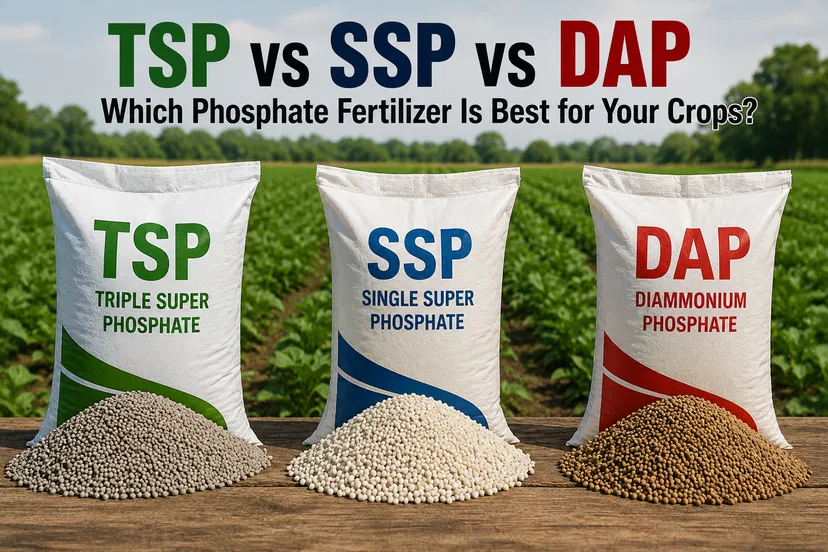
Choosing the right phosphate fertilizer can make a major difference in crop performance, soil health, and overall fertilizer efficiency. Two of the most widely used options are SSP (Single Super Phosphate) and DAP (Di-Ammonium Phosphate). While both supply phosphorus, they are not the same—and the best choice depends on your crop, soil type, and nutrient goals.
If you are trying to decide between SSP vs DAP fertilizer, understanding how each works will help you avoid costly mistakes and get better results from every application.
What Is SSP Fertilizer?
SSP fertilizer, or Single Super Phosphate, is a phosphorus fertilizer made by treating rock phosphate with sulfuric acid. It typically contains:
- Phosphorus for root development and early crop growth
- Sulfur for protein formation and enzyme activity
- Calcium to support soil structure and plant nutrition
SSP is especially valued because it provides more than one essential nutrient. This makes it useful in soils that are low in sulfur or calcium, not just phosphorus.
What Is DAP Fertilizer?
DAP fertilizer, or Di-Ammonium Phosphate, is a concentrated phosphorus fertilizer that also supplies nitrogen. Its main nutrients are:
- Phosphorus for root growth and flowering
- Nitrogen for early vegetative growth
DAP is one of the most popular fertilizers in modern farming because it is highly concentrated and easy to transport, store, and apply. It delivers a strong nutrient boost, especially at planting time.
SSP vs DAP: Key Differences
When comparing SSP vs DAP, the biggest difference is not just nutrient content, but how each fertilizer fits into your crop nutrition plan.
- SSP provides phosphorus, sulfur, and calcium
- DAP provides phosphorus and nitrogen
- SSP is generally lower in phosphorus concentration
- DAP is more concentrated and requires less product per acre
- SSP is often preferred in sulfur-deficient soils
- DAP is often preferred for crops needing both early nitrogen and phosphorus
When to Choose SSP Fertilizer
SSP fertilizer is a smart choice when your soil or crop needs sulfur in addition to phosphorus. It is especially useful for crops that respond strongly to sulfur nutrition.
Best situations for SSP
- Soils low in sulfur
- Crops with high sulfur demand
- Farms looking to improve soil calcium levels
- Fields where a balanced nutrient approach is preferred
Crops that often benefit from SSP
- Oilseeds such as mustard, groundnut, and canola
- Legumes
- Forage crops
- Root and tuber crops
Because SSP contains sulfur, it can improve crop quality in addition to yield. This matters in crops where oil content, protein production, or overall nutritional value is important.
When to Choose DAP Fertilizer
DAP fertilizer is often the better option when you need a concentrated source of phosphorus and nitrogen at planting. It works well in many high-yield farming systems.
Best situations for DAP
- Early crop establishment
- Fields needing a strong phosphorus boost
- Soils that already have adequate sulfur
- Cropping systems where nitrogen is also needed at sowing
Crops that often benefit from DAP
- Cereals such as wheat, maize, and rice
- Vegetables with high early nutrient demand
- Broad-acre crops needing starter fertilizer
DAP is especially useful when seedlings need immediate support for root growth and early vigor. Its nitrogen content can help plants establish quickly, which may lead to better crop uniformity.
Soil Type Matters More Than You Think
The right phosphate fertilizer is not universal. Soil conditions play a huge role in whether SSP or DAP will perform better.
Choose SSP if your soil test shows low sulfur or if your crop is sensitive to sulfur deficiency. SSP can be particularly valuable in sandy soils or heavily cropped land where sulfur levels have dropped over time.
Choose DAP if your soil already has enough sulfur but needs a stronger phosphorus and nitrogen starter. DAP is often ideal in soils where quick early growth is the priority.
Tip: A soil test is the best way to decide between SSP and DAP. Fertilizer choice should match what your soil actually lacks, not just what is most popular.
SSP vs DAP: Which Is Better for Yield?
There is no single winner in the SSP vs DAP debate. Yield depends on matching the fertilizer to the crop’s nutrient needs and the soil’s condition.
If your crop needs sulfur, SSP may outperform DAP because it corrects multiple deficiencies at once. If your crop needs a quick start with both phosphorus and nitrogen, DAP may deliver better early growth.
In many cases, the highest yield comes from using the fertilizer that fills the most important nutrient gap. That is why farmers who rely only on product labels often miss out on better performance.
Cost, Efficiency, and Application Differences
Cost is another major factor in deciding between SSP and DAP fertilizer. DAP usually contains more phosphorus per unit, so less product is needed. That can make transport and application more efficient.
SSP may cost less per bag, but because it is less concentrated, you may need to apply more of it to deliver the same amount of phosphorus. However, the added sulfur and calcium can make that extra volume worthwhile.
Here is a simple way to think about it:
- DAP is often more efficient for concentrated nutrient delivery
- SSP is often more effective when secondary nutrients are needed
How to Make the Right Choice
To choose between SSP vs DAP fertilizer, ask these questions:
- Does my soil lack sulfur?
- Does my crop need extra nitrogen at planting?
- Am I trying to improve early growth or overall crop quality?
- What does my soil test recommend?
- Which fertilizer gives the best return for this specific field?
If sulfur deficiency is a concern, SSP is usually the better phosphate fertilizer. If your goal is a fast-starting crop with phosphorus and nitrogen support, DAP may be the stronger choice.
Final Verdict: SSP or DAP?
Both SSP and DAP are valuable phosphate fertilizers, but they serve different purposes. SSP fertilizer is best when your crop needs phosphorus plus sulfur and calcium. DAP fertilizer is best when you want a concentrated source of phosphorus and nitrogen for strong early growth.
The smartest decision is not to choose based on habit, but on soil test results, crop requirements, and nutrient balance. When you match the fertilizer to the field, you improve nutrient efficiency, save money, and support healthier crops.
Bottom line: If sulfur matters, go with SSP. If early nitrogen and concentrated phosphorus matter most, choose DAP. The right phosphate fertilizer is the one your crop actually needs.