When rain is forecast, farmers often face an important question: should farmers irrigate before rain? The answer depends on current soil moisture, crop growth stage, expected rainfall, soil type, drainage conditions, and how soon the rain is likely to arrive.
Irrigating at the wrong time can waste water, increase pumping costs, cause nutrient loss, and create waterlogged conditions. However, delaying irrigation when crops are already under severe moisture stress can also reduce growth and yield. Smart irrigation decisions require farmers to combine weather forecasts with field observations and soil moisture data.
Should Farmers Irrigate Before Rain?
In most cases, farmers should not irrigate before rain when adequate rainfall is expected soon and the root zone already contains sufficient moisture.
Limited irrigation may still be necessary when:
- The crop is already experiencing moisture stress.
- The rainfall forecast is uncertain.
- Only a small amount of rain is expected.
- The crop is at a moisture-sensitive growth stage.
- Sandy soil is drying rapidly.
The goal is not to irrigate simply because the soil surface looks dry. Farmers should assess moisture within the active root zone and determine whether the expected rainfall will meet the crop's actual water requirement.
Key principle: Irrigate before rain only when the crop cannot safely wait and the predicted rainfall is unlikely to provide enough water.
Why Irrigation Timing Matters
Correct irrigation timing supports healthy roots, efficient nutrient uptake, and consistent crop growth. Both insufficient and excessive water can harm crop performance.
Unnecessary irrigation before rainfall may cause:
- Water waste: Rain may supply the moisture already delivered through irrigation.
- Runoff: Saturated soil may not absorb additional rainfall effectively.
- Nutrient leaching: Excess water can move nutrients below the root zone.
- Higher costs: Unnecessary pumping increases energy and labour expenses.
- Root stress: Waterlogged soil contains less oxygen for healthy root activity.
- Disease pressure: Prolonged wetness may encourage root and foliar diseases.
When Irrigating Before Rain May Be Necessary
1. The Crop Is Under Severe Moisture Stress
If crops are wilting, leaf rolling, showing reduced growth, or experiencing dry root-zone conditions, waiting for uncertain rain may cause additional damage.
A light irrigation can help protect the crop until rainfall arrives. This is especially important during sensitive stages such as flowering, fruit setting, tasselling, pod development, and grain filling.
2. The Rainfall Forecast Is Uncertain
A forecast showing a low probability of rain should not automatically replace scheduled irrigation. Rainfall may miss the field, arrive later than expected, or deliver less water than predicted.
Farmers should compare forecasts from reliable sources and monitor changing local conditions before cancelling irrigation.
3. Only Light Rain Is Expected
A brief shower may wet only the upper soil surface without replenishing moisture deeper in the root zone. If the soil profile is already dry, limited irrigation may still be required.
The expected rainfall amount should be compared with the crop's water requirement and current soil moisture deficit.
4. Sandy Soil Is Drying Quickly
Sandy soils hold less water and drain faster than clay or loam soils. Crops grown in sandy fields may experience moisture stress even when rain is forecast within the next day.
Short, controlled irrigation may help maintain crop health without saturating the field.
5. Nutrients Need Moisture for Uptake
Crops require adequate soil moisture to absorb nutrients efficiently. If the root zone is extremely dry, a small irrigation may help support nutrient movement and crop recovery.
However, irrigation should be carefully managed after applying fertilizers, because excessive water can increase nutrient leaching and runoff.
When Farmers Should Avoid Irrigating Before Rain
1. Heavy Rain Is Expected Soon
If substantial rainfall is expected within a few hours or by the following day, irrigation is usually unnecessary. Adding water before a storm can increase the risk of runoff, erosion, and standing water.
2. The Root Zone Is Already Moist
Surface soil may appear dry while deeper layers still contain sufficient moisture. Farmers should check the root zone before starting irrigation.
Applying more water when the soil is near field capacity can reduce soil aeration and stress crop roots.
3. The Field Has Poor Drainage
Low-lying fields, compacted soils, and heavy clay soils drain slowly. Irrigating these fields before rain can quickly create waterlogged conditions.
Improving drainage channels and removing standing water should take priority over additional irrigation.
4. Fertilizer Was Recently Applied
Heavy irrigation followed by rain may move nutrients below the crop's active root zone. This lowers fertilizer-use efficiency and can contribute to nutrient loss from the field.
Farmers should consider fertilizer timing, soil moisture, rainfall intensity, and field slope before irrigating.
5. Crops Are Vulnerable to Fungal Diseases
Extra irrigation before prolonged wet weather can increase humidity, leaf wetness, and soil saturation. These conditions may encourage fungal disease development.
Good irrigation management should form part of an integrated crop protection strategy during the rainy season.
Factors to Check Before Irrigating
- Soil moisture: Check moisture within the active root zone rather than relying only on surface appearance.
- Expected rainfall: Review rainfall probability, amount, intensity, and timing.
- Crop growth stage: Reproductive and establishment stages often require more consistent moisture.
- Soil type: Sandy soils dry quickly, while clay soils retain moisture longer.
- Drainage: Poorly drained fields face a greater risk of waterlogging.
- Rooting depth: Deep-rooted crops may access moisture unavailable to shallow-rooted crops.
- Irrigation efficiency: Drip systems provide more precise applications than less controlled methods.
- Recent applications: Consider fertilizers and crop treatments that may be affected by excess water.
How to Check Soil Moisture Before Rain
Reliable irrigation decisions begin with accurate soil moisture assessment. Farmers can use several methods:
- Soil moisture sensors
- Tensiometers
- Hand-feel soil tests
- Soil probes or augers
- Crop stress observations
- Evapotranspiration records
Measurements should be taken at more than one location, especially in fields with varying soil texture, slope, drainage, or crop growth.
Best Practices for Pre-Rain Irrigation
- Irrigate only when necessary: Base the decision on crop demand and soil moisture.
- Use a reduced irrigation amount: Replace only part of the moisture deficit when rain is expected.
- Prefer targeted irrigation: Apply water directly to the root zone where possible.
- Monitor hourly forecasts: Rain timing and intensity can change quickly.
- Account for soil type: Reduce irrigation in heavy or poorly drained soils.
- Avoid runoff: Use an application rate that the soil can absorb.
- Inspect drainage: Clear blocked channels before heavy rainfall.
- Record irrigation: Track water applied, rainfall received, and crop response.
Should Farmers Use a Full Irrigation Cycle?
A full irrigation cycle is rarely advisable immediately before expected rainfall. It may fill the soil profile and leave little capacity to absorb rain.
When irrigation is essential, farmers should consider a partial cycle that supplies enough water to prevent crop stress without saturating the root zone.
The correct amount depends on:
- Current soil moisture deficit
- Expected rainfall amount
- Crop rooting depth
- Crop growth stage
- Soil water-holding capacity
- Irrigation system efficiency
Drip, Sprinkler, and Flood Irrigation Before Rain
Drip Irrigation
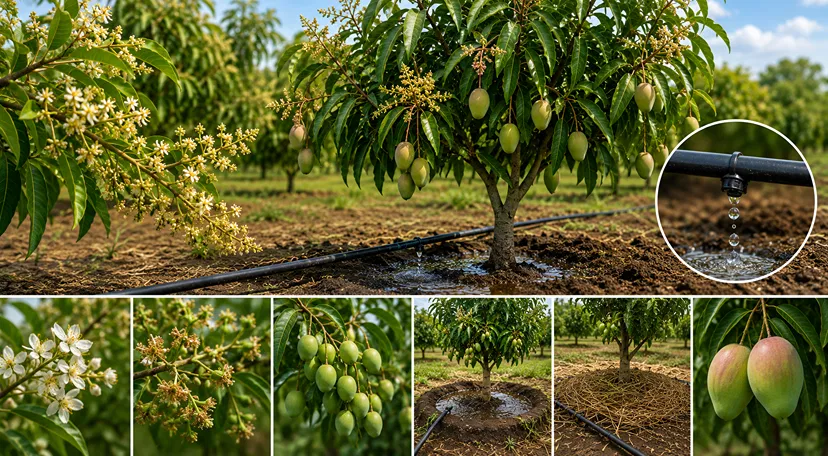
Drip irrigation allows precise, low-volume watering near the root zone. It is generally the most suitable system when a small pre-rain irrigation is necessary.
Sprinkler Irrigation
Sprinklers wet both the soil and crop canopy. Irrigating before humid or rainy weather may extend leaf wetness and increase disease risk in susceptible crops.
Flood or Furrow Irrigation
Flood and furrow systems can apply large amounts of water. They should generally be avoided before substantial rainfall, particularly in poorly drained fields.
The Role of Weather and Irrigation Technology
Weather applications, automated irrigation controllers, soil moisture sensors, satellite data, and field monitoring tools can improve irrigation decisions.
These technologies help farmers:
- Estimate rainfall more accurately.
- Track moisture at different soil depths.
- Identify dry and wet zones within a field.
- Reduce unnecessary irrigation.
- Improve water-use efficiency.
- Respond faster to changing weather conditions.
Smart irrigation is not about applying more water. It is about applying the right amount at the right time and in the right place.
Common Irrigation Mistakes Before Rain
- Assuming every forecasted rainfall event will occur.
- Cancelling irrigation without checking soil moisture.
- Applying a full irrigation cycle before a storm.
- Judging soil moisture only from the surface.
- Ignoring poor drainage or compacted soil.
- Using the same irrigation plan for every crop and soil type.
- Failing to consider recent fertilizer applications.
- Ignoring crop growth stage and rooting depth.
Pre-Rain Irrigation Checklist
- Check soil moisture in the root zone.
- Review hourly rainfall probability and expected amount.
- Assess crop stress and growth stage.
- Consider soil texture and drainage.
- Review recent fertilizer or crop treatment applications.
- Estimate how much water the rain may provide.
- Use partial irrigation if watering cannot be delayed.
- Recheck field and weather conditions before starting.
Final Answer: Should Farmers Irrigate Before Rain?
Farmers should generally avoid irrigating before rain when adequate rainfall is expected soon and the root zone already contains sufficient moisture.
However, limited irrigation may be justified when crops are under severe moisture stress, rainfall is uncertain, only light rain is forecast, or the crop is passing through a critical growth stage.
The best decision comes from combining soil moisture measurements, crop requirements, weather forecasts, soil type, and drainage conditions. This approach helps conserve water, reduce costs, prevent nutrient loss, and protect crop health.
Bottom line: Do not irrigate before rain based on habit or surface soil appearance. Measure the root-zone moisture, assess the expected rainfall, and apply only the water the crop genuinely needs.