Every successful crop starts long before the first green shoot breaks through the soil. In those early hours and days, seeds and seedlings face a hidden threat from soilborne diseases, damping-off pathogens, and fungal infections that can reduce emergence, stunt growth, and weaken yield potential. That is where seed treatment fungicides come in. By giving seeds an early shield of protection, growers can help crops establish faster, stronger, and more evenly from day one.
Why Seed Treatment Fungicides Matter
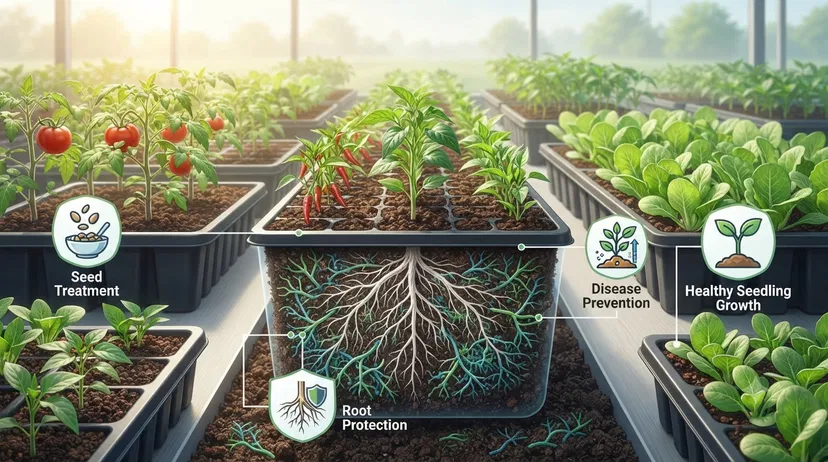
Seed treatment fungicides are specially formulated products applied directly to seed before planting. Their purpose is simple but powerful: protect germinating seeds and young seedlings from fungal diseases during the most vulnerable stage of development. Unlike foliar fungicides applied later in the season, seed treatments work immediately, creating a protective barrier right where disease pressure begins.
This early protection can make a major difference in crop stand quality. When seeds are exposed to pathogens in cold, wet, or compacted soils, emergence can be delayed or uneven. Seed treatment fungicides help reduce those risks, improving the chances of uniform germination and stronger early vigor.
How Seed Treatment Fungicides Work
Seed treatment fungicides function in several ways depending on the active ingredient and formulation. Some create a protective coating around the seed surface, preventing fungal spores from infecting the seed before or during germination. Others are absorbed by the seed or young plant tissue, offering systemic protection as the seedling grows.
Common benefits include:
- Protection against seedborne diseases that can be carried on or in the seed.
- Defense against soilborne pathogens that attack during germination and emergence.
- Improved stand establishment by reducing early-season seedling losses.
- Better crop uniformity from more consistent emergence.
In practical terms, that means fewer gaps in the field, healthier plants, and a more reliable start to the growing season.
Common Diseases Controlled by Seed Treatment Fungicides
Seed treatment fungicides are used across many crops to manage a wide range of fungal diseases. The exact targets vary by crop and product, but some of the most common include:
- Pythium species, which can cause damping-off and seed decay in cool, wet soils.
- Rhizoctonia, a pathogen linked to seedling blight and root rot.
- Fusarium species, which may infect seeds, roots, and seedlings.
- Seed rots caused by soilborne fungi under unfavorable planting conditions.
- Smuts and bunts in cereal crops, depending on the treatment used.
Because disease pressure differs from region to region and from field to field, choosing the right seed treatment fungicide starts with understanding local risks, planting conditions, and crop history.
Benefits of Using Seed Treatment Fungicides
One of the biggest advantages of seed treatment fungicides is targeted protection. Rather than applying large amounts of product across an entire field, growers can deliver protection directly where it is needed most. This precision can improve efficiency while supporting crop performance.
1. Stronger Early-Season Establishment
Young plants are most vulnerable before they develop a robust root system and above-ground growth. A seed treatment fungicide helps protect that critical establishment phase, giving crops a better chance to grow past early disease pressure.
2. Improved Stand Uniformity
Uneven emergence can lead to uneven crop development, which may complicate management and reduce yield potential. By limiting early seedling loss, fungicide seed treatments contribute to a more uniform stand.
3. Better Return on Seed Investment
High-quality seed is valuable, and every planted seed represents an investment. Seed treatment fungicides help protect that investment by reducing the likelihood that disease will compromise germination or early growth.
4. Reduced Need for Rescue Treatments
Preventive protection is often more effective than reactive treatment. By stopping disease before it gains a foothold, seed treatments may reduce the need for costly in-season interventions later on.
Healthy emergence is the foundation of yield. When crops start clean and protected, they are better positioned to handle stress, establish roots, and build momentum throughout the season.
Choosing the Right Seed Treatment Fungicide
Not all seed treatment fungicides are the same. The best choice depends on the crop, disease history, planting environment, and product compatibility. A strategic approach can improve both performance and value.
Consider the Crop
Corn, soybeans, wheat, cotton, and vegetables each have unique seedling disease profiles. A fungicide that works well in one crop may not be the best fit for another.
Assess Disease Pressure
Fields with a history of seed rot, damping-off, or root disease may benefit from broader or more targeted protection. Cool, wet planting conditions can also increase the need for treatment.
Look at Active Ingredients
Some seed treatments are broad-spectrum, while others target specific pathogens. Understanding the mode of action helps match the product to the expected disease challenge.
Check Seed Quality and Compatibility
The treatment should not interfere with seed flow, germination, or compatibility with other treatments such as insecticides or inoculants. Proper formulation matters for both performance and plant safety.
Best Practices for Seed Treatment Application
Even the best seed treatment fungicide can underperform if it is not applied correctly. Consistent coverage and proper handling are essential for reliable results.
- Use the recommended rate specified by the product label.
- Ensure even seed coverage so each seed receives adequate protection.
- Follow handling and storage instructions to preserve product performance.
- Test compatibility if combining fungicides with other seed-applied products.
- Plant treated seed promptly according to label guidance and storage recommendations.
Attention to detail at the seed treatment stage can translate into healthier emergence and fewer problems later in the season.
Seed Treatment Fungicides and Modern Crop Protection
Today's crop protection strategies increasingly emphasize precision, sustainability, and early intervention. Seed treatment fungicides fit naturally into that model because they concentrate protection at the point of greatest vulnerability. Instead of waiting for disease symptoms to appear, growers can act proactively before yield loss begins.
In integrated crop management systems, fungicide seed treatments are often combined with high-quality genetics, proper planting timing, soil health practices, and balanced fertility. Together, these practices create a stronger foundation for plant health and productivity.
When Seed Treatment Fungicides Make the Most Sense
Seed treatment fungicides can be especially valuable under conditions such as:
- Early planting into cold or saturated soils
- Fields with known history of damping-off or root rot
- High-value crops where stand loss is costly
- Situations where uniform emergence is critical
- Seeds planted into residue-heavy or disease-prone fields
In these settings, early protection can be the difference between a weak stand and a strong start.
The Bottom Line
Seed treatment fungicides are one of the most effective ways to protect crops from the moment they are planted. By defending seeds and seedlings against fungal threats, they help improve emergence, strengthen early growth, and support more uniform stands. For growers who want to maximize crop potential from day one, seed treatment fungicides offer a practical, preventive advantage that can pay off throughout the season.
Start strong, stay protected, and give every seed the best possible chance to succeed.