If you want strong, healthy plants next season, seed storage matters just as much as seed selection. Even the best seeds can lose vigor fast if they are exposed to heat, moisture, light, or air. The good news is that storing seeds correctly is simple once you know the basics. With the right seed storage tips, you can maintain germination, extend seed life, and save money by reducing waste.
Why Proper Seed Storage Matters
Seeds are living organisms in a dormant state. They may look dry and inactive, but they are still affected by their environment. Poor storage can damage the embryo inside the seed and reduce its ability to sprout later. That means lower germination rates, weaker seedlings, and fewer successful crops or flowers.
Good seed storage helps you:
- Maintain germination rates over time
- Protect seeds from mold and rot
- Preserve seed viability for future planting seasons
- Save money by preventing unnecessary seed replacement
- Keep heirloom and open-pollinated varieties usable for longer
The Four Biggest Threats to Seed Viability
To store seeds properly, you need to control the main factors that cause deterioration. The four biggest threats are heat, moisture, light, and oxygen. When these are minimized, seeds stay viable much longer.
1. Heat
High temperatures speed up seed aging. Even short exposure to warm conditions can shorten shelf life. Seeds should be kept in a cool place with stable temperatures.
2. Moisture
Moisture is one of the fastest ways to ruin seeds. It can trigger premature sprouting or encourage mold growth. Always make sure seeds are fully dry before storage.
3. Light
Direct sunlight and bright indoor light can degrade seed quality over time. Store seeds in opaque containers or in a dark location.
4. Oxygen
Air exposure gradually reduces seed longevity. While seeds do need to breathe during germination, long-term storage is better when seeds are sealed tightly to limit oxidation.
How to Prepare Seeds for Storage
Before placing seeds in storage, proper preparation is essential. Skipping this step can lead to mold, clumping, or early deterioration.
- Clean the seeds: Remove any plant debris, pulp, or chaff.
- Dry them thoroughly: Seeds should be fully dry before packing. A dry seed should feel hard and break cleanly rather than bend.
- Sort by type: Separate seeds by species and variety so you can track planting dates and storage needs.
- Label everything: Include the plant name, variety, and date collected or purchased.
For home gardeners, this small amount of organization can make a huge difference when it is time to plant.
Best Containers for Seed Storage
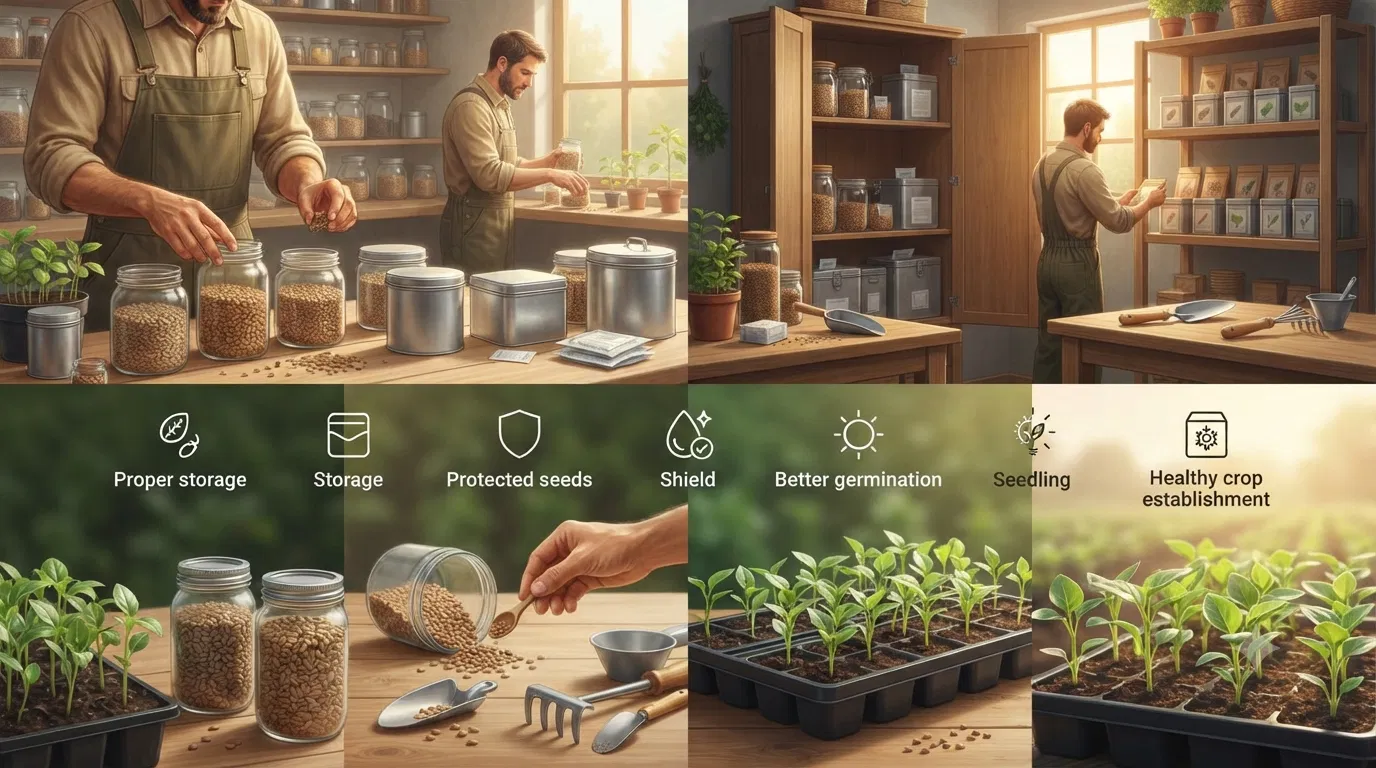
The right container helps protect seeds from moisture and temperature changes. Not all storage options are equally effective.
Paper Envelopes
Paper envelopes are a popular choice for short-term storage. They are breathable and useful for fully dried seeds. However, they should be kept inside a larger airtight container to protect against humidity.
Glass Jars
Glass jars with tight-fitting lids are excellent for long-term seed storage. They offer strong protection against moisture and pests. Add a desiccant packet if you want extra moisture control.
Plastic Containers
High-quality plastic containers can work well if they seal tightly. Make sure seeds are completely dry before sealing them inside.
Mylar Bags
Mylar bags are ideal for long-term seed preservation because they block light and provide a strong barrier against air and moisture. They are especially useful if you are storing large seed collections.
Tip: Always place seed packets inside a larger airtight container for added protection, especially in humid climates.
Ideal Storage Conditions for Seeds
If you want to maintain germination, focus on creating a cool, dry, and dark environment. Consistency is more important than constantly moving seeds from one place to another.
- Temperature: Store seeds in a cool area, ideally between 32°F and 41°F for long-term preservation. A refrigerator can work well if seeds are sealed properly.
- Humidity: Keep relative humidity low. Seeds last longer in dry conditions.
- Light exposure: Store seeds away from windows and bright indoor lighting.
- Stability: Avoid places with frequent temperature swings, such as garages, sheds, or areas near ovens and appliances.
A kitchen cabinet, basement shelf, or refrigerator can be suitable depending on your climate and how well the seeds are sealed.
Should You Store Seeds in the Fridge?
Refrigeration can extend seed life, but only if done correctly. The main advantage is a cool, stable environment. The main risk is condensation when containers are opened and closed too often.
If you store seeds in the fridge, follow these rules:
- Use airtight containers
- Let seeds reach room temperature before opening the container
- Avoid storing seeds near the fridge door where temperatures fluctuate
- Use desiccant packets if needed
When handled carefully, refrigerator seed storage can be one of the best ways to maintain germination for several seasons.
Using Desiccants to Protect Seeds
Desiccants absorb excess moisture and help keep seed containers dry. They are especially helpful in humid climates or when storing seeds for longer periods.
Common desiccant options include:
- Silica gel packets
- Dry rice in a breathable pouch
- Commercial moisture absorber packets
Do not let desiccants come into direct contact with seeds unless the product is designed for that purpose. Their job is to control humidity inside the container, not mix with the seeds themselves.
How Long Do Seeds Stay Viable?
Seed longevity varies by plant type. Some seeds remain viable for many years, while others lose germination quickly. The better your storage conditions, the longer seeds are likely to stay useful.
As a general guide:
- Short-lived seeds: onions, parsley, parsnips
- Medium-lived seeds: lettuce, carrots, peppers
- Long-lived seeds: beans, cucumbers, tomatoes, brassicas
Even within the same plant family, storage conditions and seed freshness can affect results. When in doubt, test old seeds before planting a full crop.
How to Test Germination Before Planting
Testing old seeds is a smart way to avoid disappointment in the garden. A simple germination test tells you whether seeds are still viable.
- Place 10 seeds on a damp paper towel.
- Fold the towel and place it inside a sealed bag or container.
- Keep it in a warm spot appropriate for the seed type.
- Check after the expected germination period.
- Count how many seeds sprouted to estimate germination rate.
If only a few seeds sprout, sow more than usual to compensate. This helps ensure a better stand in the garden.
Common Seed Storage Mistakes to Avoid
Many gardeners accidentally shorten seed life by making simple storage mistakes. Avoid these common problems:
- Storing seeds while they are still damp
- Leaving seed packets in hot cars, sheds, or garages
- Using clear containers in bright light
- Failing to label seed packets clearly
- Opening refrigerated seeds before they warm to room temperature
- Mixing old and new seeds without tracking dates
These issues may seem minor, but they can significantly reduce seed viability over time.
Final Thoughts on Maintaining Germination
Successful seed storage is really about protecting life in a tiny package. If you keep seeds cool, dry, dark, and properly labeled, you give them the best chance to stay viable until planting time. Whether you are saving garden seeds, preserving heirloom varieties, or simply storing leftovers from a packet, these seed storage tips will help maintain germination and improve your gardening success.
Take action today: review your current seed collection, move seeds into better containers if needed, and store them in a stable, dry location. A little care now can lead to stronger seedlings and a more productive garden later.