
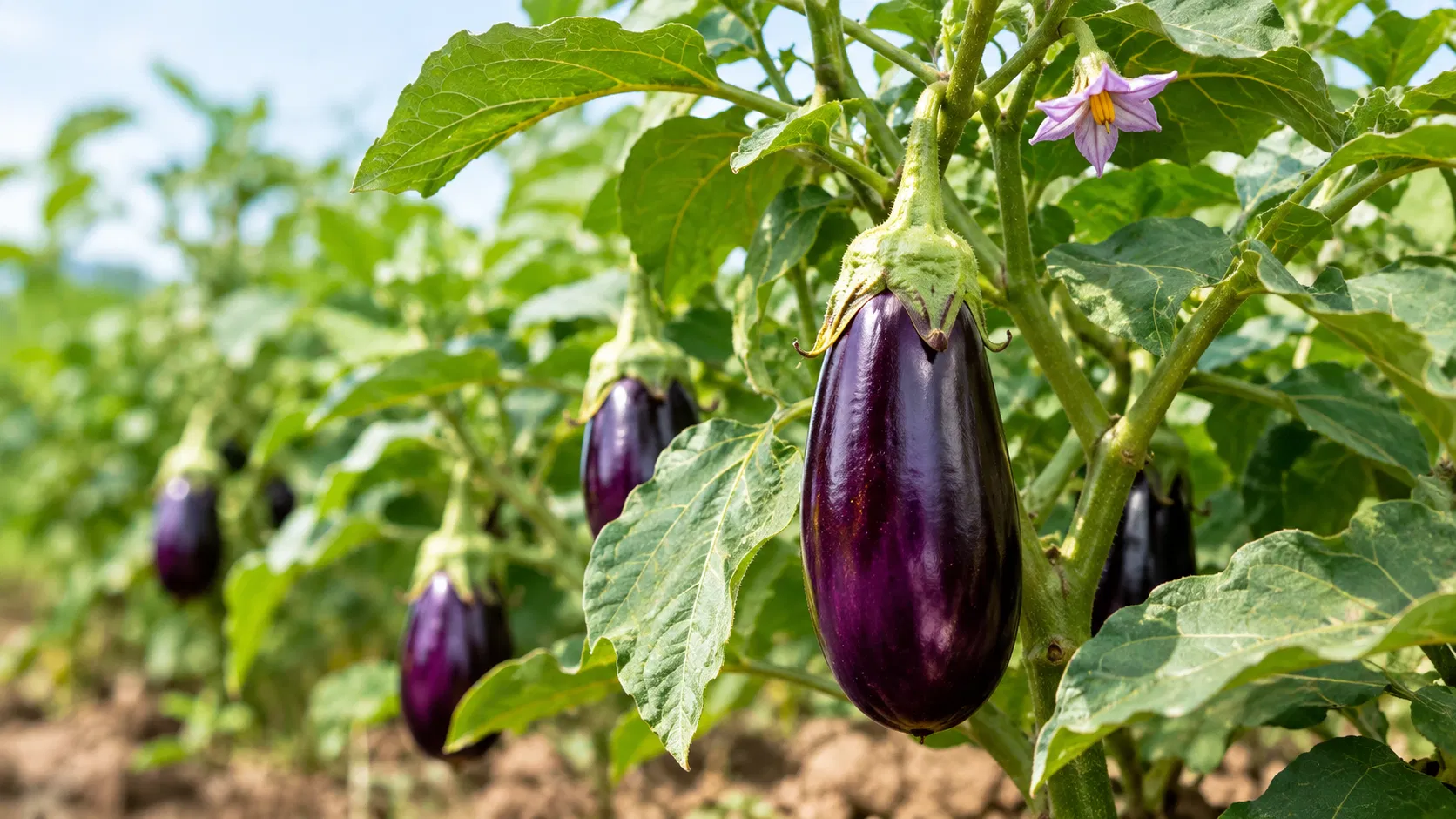
Brinjal is grown almost round the year in India, and every season brings its own trouble: borers and fruit rot in the rains, jassids and whitefly in the dry winter, mites and wilt in the summer heat. Farmers who know when a pest or disease is likely to arrive can set traps, treat the nursery and scout the crop before damage starts, instead of spraying after the fruit is already lost. This calendar puts the main brinjal pests and diseases against the months and crop stages so you can plan your protection ahead of time.
Brinjal Growing Seasons in India
In the plains, brinjal is generally sown in three windows; seedlings are ready for transplanting about 4–6 weeks after sowing, and picking continues for 3–4 months.
| Season | Nursery sowing | Transplanting | Main harvest |
|---|---|---|---|
| Kharif (rainy) | June–July | July–August | September–December |
| Rabi (winter) | October–November | November–December | January–April |
| Summer | February–March | March–April | May–July |
Choose varieties suited to the season and your region from brinjal seeds.
Month-by-Month Brinjal Pest and Disease Calendar
| Months | Weather | Pests likely to appear | Diseases likely to appear |
|---|---|---|---|
| June–July | Monsoon onset, humid | Epilachna beetle, early jassids and aphids on nursery and young plants | Damping off in nursery, bacterial wilt in wet fields |
| August–September | Heavy rain, high humidity | Shoot & fruit borer builds up, Epilachna beetle, whitefly | Phomopsis blight and fruit rot, leaf spots, bacterial wilt, collar rot |
| October–November | Rains withdraw, warm days | Shoot & fruit borer peak, jassids, whitefly, aphids, thrips | Leaf spots continue, little leaf (via leaf hoppers), Fusarium wilt |
| December–January | Cool, dry | Aphids and jassids on rabi crop; borer slows in cold | Damping off in rabi nursery, fruit rot in foggy areas |
| February–March | Warming, dry | Jassids, whitefly, thrips rise again; borer resumes | Little leaf, wilt in old plots |
| April–May | Hot, dry | Two spotted spider mite and red spider mite peak, thrips, borer on summer crop | Fusarium and bacterial wilt under water stress, leaf spots after pre-monsoon showers |
Timing can shift by 2–3 weeks depending on your state and the monsoon, so treat this as a guide and confirm with weekly scouting.
Kharif Crop (June–October): Borers, Beetles and Rots
Warm, wet weather favours both the shoot and fruit borer (Leucinodes orbonalis) and fungal rots, so this is the season where traps and sanitation pay the most.
- Nursery (June–July): Use raised, solarised beds and treat seed with Trichoderma viride such as Multiplex Nisarga Bio Fungicide to cut damping off and wilt; in bacterial-wilt fields, treat seed and nursery soil with Pseudomonas fluorescens such as Katyayani Striker Bio Fungicide Powder.
- At transplanting: Install borer pheromone traps — Gaiagen Lucin Lure with a Tapas Funnel Trap, or the SK Agrotech Water Trap with Brinjal Borer Lure — and hand-pick Epilachna beetle grubs and adults.
- August–October: Clip bored shoots weekly and remove bored or rotten fruits at every picking. When borer damage crosses about 5%, a registered insecticide such as Crystal Proclaim Insecticide (Emamectin benzoate 5% SG), AgriVenture Carzone Insecticide (Chlorantraniliprole 18.5% SC) or Bayer Fame Insecticide (Flubendiamide 39.35% SC) may be used, rotating groups between sprays. Neem-based Kay Bee Orga Neem 10000 PPM can be worked in between.
- Fruit rot and leaf spot: In humid spells, a carbendazim spray such as Crystal Bavistin Fungicide or Dhanuka Dhanustin Fungicide is registered for brinjal leaf spot and fruit rot. Rogue out wilted plants with roots and avoid flood irrigation.
Rabi Crop (October–February): Sucking Pests and Little Leaf
Dry, warm days after the monsoon suit jassids (Amrasca biguttula biguttula), whitefly (Bemisia tabaci), aphids and thrips, and leaf hoppers carry little leaf into the crop.
- From transplanting: Put up Tapas Yellow Sticky Traps for whitefly, jassids and aphids and Tapas Blue Sticky Traps for thrips; avoid excess nitrogen.
- Early build-up: Evening sprays of Lecanicillium lecanii such as Katyayani Veer Chakra Bio Insecticide can hold jassids, aphids and whitefly without harming natural enemies.
- Above threshold: Registered options include Syngenta Actara Insecticide (Thiamethoxam 25% WG) for whitefly and jassids, Syngenta Pegasus Insecticide (Diafenthiuron 50% WP) for whitefly, and FMC Benevia Insecticide (Cyantraniliprole 10.26% OD) for whitefly, aphids, thrips and borer together.
- Little leaf: Uproot and destroy affected plants as soon as leaves turn small and bushy; there is no spray cure. Read more on little leaf disease in brinjal.
- Cold months: Borer activity drops, but keep traps running — moth catch generally rises again from February.
Summer Crop (February–May): Mites, Thrips and Wilt
Heat and water stress favour the two spotted spider mite (Tetranychus urticae), thrips and wilts, while the borer returns on the summer crop.
- Mites: Watch for yellow speckling and webbing under leaves from March. Registered miticides include Dhanuka Omite Insecticide (Propargite 57% EC) and Katyayani Ozil Insecticide (Spiromesifen 22.9% SC). Avoid repeated synthetic pyrethroid sprays, which may trigger mite flare-ups.
- Thrips and borer: Corteva Delegate Insecticide (Spinetoram 11.7% SC) is registered for both on brinjal.
- Wilt: Irrigate lightly and regularly, mulch to keep roots cool, and avoid rotating with tomato, chilli or potato. See root-related wilt diseases in brinjal.
- Pre-monsoon showers (May): Expect leaf spots and fruit rot to return; remove damaged fruit promptly.
Crop-Stage Checklist for Any Season
| Crop stage | Do this |
|---|---|
| Nursery | Solarised raised beds, bio-agent seed treatment, nylon net, light watering |
| Transplanting to 30 days | Pheromone, yellow and blue sticky traps; neem cake; weekly scouting |
| Vegetative | Clip bored shoots, bio-sprays for sucking pests, hand-pick beetles, rogue wilted plants |
| Flowering and fruiting | Remove bored and rotten fruit at each picking; need-based registered spray on crossing threshold |
| Harvest | No sprays near picking; respect waiting periods; clear residues after the last harvest |
Browse traps, bio insecticides, bio fungicides, insecticides and fungicides for brinjal.
Frequently Asked Questions
1. Which season has the highest pest pressure in brinjal?
The kharif crop generally faces the most pressure, as humid weather favours shoot and fruit borer, Epilachna beetle, fruit rot and bacterial wilt at the same time.
2. When does shoot and fruit borer attack brinjal most?
Activity generally peaks in warm, humid months from August to November and again on the summer crop from March, slowing in the cold of December–January.
3. Why do mites attack brinjal in summer?
Hot, dry weather speeds up mite breeding and water-stressed plants are easier to feed on; dust and repeated broad-spectrum sprays make it worse.
4. Which brinjal season is best for fewer diseases?
The rabi crop in the plains generally sees less fruit rot and wilt, though sucking pests and little leaf need attention.
5. When should pheromone traps be installed in brinjal?
At transplanting, in every season, so that the first moths are caught before egg laying starts on the crop.
6. How do I prepare the nursery for the monsoon season?
Raise the beds, solarise the soil in summer, treat seed with a bio-agent and keep watering light to avoid damping off.
7. Does bacterial wilt occur in every season?
It can, but it generally spreads fastest in warm, wet soil during kharif and in water-stressed summer plots; infected fields should be rotated out of solanaceous crops.
8. Can one spray schedule be used for all seasons?
No. Sprays should follow weekly scouting and the pest actually present; a fixed calendar spray may waste money and build resistance.
Disclaimer: Always confirm current label registration, approved dosage, water volume, and pre-harvest interval (PHI) for your state before using any product - labels are periodically revised by regulatory authorities.
The information in this article is for general guidance only. Pest and disease timing can vary with weather, variety and local conditions. Please consult your local agricultural officer or a qualified agronomist before taking any crop management decision.