Rodents can quietly turn a profitable farm or grain storage facility into a costly problem. A few mice or rats may seem minor at first, but they can quickly contaminate feed, damage equipment, destroy stored grain, and spread disease. In agricultural operations, rodent control is not just about cleanliness—it is about protecting inventory, preserving profits, and maintaining safe working conditions.
Whether you manage a farm, silo, warehouse, or grain bin, the key to success is a proactive rodent management plan. The best results come from combining sanitation, exclusion, monitoring, and targeted control measures. When these steps work together, you can reduce infestations and keep rodents from returning.
Why Rodent Control Matters in Farms and Grain Storage
Rodents are highly adaptive and reproduce quickly. In farms and grain storage areas, they are drawn to easy access to food, shelter, and water. Once inside, they can chew through packaging, wiring, insulation, and structural materials. They also leave droppings, urine, and hair behind, which can contaminate grain and feed.
Common risks include:
- Grain contamination from droppings, urine, and nesting materials
- Feed loss due to chewing and spillage
- Equipment damage from gnawing on wires, hoses, and insulation
- Fire hazards caused by damaged electrical systems
- Disease transmission to animals and workers
- Reduced product quality and possible rejection by buyers
In storage environments, even a small rodent population can create large losses over time. That is why prevention must be continuous, not seasonal.
Common Rodents Found in Agricultural Settings
Understanding the pests you are dealing with helps you choose the right control methods. The most common rodent species in farms and grain storage facilities are mice and rats.
House Mice
House mice are small, agile, and able to squeeze through tiny openings. They reproduce rapidly and can establish nests in wall voids, machinery, feed rooms, and grain storage areas. They are often the first rodents to appear in a facility.
Norway Rats
Norway rats are larger and usually burrow near foundations, walls, and storage structures. They are strong gnawers and tend to prefer ground-level areas where food and shelter are available.
Roof Rats
Roof rats are excellent climbers and often nest in elevated spaces such as rafters, lofts, and upper storage areas. They may access grain storage from overhead routes or utility lines.
“The most effective rodent control strategy is not one single treatment, but a consistent system of prevention, monitoring, and rapid response.”
How Rodents Enter Farms and Grain Storage Facilities
Rodents can exploit surprisingly small openings. A mouse can enter through a gap as small as a pencil, while rats can fit through openings around pipes, doors, vents, and foundations. Once inside, they travel along walls, behind equipment, and through hidden spaces.
Common entry points include:
- Cracks in walls, floors, and foundations
- Gaps under doors and loading bays
- Open vents and utility penetrations
- Damaged screens and broken seals
- Open grain augers, hatches, and bin access points
- Cluttered areas that provide easy shelter
Because rodent activity often begins in hidden places, regular inspections are essential. By the time signs are obvious, the infestation may already be established.
Key Signs of Rodent Infestation
Early detection is one of the most important parts of rodent control in farms and grain storage. Look for these warning signs:
- Droppings near feed, grain, walls, or equipment
- Chewed packaging, sacks, and bins
- Scratching noises in walls or ceilings
- Grease marks along runways and entry points
- Nesting materials such as shredded paper, insulation, or straw
- Burrows near buildings or storage structures
- Unusual odors from urine or decaying rodents
If you notice any of these signs, respond immediately. Rodent populations can expand rapidly if left unchecked.
Best Prevention Practices for Rodent Control
The most effective way to manage rodents is to make your farm or storage area less attractive to them. Prevention reduces the chance of infestation and supports long-term control.
1. Maintain Strong Sanitation
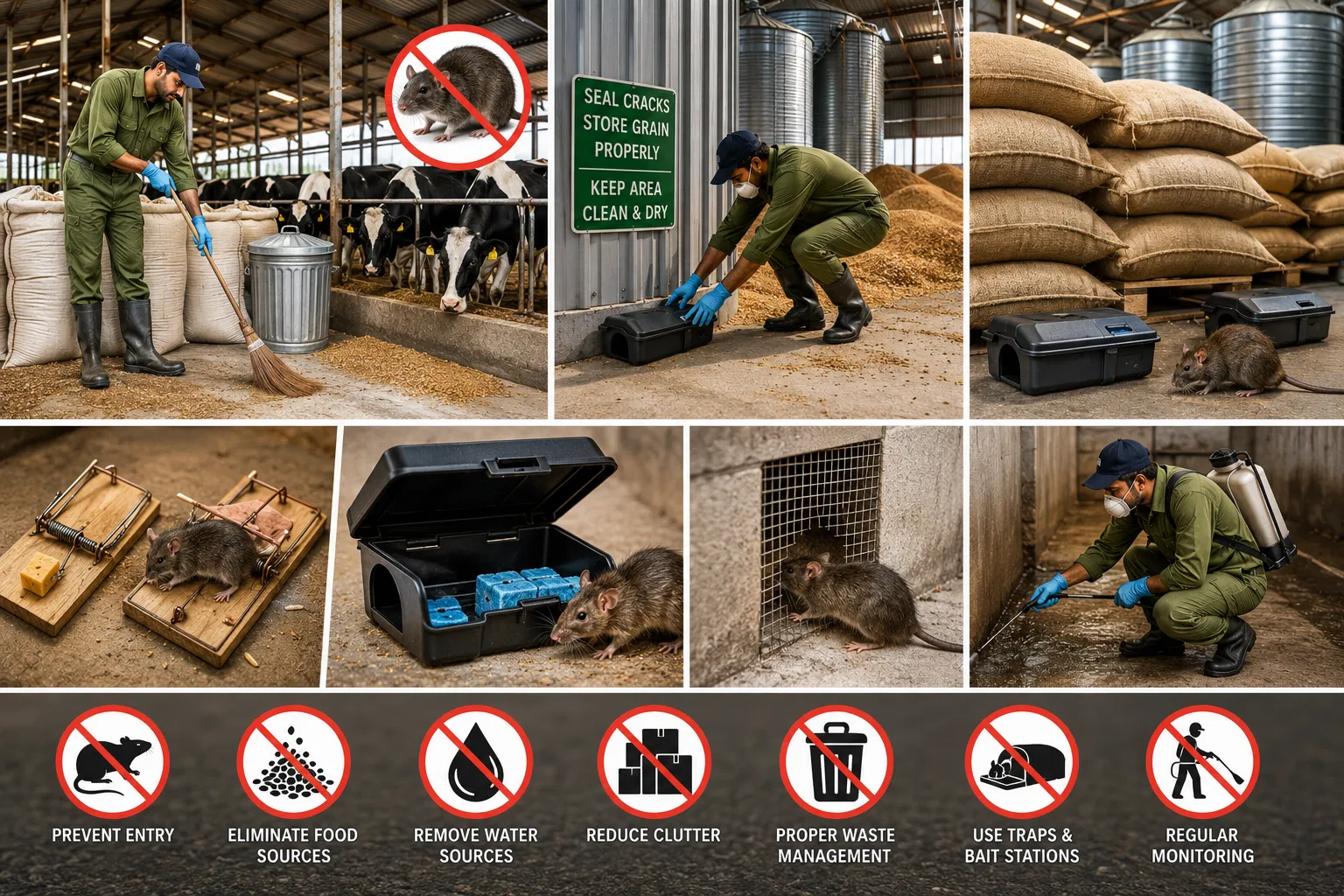
Rodents are drawn to accessible food and spilled grain. Clean up feed spills promptly, remove waste regularly, and keep storage areas tidy. Avoid leaving open containers of grain, seed, or feed where rodents can reach them.
Important sanitation steps include:
- Cleaning up spilled grain immediately
- Using sealed containers for feed and seed storage
- Removing unused pallets, debris, and clutter
- Keeping trash bins covered and emptied regularly
- Managing vegetation around buildings to reduce hiding places
2. Seal Entry Points
Exclusion is one of the strongest defenses against rodents. Inspect buildings, bins, and storage structures for gaps or damage. Seal cracks with durable materials such as metal flashing, concrete, or rodent-resistant sealant. Install door sweeps and repair broken screens.
3. Store Grain Properly
Grain storage should be designed to limit access and reduce losses. Keep grain bins closed, use tight-fitting lids, and inspect augers and access panels regularly. If possible, elevate stored materials and maintain clear space around bins and structures.
4. Reduce Outdoor Harborages
Rodents often nest in weeds, woodpiles, junk piles, and tall grass near buildings. Keeping the area around storage facilities trimmed and organized reduces cover and discourages rodent movement toward structures.
Monitoring and Inspection Strategies
Regular monitoring helps identify problems before they become severe. A structured inspection routine is especially important in grain storage facilities where rodents may remain hidden for long periods.
Use a checklist that includes:
- Inspecting building exteriors for entry points
- Checking walls, corners, and storage zones for droppings
- Examining feed bags, bins, and grain surfaces for damage
- Looking for burrows, runways, and nests around structures
- Reviewing signs of activity near doors, vents, and loading areas
Tracking rodent activity over time can help you see patterns and identify hotspots. This makes control measures more targeted and efficient.
Control Methods That Work
When prevention alone is not enough, use control methods carefully and strategically. The goal is to reduce the rodent population while protecting grain, livestock, and workers.
Traps
Traps are useful for monitoring and reducing rodent numbers, especially in sensitive areas. Snap traps and multi-catch traps are common options. Place traps along walls, near droppings, and in travel paths where rodents are active.
Bait Stations
Secure bait stations may be appropriate in certain agricultural settings, but they should be used responsibly and according to local regulations. Keep them tamper-resistant and place them where non-target animals and livestock cannot reach them.
Professional Pest Management
For larger infestations or high-risk storage facilities, a professional pest management program is often the best choice. Experts can design an integrated rodent control plan, identify hidden entry points, and apply treatments safely and effectively.
Why an Integrated Approach Delivers the Best Results
Rodent control in farms and grain storage works best when all measures are combined. Sanitation alone may not eliminate a population. Traps alone may not stop new rodents from entering. Baiting alone may not solve the root problem. An integrated approach creates layers of protection that support each other.
A strong integrated rodent management program includes:
- Regular sanitation
- Structural repair and exclusion
- Consistent inspection and monitoring
- Targeted trapping or baiting when needed
- Ongoing recordkeeping and follow-up
This kind of system not only removes rodents but also helps prevent future infestations, protecting grain quality and farm productivity over the long term.
Final Thoughts on Rodent Control in Farms and Grain Storage
Rodent problems in agricultural environments can escalate quickly, but they are manageable with the right strategy. By focusing on sanitation, exclusion, monitoring, and timely intervention, you can protect grain storage areas, reduce contamination risks, and safeguard your operation from costly losses.
The best time to control rodents is before they become a problem. Make rodent prevention part of your routine maintenance, and treat every sign of activity as an opportunity to act fast. A disciplined, proactive approach is the most reliable way to keep farms and grain storage facilities rodent-free.