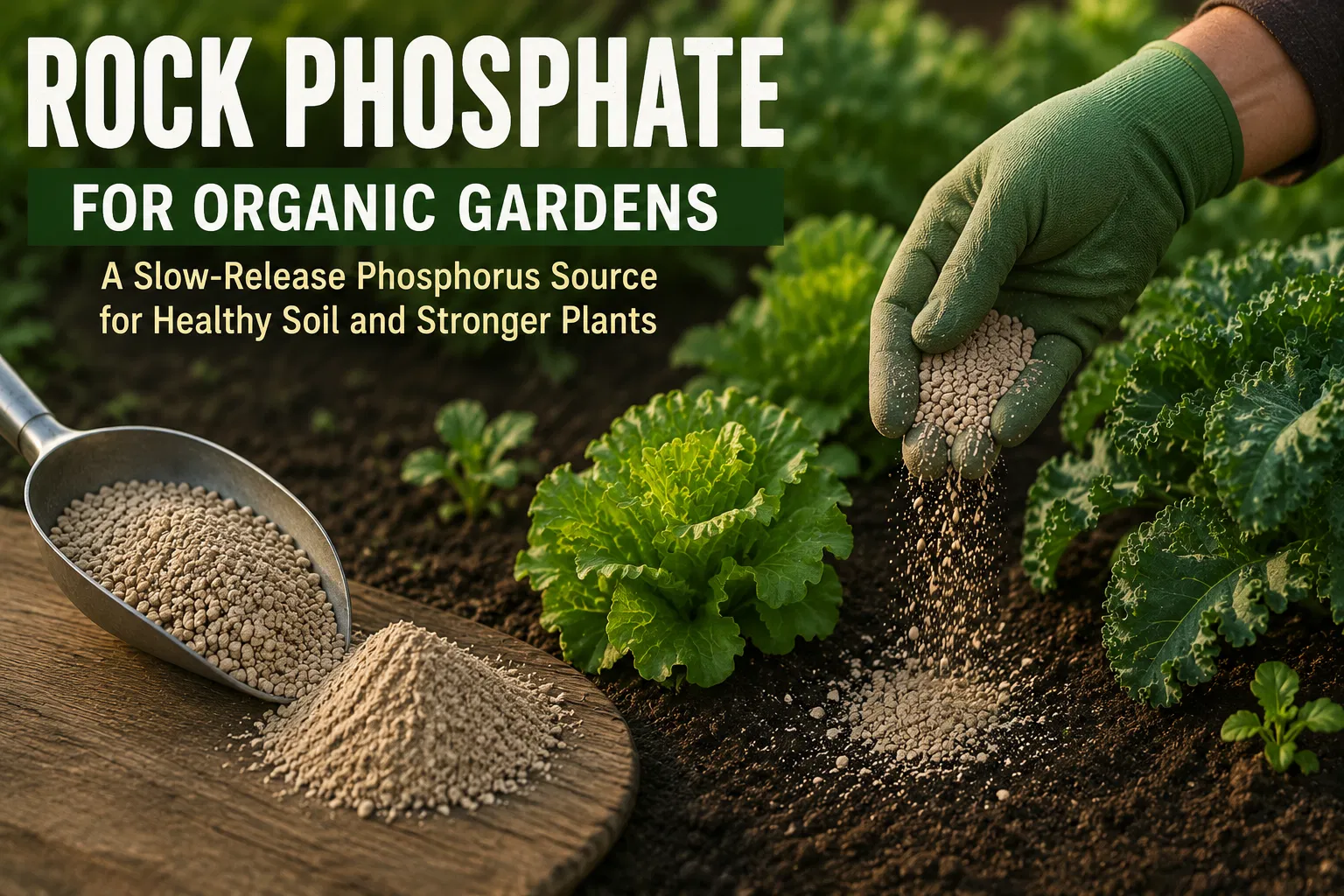
If you’re building soil health for the long term, rock phosphate is one of the most practical phosphorus amendments you can use. Unlike synthetic fertilizers that can deliver a quick burst of nutrients, rock phosphate releases phosphorus slowly, making it a smart choice for organic farms, gardens, orchards, and perennial plantings. For growers focused on sustainable fertility, this natural mineral can help support root development, flowering, fruiting, and overall plant vigor without forcing rapid growth.
What Is Rock Phosphate?
Rock phosphate is a naturally mined mineral source of phosphorus, one of the three primary nutrients plants need. It is typically made from ancient marine deposits and contains phosphorus in a form that becomes available gradually over time. Depending on the source, it may also contain calcium and trace minerals that contribute to soil fertility.
Because it is slow to dissolve, rock phosphate is especially valued in organic farming systems where soil building matters as much as immediate plant feeding. Instead of acting like a quick fix, it works best as part of a broader fertility plan that includes compost, organic matter, and good soil biology.
Why Phosphorus Matters in Organic Farming
Phosphorus plays a critical role in plant energy transfer, root growth, flowering, seed formation, and fruit development. When phosphorus is lacking, plants may become stunted, slow to establish, or produce fewer flowers and smaller yields.
Organic growers often turn to rock phosphate when they want to:
- Encourage strong root systems in young plants
- Support flowering and fruit set in crops
- Improve long-term soil fertility
- Provide a natural phosphorus source for organic certification programs
- Reduce reliance on fast-release synthetic fertilizers
How Rock Phosphate Works as a Slow-Release Fertilizer
Rock phosphate does not dissolve quickly in water, which is exactly why it is considered a slow-release phosphorus for organic farms. Its nutrients become available gradually as soil microbes, organic acids, and natural weathering processes break the mineral down.
This means rock phosphate is most effective in soils with active biology and slightly acidic conditions. In those environments, microbial activity helps convert the mineral into forms plants can absorb over time. That slow availability makes it a good match for perennial crops and long-season soil improvement goals.
Best used as a soil-building amendment, rock phosphate is not a quick rescue fertilizer. It works best when applied ahead of planting or as part of a long-term fertility strategy.
Benefits of Rock Phosphate for Organic Farms
1. Long-Term Nutrient Supply
One of the biggest advantages of rock phosphate is its extended release pattern. Instead of feeding plants all at once, it continues contributing phosphorus over time, which is especially useful for long-term crop rotations and soil restoration projects.
2. Supports Root Development
Phosphorus is essential for early root growth. Applying rock phosphate before planting can help seedlings, transplants, and young orchard trees establish more effectively, especially in soils that test low in phosphorus.
3. Improves Flowering and Fruiting
Plants need adequate phosphorus to move from leafy growth into reproductive stages. Crops such as tomatoes, peppers, berries, grapes, and stone fruits often benefit from balanced phosphorus availability during flowering and fruit set.
4. Fits Organic Soil Management
Because it is naturally mined and can be approved for many organic production systems, rock phosphate aligns well with organic standards when used correctly. It is often chosen for farm plans that emphasize soil stewardship and nutrient cycling.
5. Low Risk of Nutrient Burn
Since it releases slowly, rock phosphate is far less likely to cause fertilizer burn than many soluble phosphorus products. That makes it a safer choice for sensitive crops and long-season applications.
When to Use Rock Phosphate
Rock phosphate is most effective when applied in situations where long-term phosphorus availability matters more than immediate response. It is commonly used:
- Before planting annual crops
- When establishing orchards, vineyards, and berry patches
- In compost blends to enrich soil amendments
- During soil restoration on depleted fields
- In gardens with tested low phosphorus levels
For best results, use it based on soil test recommendations. Adding more phosphorus than your soil needs can lead to nutrient imbalance and environmental concerns, so precision matters.
How to Apply Rock Phosphate
Application methods depend on the crop, soil type, and fertility goals. In general, rock phosphate should be incorporated into the root zone so it can interact with soil moisture, microbes, and plant roots.
- Test your soil first. Confirm whether phosphorus is actually deficient before applying any amendment, using a soil testing kit.
- Apply evenly. Broadcast the material over the soil surface or place it in planting rows.
- Incorporate when possible. Mixing it into the topsoil improves contact with roots and soil biology.
- Pair it with organic matter. Compost, manure, and mulch help stimulate microbial activity that speeds nutrient release.
- Plan ahead. Because the nutrient release is slow, apply rock phosphate well before plants reach peak demand.
What Soils Benefit Most from Rock Phosphate?
Rock phosphate tends to perform best in acidic to slightly acidic soils, where its mineral structure breaks down more efficiently. It is often less effective in alkaline soils because phosphorus can remain locked in forms plants cannot readily access.
Soils with strong microbial activity and healthy organic matter content are also better candidates. In other words, rock phosphate works best in living soil, not in compacted, biologically inactive ground.
It is particularly useful in:
- Acidic garden beds
- Perennial systems with established soil life
- Fields being rebuilt after years of intensive use
- Compost-enriched organic production systems
Rock Phosphate vs. Other Phosphorus Sources
Compared with synthetic phosphorus fertilizers, rock phosphate offers a slower, more natural release. That makes it less useful for immediate correction of severe deficiencies, but much better suited to long-term fertility planning.
Compared with compost alone, rock phosphate provides a more concentrated phosphorus source. Compost improves soil structure and biology, but its phosphorus content may not be high enough when a soil test shows a clear deficiency.
Compared with bone meal, rock phosphate is typically slower to release and often preferred in larger-scale farm systems where long-term soil amendment is the goal. Bone meal can be faster acting in some soils, but it is usually used more often in gardens and smaller applications.
Common Mistakes to Avoid
Even though rock phosphate is a valuable organic amendment, it works best when used thoughtfully. Avoid these common mistakes:
- Applying without a soil test and assuming phosphorus is always needed
- Expecting fast results from a slow-release mineral
- Using it in alkaline soils where availability may be limited
- Neglecting organic matter that helps activate nutrient release
- Overapplying and creating unnecessary phosphorus buildup
Final Thoughts on Rock Phosphate for Organic Farms
Rock phosphate is a powerful tool for growers who want a slow-release phosphorus source that supports soil health and plant performance over time. It is not about instant results. It is about building a stronger foundation for roots, blooms, fruiting, and long-term fertility in organic systems.
When used with soil testing, compost, and a healthy fertility plan, rock phosphate can become an important part of a sustainable farm strategy. If your goal is to feed the soil first and the crop second, this natural amendment deserves serious consideration.
For organic farmers and gardeners looking to grow healthier plants naturally, rock phosphate offers a steady, reliable path toward better soil and better harvests.