Repotting is meant to help a plant, but a handful of common errors turn a routine task into the reason a healthy plant declines and dies. Here are the mistakes that cause the most damage — and the agronomically sound way to avoid each one.
1. Choosing a Pot That's Too Big
The mistake: Jumping several sizes up "so it won't need repotting again soon."
Why it's dangerous: Soil that isn't yet filled with roots stays wet far longer after watering. That prolonged saturation cuts off oxygen to the root zone and creates ideal conditions for root rot, caused by pathogens like Pythium and Fusarium species.
The fix: Move up only one pot size (2–5 cm larger in diameter) at a time, and always use a container with drainage holes.
2. Using Garden Soil Instead of a Container Mix
The mistake: Filling pots with soil dug straight from the garden or a field.
Why it's dangerous: Garden soil compacts inside containers, losing the air pockets roots need, and it can carry soil-borne pathogens or weed seeds indoors.
The fix: Use a light, well-draining container blend — a potting mix combined with cocopeat and coarse sand or perlite for aeration and drainage.
3. Repotting During Dormancy or Flowering
The mistake: Repotting in peak winter or while a plant is actively flowering.
Why it's dangerous: Root regeneration depends on active metabolism. Disturbing roots during dormancy, or diverting energy away from flower development, slows recovery and can cause bud or flower drop.
The fix: Repot during active growth — spring through early monsoon for most Indian indoor plants.
4. Ignoring Existing Root Rot or Pest Damage
The mistake: Repotting a struggling plant into fresh soil without first checking the roots.
Why it's dangerous: Moving a rotten or infected root ball into new soil simply spreads the problem, and the plant now has to fight disease and adjust to a new pot at the same time.
The fix: Trim any blackened, mushy roots with a clean tool first. Where fungal root rot is suspected, a Trichoderma-based bio-fungicide drenched around the root zone helps suppress soil-borne pathogens before the plant goes into fresh mix.
5. Watering Heavily Right After Repotting
The mistake: Soaking the plant "to help it settle in," then continuing to water on the usual schedule.
Why it's dangerous: Fresh mix combined with a smaller, still-recovering root system can't take up water as fast as before, so excess moisture sits and invites rot.
The fix: Water once to settle the soil and remove air pockets, then let the topsoil dry out slightly between waterings until new growth appears.
6. Fertilizing Immediately
The mistake: Feeding the plant right after repotting to "give it a boost."
Why it's dangerous: Freshly cut or stressed roots are more sensitive to salt concentration in fertilizers, which can scorch tender root tips before they've re-established.
The fix: Wait 2–3 weeks after repotting before applying any fertilizer.
7. Handling Roots Roughly
The mistake: Yanking the plant out by the stem or aggressively pulling the root ball apart.
Why it's dangerous: Torn roots and a damaged stem base create open wounds that pathogens can enter, and a badly disturbed root system takes longer to recover.
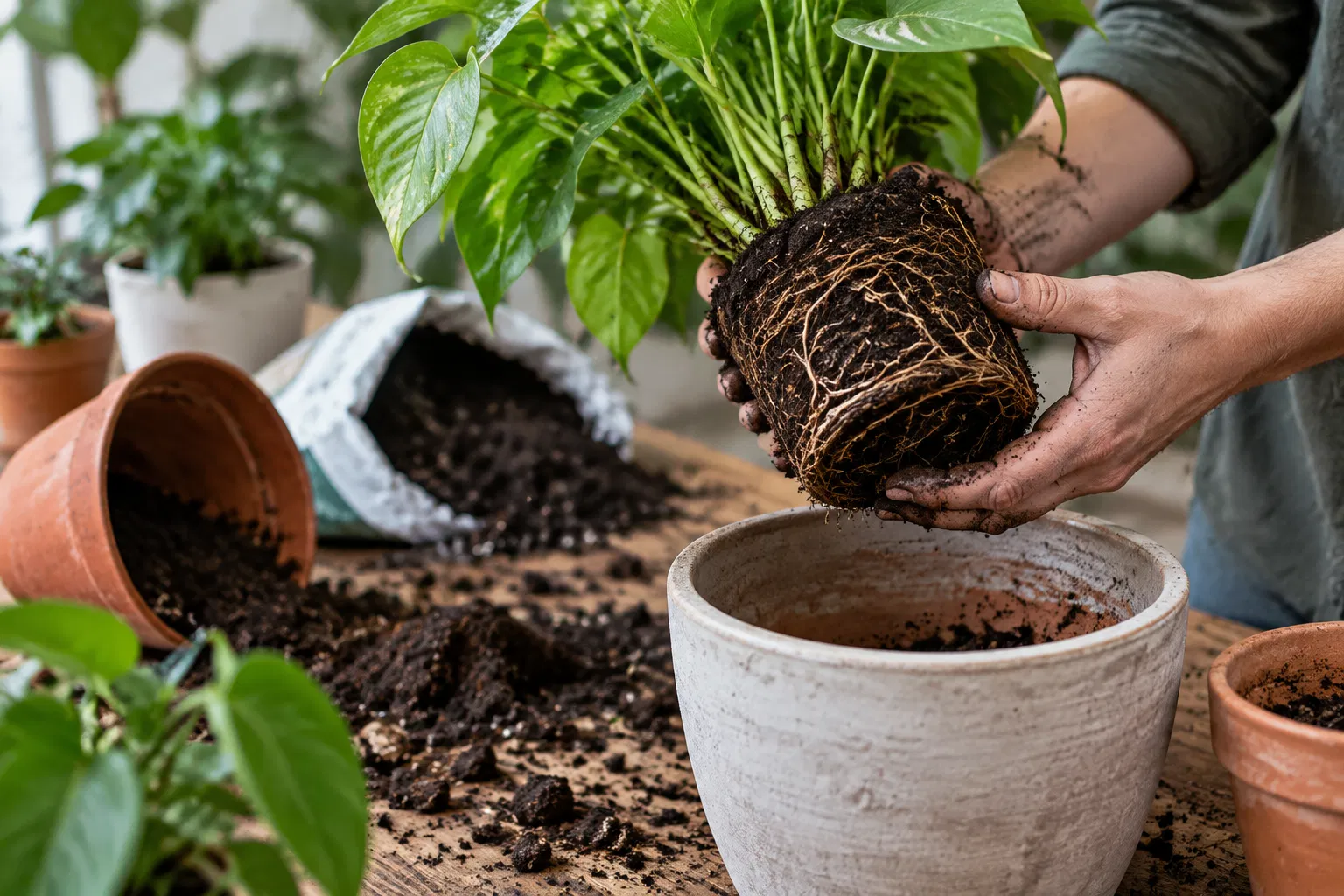
The fix: Tip the pot sideways and ease the plant out gently. Loosen roots by hand rather than tearing.
Frequently Asked Questions
Can wrong repotting actually kill a plant?
Yes — root rot from waterlogging, root damage from rough handling, and shock from bad timing are among the most common causes of plant death after repotting.
My plant is drooping after repotting — is it dying?
Mild, temporary drooping is normal root-adjustment stress. Prolonged wilting, yellowing, or a mushy stem base points to root rot or transplant shock and needs attention.
Is it ever too late to save an over-repotted plant?
Often not — remove the plant, trim rotten roots, treat with a bio-fungicide if rot is present, and move it into a properly sized pot with fresh, well-draining mix.
Disclaimer: General guidance for common indoor houseplants; requirements vary by species. Always follow product label instructions when using any soil amendment or bio-fungicide.