Fungal diseases can move fast, and once they spread, crop damage can become expensive and difficult to reverse. That is why choosing between preventive fungicide spraying and curative fungicide spraying is one of the most important decisions growers make. The right timing can protect yield, reduce waste, and improve overall crop health.
Understanding the difference between these two fungicide application strategies helps farmers, gardeners, and agronomists make smarter, more profitable decisions. In many cases, the best disease management plan uses both approaches at the right time.
What Is Preventive Fungicide Spraying?
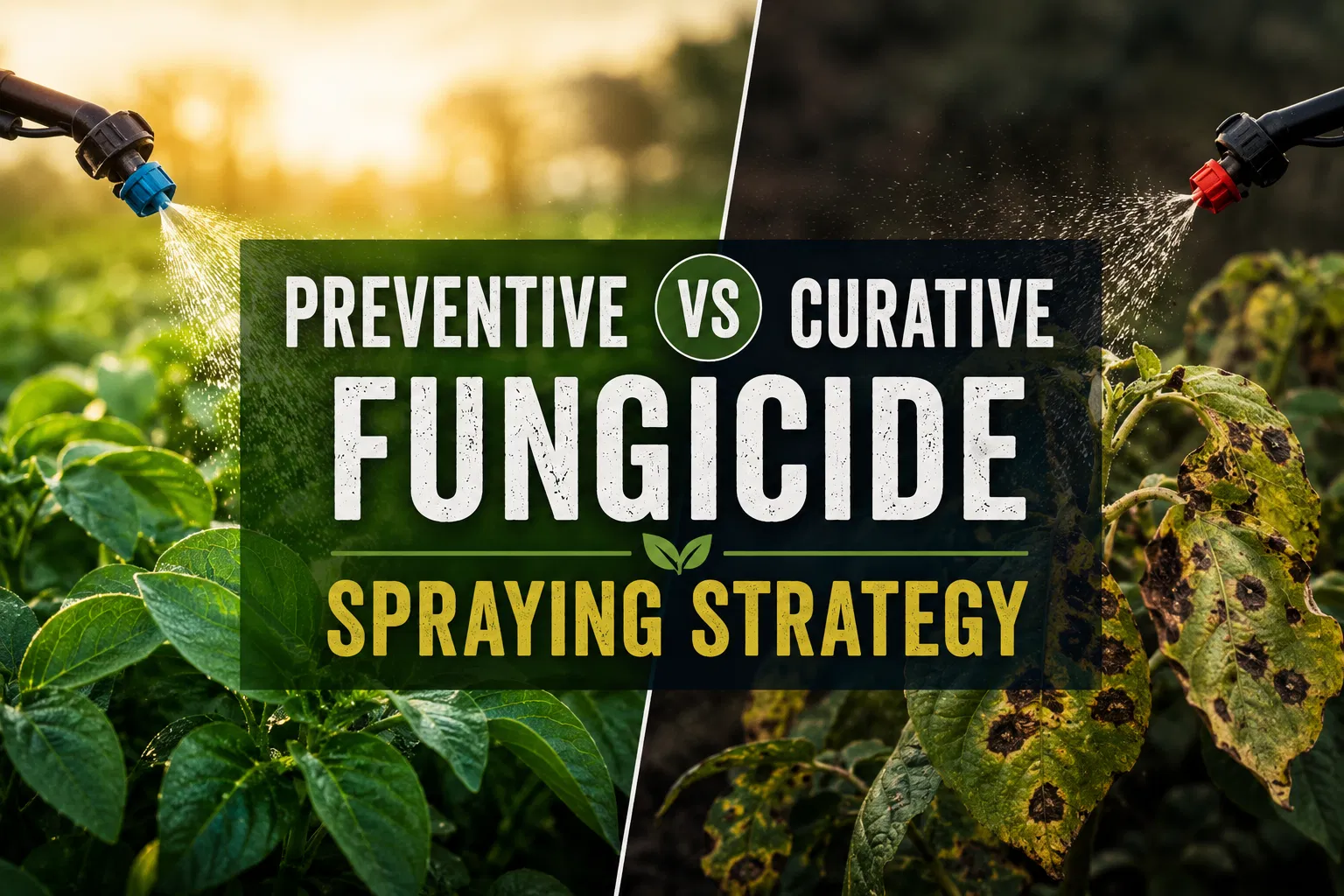
Preventive fungicide spraying is the practice of applying fungicides before fungal infection occurs. The goal is to create a protective barrier on plant surfaces so spores cannot successfully germinate, infect tissue, or spread.
This strategy works best when disease pressure is expected but symptoms are not yet visible. It is especially valuable during periods of warm, humid weather, frequent rainfall, or in crops with a known history of fungal problems.
Benefits of Preventive Spraying
- Stops infection before it starts
- Helps protect high-value crops
- Reduces the chance of severe outbreaks
- Improves consistency in crop quality
- Often works more efficiently than rescue treatments
Preventive fungicide programs are commonly used in vineyards, orchards, vegetables, turf, and row crops where disease can spread rapidly under favorable environmental conditions.
What Is Curative Fungicide Spraying?
Curative fungicide spraying is used after infection has already begun, usually when early symptoms are visible or when disease has just started developing. Unlike preventive fungicides, curative products are designed to suppress or stop the pathogen after it has entered the plant tissue.
Curative action is time-sensitive. The earlier it is applied after infection, the better the outcome. Once disease advances too far, even the best fungicide may only slow progress rather than eliminate the problem.
Benefits of Curative Spraying
- Useful when disease appears unexpectedly
- Can slow or stop early infections
- Helps limit spread after first symptoms
- Provides flexibility when preventive timing was missed
Curative fungicide spraying should not be viewed as a replacement for prevention. Instead, it is often a corrective tool used when disease risk was underestimated or conditions changed quickly.
Preventive vs Curative Fungicide Spraying: Key Differences
Although both strategies aim to control fungal diseases, they work in different ways and are used at different stages of infection.
| Factor | Preventive Spraying | Curative Spraying |
|---|---|---|
| Timing | Before infection | After infection begins |
| Main goal | Prevent disease establishment | Stop or suppress active disease |
| Effectiveness | Highest when applied before symptoms | Best in early stages of infection |
| Risk level | Lower crop-loss risk | Higher if disease is already advanced |
| Use case | Forecasted disease pressure | Visible symptoms or missed spray window |
The biggest difference is timing. Preventive fungicides work like a shield, while curative fungicides act more like a correction after the pathogen has already slipped through.
When Preventive Fungicide Spraying Makes the Most Sense
Preventive spraying is usually the preferred approach when disease forecasting indicates high risk. It is also the best option when the crop has a history of recurring fungal pressure.
You should strongly consider a preventive fungicide program when:
- Weather conditions favor fungal growth
- Nearby fields or plants have active disease
- The crop is highly susceptible to infection
- The stage of growth is critical to yield or quality
- Past seasons showed repeated disease outbreaks
Because preventive spraying protects healthy tissue, it often delivers better results with fewer applications than trying to recover from an outbreak later.
When Curative Fungicide Spraying Is Necessary
Curative fungicide spraying becomes necessary when symptoms have already appeared or when infection likely happened before the last application. This can happen even in well-managed fields, especially after prolonged rain, missed intervals, or sudden weather changes.
Curative action is most appropriate when:
- Early leaf spots, mildew, rust, or blight symptoms are visible
- A preventive spray was delayed or skipped
- There was a sudden spike in disease pressure
- Plant tissue needs immediate suppression of active infection
Important: Curative sprays are most effective at the first sign of infection. Waiting too long reduces control and can leave lasting damage.
Which Fungicide Strategy Is Better?
In most cases, preventive fungicide spraying is more reliable and cost-effective than curative spraying. Why? Because once disease has spread, recovery becomes harder and crop losses can increase quickly.
That said, curative fungicide spraying still plays an essential role in disease management. It provides a second line of defense when prevention was not enough or when disease pressure changes unexpectedly.
The best fungicide strategy is not preventive or curative alone, but a well-timed program built around crop stage, weather risk, and disease history.
For many growers, the smartest approach is integrated disease management: prevent when possible, monitor closely, and cure early if infection breaks through.
How to Build a Smarter Fungicide Spraying Program
A successful fungicide spraying strategy depends on more than just product choice. Timing, coverage, rotation, and field scouting all matter.
Best Practices for Better Results
- Scout regularly to catch disease early.
- Use weather data to anticipate infection risk.
- Apply preventive sprays before peak disease conditions.
- Use curative sprays quickly at the first sign of infection.
- Rotate fungicide modes of action to reduce resistance.
- Follow label rates and intervals for safety and effectiveness.
- Improve spray coverage so products reach target tissue.
Resistance management is especially important. Repeated use of the same fungicide group can allow fungal populations to adapt, making future sprays less effective. Rotating active ingredients helps preserve long-term control.
Common Mistakes to Avoid
Even the best fungicide can fail if the timing or execution is wrong. Avoid these common mistakes:
- Waiting until disease is severe before spraying
- Assuming a curative product can reverse advanced damage
- Using preventive sprays without monitoring actual risk
- Spraying too late after a weather event that triggered infection
- Ignoring label directions or resistance warnings
Good disease management is proactive, not reactive. The earlier you respond, the more options you have.
Final Takeaway on Preventive vs Curative Fungicide Spraying
When it comes to fungal disease control, preventive fungicide spraying is usually the stronger long-term strategy because it protects crops before infection can take hold. Curative fungicide spraying, on the other hand, is a valuable backup when disease has already begun or conditions changed too fast to stay ahead of it.
The most effective disease management programs combine both approaches intelligently. Monitor crop conditions, study weather patterns, and apply fungicides at the right stage for the best possible protection.
If you want healthier plants, fewer losses, and better spray efficiency, focus on prevention first, then use curative treatment early when needed. That balanced strategy gives crops the best chance to stay productive all season long.