Plants may seem passive, but their growth is anything but accidental. Every stem, leaf, flower, and fruit is shaped by powerful internal signals known as plant growth regulators or PGRs. These natural and synthetic compounds act like chemical messengers, controlling how plants grow, respond to stress, and develop over time.
Whether you are a farmer, horticulture professional, gardener, or student, understanding plant growth regulators is essential for improving crop performance and plant health. From speeding up seed germination to delaying fruit ripening, PGRs play a major role in modern agriculture and plant science.
What Are Plant Growth Regulators?
Plant growth regulators are organic compounds that influence plant physiological processes at very low concentrations. Unlike fertilizers, which supply nutrients, PGRs do not feed the plant. Instead, they regulate growth patterns such as cell division, elongation, flowering, dormancy, rooting, and fruit development.
Some PGRs occur naturally within plants, while others are manufactured synthetically for agricultural and horticultural use. Because they work in tiny amounts, even a small change in concentration can have a major effect on plant behavior.
Why Plant Growth Regulators Matter
PGRs are widely used because they help growers manage plant growth more precisely. They can improve yield, enhance fruit quality, control plant height, promote rooting, and reduce unwanted growth. In commercial farming, nursery production, and landscaping, these regulators are valuable tools for achieving consistent results.
Plant growth regulators help farmers and growers guide plant development instead of simply reacting to it.
Main Types of Plant Growth Regulators
There are five major classes of plant growth regulators, each with distinct functions and applications.
1. Auxins
Auxins are best known for promoting cell elongation and root initiation. They are critical in shoot and root development, apical dominance, and tropic responses such as phototropism and gravitropism.
- Natural auxin: Indole-3-acetic acid (IAA)
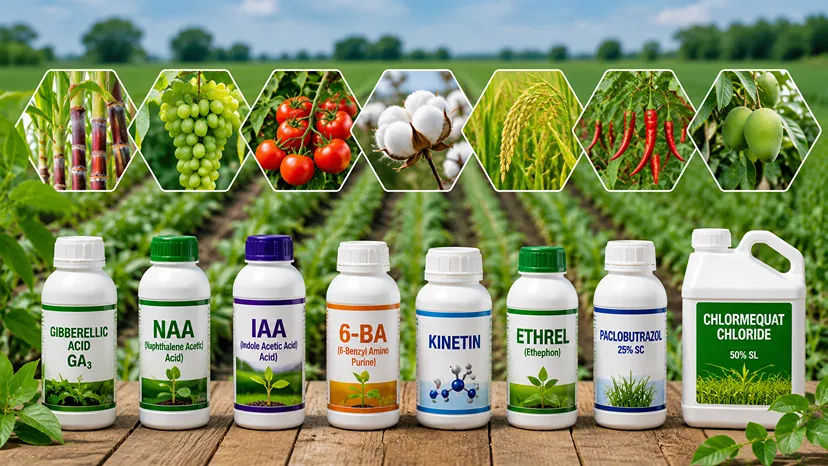
- Synthetic auxins: Indole-3-butyric acid (IBA), naphthaleneacetic acid (NAA), 2,4-D
Uses: Rooting hormones for cuttings, preventing premature fruit drop, and selective weed control.
2. Gibberellins
Gibberellins promote stem elongation, seed germination, flowering, and fruit development. They are especially important in breaking seed dormancy and stimulating growth in dwarf plants.
- Common form: Gibberellic acid (GA3)
Uses: Increasing fruit size, improving seed germination, inducing flowering, and lengthening stalks in certain crops.
3. Cytokinins
Cytokinins stimulate cell division and delay leaf aging. They work closely with auxins to control organ formation and overall plant balance.
- Examples: Zeatin, kinetin, benzyladenine (BA)
Uses: Promoting shoot growth, enhancing tissue culture propagation, and extending the shelf life of leafy crops.
4. Abscisic Acid (ABA)
Abscisic acid is often called the stress hormone because it helps plants respond to drought, salinity, and other unfavorable conditions. It also regulates seed dormancy and stomatal closure.
- Key role: Slowing growth during stress conditions
Uses: Improving drought tolerance and maintaining dormancy in seeds and buds.
5. Ethylene
Ethylene is a gaseous plant hormone that influences fruit ripening, leaf abscission, flowering, and senescence. It is one of the most important regulators in postharvest management.
- Example: Ethylene gas, ethephon
Uses: Ripening fruits, synchronizing flowering, and promoting uniform maturation in crops like bananas and tomatoes.
How Plant Growth Regulators Work
PGRs work by interacting with plant cells and triggering specific biochemical responses. Their effect depends on the type of hormone, the dosage, the crop species, the growth stage, and environmental conditions.
In many cases, the balance between different regulators is more important than the level of one hormone alone. For example, a high auxin-to-cytokinin ratio often encourages root formation, while a higher cytokinin-to-auxin ratio promotes shoot growth.
Common Uses of Plant Growth Regulators in Agriculture
Plant growth regulators are used across agriculture and horticulture to improve plant performance and market value. Some of the most common applications include:
- Rooting of cuttings: Auxins help nursery plants establish faster.
- Fruit thinning and sizing: PGRs can improve fruit quality and uniformity.
- Delayed ripening: Certain regulators extend shelf life during transport and storage.
- Weed control: Synthetic auxins can selectively kill broadleaf weeds.
- Flower induction: Gibberellins and ethylene support flowering in specific crops.
- Plant height control: Growth retardants help produce compact ornamental plants.
- Stress management: ABA-related responses improve survival under drought or salinity.
Benefits of Using PGRs
When used correctly, plant growth regulators offer major advantages:
- Improved crop yield: Better flowering, fruit set, and development.
- Higher quality produce: More uniform size, color, and ripening.
- Efficient growth control: Managed plant height and branching.
- Faster propagation: Improved rooting and tissue culture success.
- Better stress tolerance: Enhanced plant response to environmental challenges.
Limitations and Precautions
Despite their benefits, PGRs must be used carefully. Overuse or incorrect application can damage plants, reduce yield, or create undesirable growth patterns. The response varies by species, growth stage, dosage, and application method.
It is important to follow label instructions, use the right concentration, and consider local crop recommendations. Environmental factors such as temperature, light, and moisture can also influence how well a regulator works.
- Apply only the recommended dose
- Use the right regulator for the right crop
- Avoid spraying during extreme weather
- Test on a small scale before broad application
- Observe plant response closely after treatment
Plant Growth Regulators in Everyday Horticulture
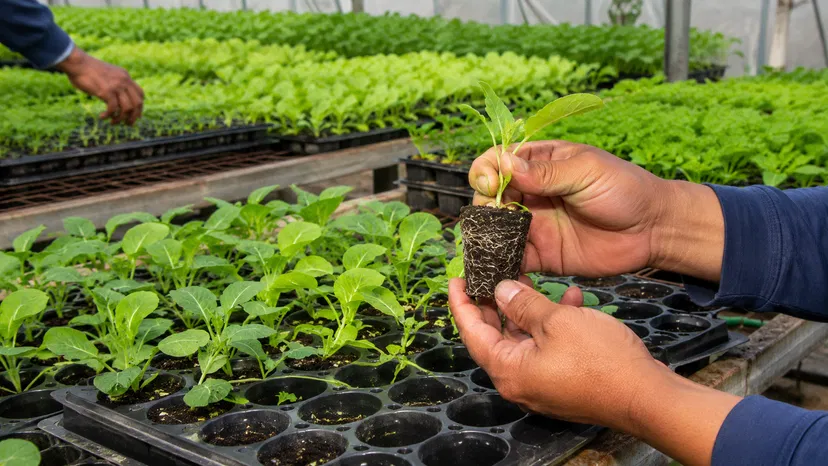
PGRs are not limited to large-scale farming. They are also widely used in home gardening, landscaping, and ornamental plant production. Gardeners use rooting hormones to propagate cuttings, while nursery growers rely on growth retardants to produce compact, attractive plants.
In fruit production, ethylene management helps ripen produce at the right time for market. In greenhouses, cytokinins and auxins support controlled growth and propagation. These applications show how versatile and practical PGRs have become.
Conclusion
Plant growth regulators are essential tools in modern plant science and agriculture. By controlling growth, flowering, rooting, and ripening, they help growers produce healthier plants and better yields with greater precision. Understanding the different types of PGRs—auxins, gibberellins, cytokinins, abscisic acid, and ethylene—can make a significant difference in how you manage crops and ornamental plants.
If you want to improve plant performance, boost productivity, or make smarter crop management decisions, learning how to use plant growth regulators is a valuable next step. The more you understand these powerful compounds, the better you can guide plant growth with confidence.