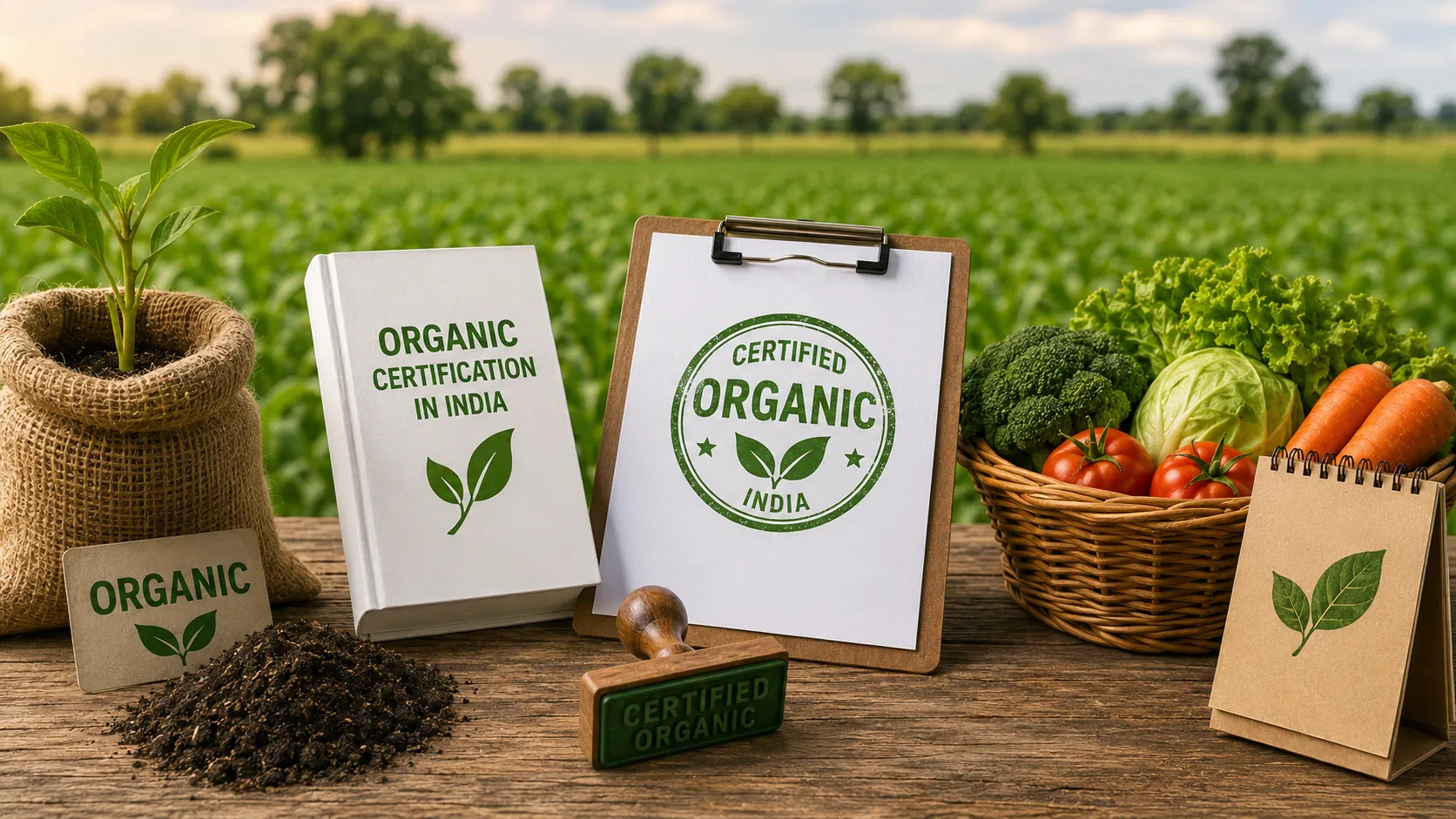
Thinking about selling organic products in India? Then understanding organic certification in India is the first step. Whether you’re a farmer, food processor, exporter, or startup entering the organic market, certification is what proves your products meet recognized organic standards. It builds trust, opens bigger markets, and helps you stand out in a fast-growing industry.
But the process can feel confusing at first. What rules apply? Which certification is needed? How long does it take? This beginner-friendly roadmap breaks it all down in simple terms so you can move forward with confidence.
What Is Organic Certification in India?
Organic certification is an official verification that a farm, product, or processing unit follows organic production standards. In India, it confirms that the product has been produced without synthetic fertilizers, harmful pesticides, genetically modified organisms, or prohibited additives.
For consumers, certification is proof of authenticity. For businesses, it is often the key to premium pricing, retail acceptance, and export opportunities.
In simple words: organic certification tells buyers that your product is genuinely organic, not just marketed that way.
Why Organic Certification Matters
The demand for organic food in India and abroad is rising steadily. However, the market is also full of products that use the word “organic” without proper proof. Certification solves this problem by creating trust and accountability.
Key benefits of organic certification
- Builds consumer trust with verified organic claims
- Improves market access in retail, e-commerce, and export channels
- Supports premium pricing for certified organic products
- Helps farmers adopt sustainable practices
- Strengthens brand credibility in a competitive market
Types of Organic Certification in India
India has a structured organic certification system. The right certification depends on whether your product is meant for the domestic market or export market.
1. NPOP Certification
The National Programme for Organic Production (NPOP) is the main certification system for organic products in India, especially for exports. It is recognized by many international markets and is widely used by farmers, processors, and exporters.
NPOP certification is managed through accredited certification bodies approved by the government.
2. PGS-India Certification
Participatory Guarantee System-India (PGS-India) is a low-cost, community-based certification system mainly for domestic sales. It is suitable for small farmers and local groups who want a simpler process.
PGS-India relies on group participation, peer reviews, and local validation rather than third-party inspection alone.
Which one should you choose?
- Choose NPOP if you want export recognition or formal third-party certification
- Choose PGS-India if you are selling locally and want a more affordable route
Who Needs Organic Certification?
Certification is not just for farmers. Any business involved in the organic supply chain may need it, depending on the products and claims being made.
- Organic farmers and producer groups
- Food processors and manufacturers
- Packers and labelers
- Exporters
- Retail brands selling certified organic products
If you are using the word organic on your product label or in your marketing, certification is usually essential to back up the claim.
Basic Requirements for Organic Certification
Before applying, your farm or facility must meet certain organic standards. These include avoiding prohibited chemicals and following approved organic methods.
Common requirements include:
- No use of synthetic pesticides or chemical fertilizers
- No use of genetically modified seeds or inputs
- Maintaining records of all farming activities
- Using organic-approved pest and soil management practices
- Keeping land, storage, and processing systems separate from non-organic operations when necessary
In many cases, there is also a conversion period before land can be certified organic. During this time, farmers must follow organic methods, but the produce may not yet qualify as certified organic.
The Organic Certification Process in India
Although the exact steps may vary by scheme, the certification journey usually follows a clear path.
Step 1: Choose the right certification scheme
Decide whether you need NPOP or PGS-India based on your market, scale, and business goals.
Step 2: Apply to an approved certification body or system
For NPOP, apply through an accredited certification agency. For PGS-India, register with the relevant local group or online platform.
Step 3: Submit documents and farm details
You may need to provide land records, crop details, production history, input usage, maps, and business information.
Step 4: Undergo inspection or verification
An inspector or authorized reviewer checks your land, facilities, records, and processes to ensure compliance with organic standards.
Step 5: Complete corrective actions if needed
If any gaps are found, you may need to fix them before approval.
Step 6: Receive certification
Once approved, you can use the certification status according to the scheme’s rules and sell your product as organic.
Documents Commonly Required
Documentation is a major part of organic certification in India. Keeping records organized makes the process smoother and faster.
- Application form
- Land ownership or lease documents
- Field history and crop plan
- Input purchase records
- Farming activity log
- Harvest and sales records
- Processing and storage details, if applicable
- Identity and business registration documents
How Long Does Certification Take?
The timeline depends on the certification system, the condition of the land, and how quickly documents and inspections are completed. For many farms, the process may take several months, especially if a conversion period is required.
Factors that affect timing include:
- Previous use of chemical inputs on the land
- Completeness of records
- Response time during inspection and follow-up
- Type of product and certification route
Common Mistakes to Avoid
Many beginners delay certification because of avoidable errors. If you’re just starting out, watch out for these common issues.
- Using prohibited inputs without checking approval status
- Not keeping proper records
- Mixing organic and non-organic produce during storage or transport
- Choosing the wrong certification scheme
- Making “organic” claims before certification is complete
Staying organized and following the rules from the beginning will save time, money, and stress later.
Tips for Beginners Starting the Certification Journey
If you are new to organic farming or organic business, keep your approach simple and systematic.
- Start with clean land and clean records.
- Learn the standards before applying.
- Work with an experienced consultant or certification body if needed.
- Train your team on organic handling practices.
- Plan for the conversion period and certification costs.
A little preparation at the beginning can make the entire process easier and more successful.
Final Thoughts
Organic certification in India is more than a label. It is a system that protects consumers, rewards responsible producers, and helps genuine organic businesses grow. If you are serious about entering the organic market, certification is one of the most important investments you can make.
Start by choosing the right scheme, understanding the requirements, and maintaining proper records from day one. With the right approach, the path to certification becomes much more manageable—and the long-term benefits can be substantial.
Ready to begin? Take the first step today by reviewing your farm or product setup and identifying the certification route that best fits your goals.