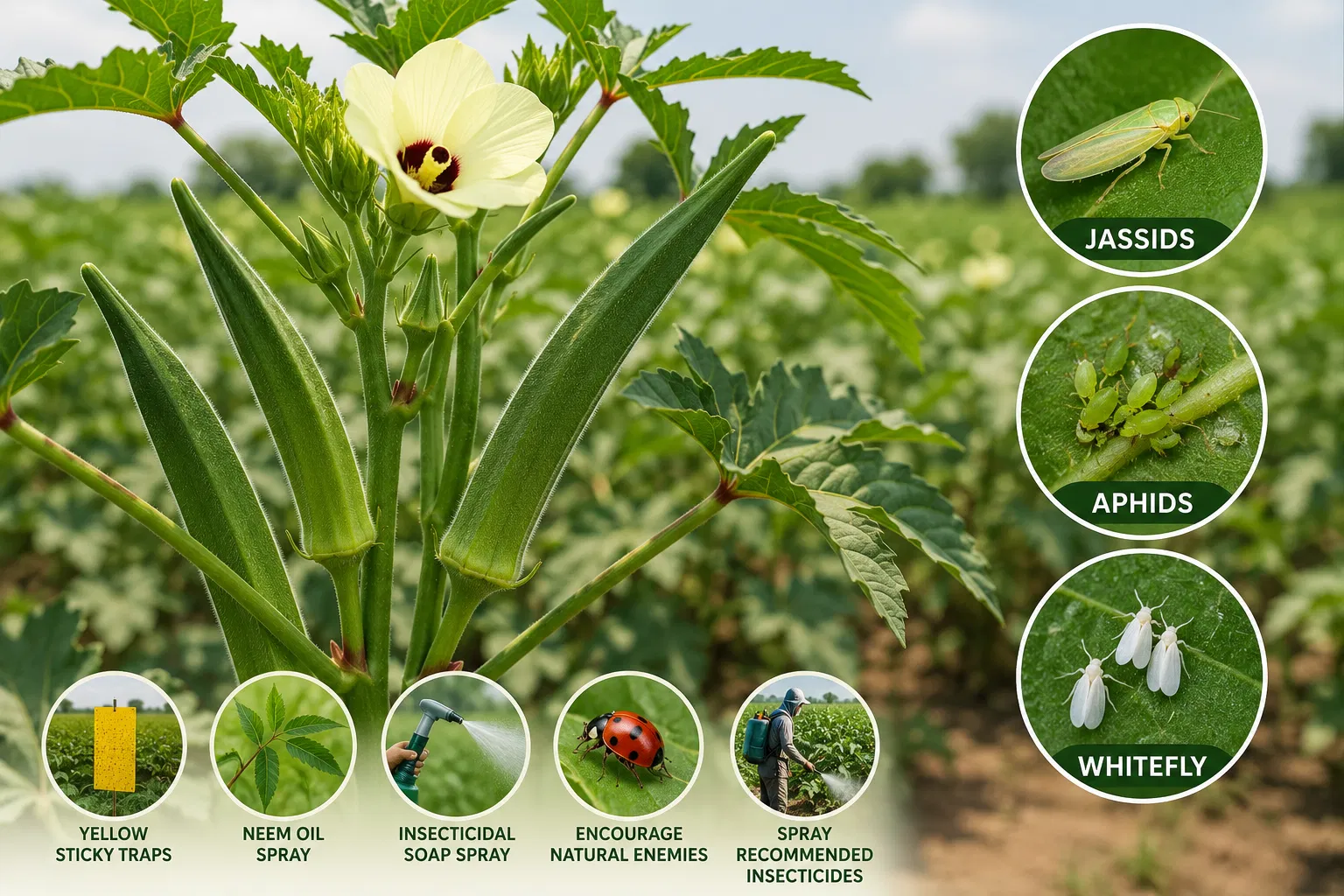
Healthy okra plants can quickly turn weak and unproductive when jassids, aphids, and whitefly attack. These tiny sucking pests may look harmless at first, but they can damage leaves, stunt growth, reduce flowering, and lower pod yield fast. If you want a better harvest, early detection and the right control strategy are essential.
Why Jassids, Aphids, and Whitefly Are a Serious Threat to Okra
These pests feed by sucking sap from tender okra leaves and shoots. As they multiply, plants lose vigor and show visible stress. In many cases, they also spread plant diseases, making the damage even worse.
- Jassids cause leaf curling, yellowing, and a burnt-looking edge called "hopper burn."
- Aphids cluster on young shoots and underside of leaves, weakening the plant and causing sticky honeydew.
- Whiteflies suck sap, cause yellowing, and often lead to sooty mold growth on leaves.
Once the pest population builds up, control becomes much harder. That is why a strong integrated approach works best for okra pest control.
How to Identify Jassids, Aphids, and Whitefly in Okra
Early identification helps you act before the infestation spreads. Check your crop regularly, especially the underside of leaves and new growth.
Signs of Jassid Damage
- Yellowing or whitening along leaf margins
- Leaf curling and drying
- Plants look stunted and weak
- Burnt appearance on the edges of leaves
Signs of Aphid Damage
- Small green, black, or yellow soft-bodied insects on tender parts
- Sticky honeydew on leaves and stems
- Leaf curling and distortion
- Ant activity around infested plants
Signs of Whitefly Damage
- Tiny white insects fly up when plants are disturbed
- Yellowing leaves
- Sticky residue on leaves
- Black sooty mold caused by honeydew buildup
Best practice: Inspect okra plants at least twice a week during early growth, when these pests usually become active.
Best Cultural Practices to Prevent Infestation
Good crop management reduces pest pressure before it becomes severe. Healthy plants are also better able to tolerate minor pest attacks.
1. Choose the Right Planting Time
Plant okra at the recommended season for your region. Avoid very dry or highly favorable pest periods if possible, since jassids, aphids, and whitefly often thrive in warm conditions.
2. Use Healthy Seeds and Resistant Varieties
Select certified seeds and, if available, pest-tolerant okra varieties. Strong seedlings establish faster and are less likely to suffer serious damage.
3. Maintain Proper Field Sanitation
- Remove weeds around the field
- Destroy old crop residues after harvest
- Remove heavily infested leaves when practical
- Avoid overcrowding of plants
Weeds often serve as alternate hosts for aphids and whitefly, so clean fields can greatly reduce pest buildup.
4. Use Balanced Fertilization
Too much nitrogen causes excessive soft growth, which attracts sucking pests. Apply fertilizers based on soil needs and avoid overfeeding the crop with nitrogen.
Mechanical and Physical Control Methods
Before turning to chemicals, use simple methods that can help lower pest numbers naturally.
- Yellow sticky traps attract and trap whiteflies and aphids.
- Hand removal of severely affected leaves can slow pest spread in small gardens.
- Water spray can dislodge aphids from tender shoots when infestations are light.
- Mulching with reflective material may help repel whiteflies in some systems.
These methods work best when combined with regular field monitoring and timely action.
Biological Control for Okra Pest Management
Natural enemies can play an important role in controlling jassids, aphids, and whitefly. Protecting beneficial insects helps keep pest populations in check.
Helpful Beneficial Insects
- Lady beetles feed on aphids
- Green lacewings prey on aphids and other soft-bodied pests
- Parasitic wasps help control whitefly populations
Avoid spraying broad-spectrum insecticides unnecessarily, as these can kill beneficial insects along with pests.
Biopesticides and Botanical Options
For light to moderate infestations, biopesticides can be effective and safer than harsh chemicals.
- Neem oil helps repel and suppress sucking pests
- Insecticidal soap can reduce aphids and whiteflies on contact
- Botanical extracts may help in early-stage pest management
Always apply these products in the early morning or late evening and repeat as needed according to label guidance.
Chemical Control of Jassids, Aphids, and Whitefly in Okra
When pest levels become severe and other methods are not enough, chemical control may be necessary. Use only recommended crop protection products and follow local agricultural guidelines carefully.
Important Tips Before Spraying
- Spray only when pest thresholds are reached
- Target the undersides of leaves where pests hide
- Rotate fungicides and insecticides with different modes of action
- Follow label dose and safety instructions
- Avoid repeated use of the same product to prevent resistance
Because whitefly and aphids can develop resistance quickly, rotation is especially important. Improper spraying can make the problem worse over time.
Application Best Practices
- Use a knapsack sprayer or suitable equipment for even coverage
- Apply when wind is low to reduce drift
- Spray during cooler hours for better effectiveness
- Wear protective clothing during application
Integrated Pest Management for Long-Term Control
The most effective way to control jassids, aphids, and whitefly in okra is through Integrated Pest Management (IPM). This combines prevention, monitoring, biological control, and chemical control only when needed.
A Simple IPM Plan for Okra
- Start with healthy seed and clean field preparation.
- Monitor plants regularly from early growth.
- Use sticky traps and remove weeds.
- Encourage natural enemies and use bio-fertilizers and natural options first.
- Apply recommended insecticides only when infestations are severe.
- Rotate pest control products to reduce resistance.
This balanced approach protects the crop while reducing unnecessary chemical use and preserving beneficial insects.
Common Mistakes to Avoid
Many growers lose yield because they react too late or use the wrong control method. Avoid these common mistakes:
- Ignoring early signs of pest attack
- Overusing nitrogen fertilizer
- Spraying without checking pest levels
- Using the same insecticide repeatedly
- Neglecting weeds and field sanitation
- Spraying at the wrong time of day
Small changes in management can make a big difference in pest pressure and final yield.
Final Thoughts on Controlling Jassids, Aphids, and Whitefly in Okra
Jassids, aphids, and whitefly can seriously damage okra, but they can be managed effectively with timely action and smart crop care. The key is to monitor early, keep the field clean, protect beneficial insects, and use insecticides only when necessary.
If you want healthier okra plants and better pod yield, begin pest control from the first signs of infestation. A practical IPM-based approach will always give you better long-term results than relying on chemicals alone.
Take action early, stay consistent, and protect your okra crop before pest damage becomes a loss.