Fertilizer efficiency can make the difference between average harvests and exceptional ones. Among the most widely discussed options in modern agriculture is neem-coated urea, a smarter alternative to regular urea that helps farmers use nitrogen more effectively while reducing waste. If you want better crop performance, healthier soil, and lower fertilizer losses, understanding the benefits of neem-coated urea over regular urea is essential.
What Is Neem-Coated Urea?
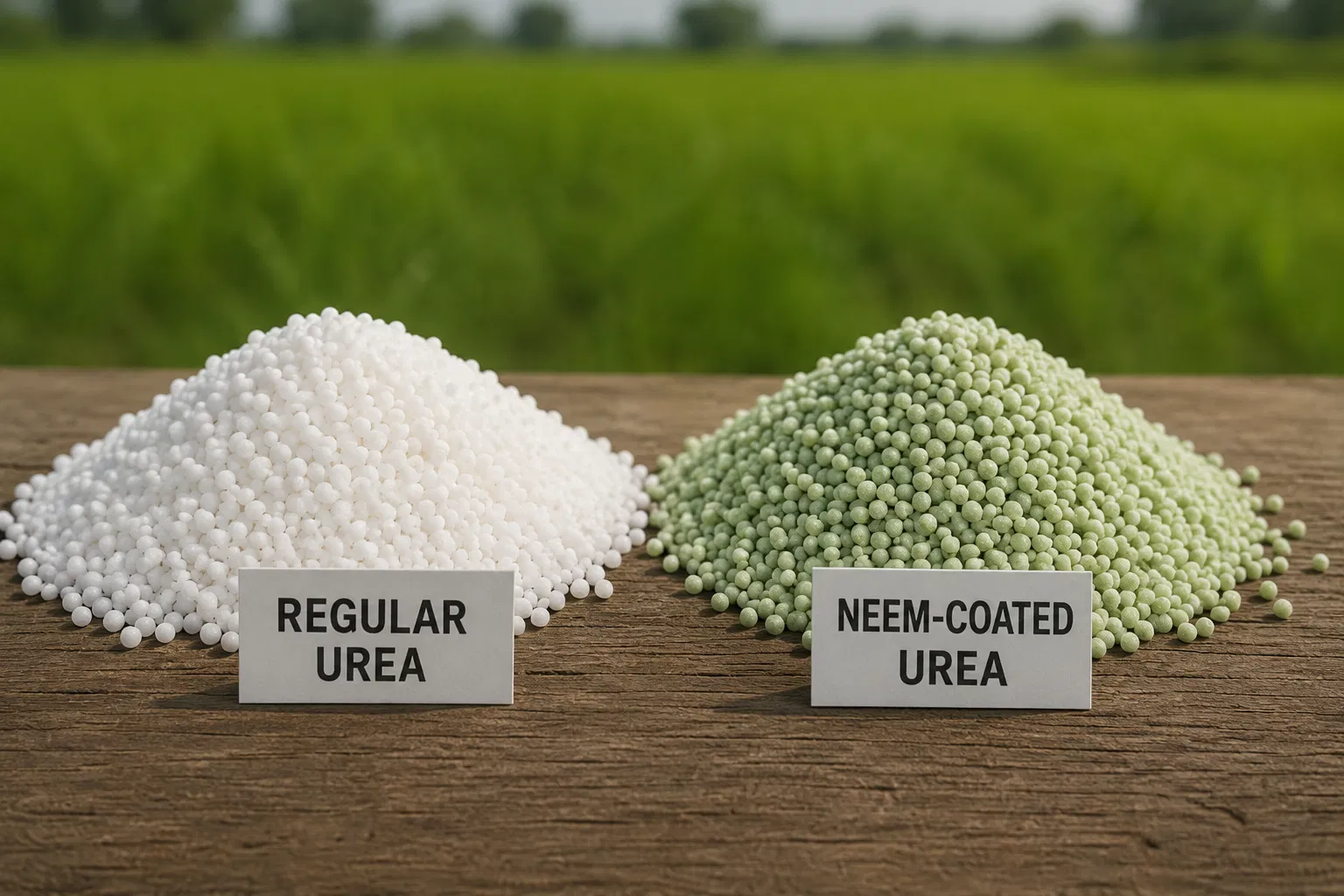
Neem-coated urea is regular urea granules coated with neem oil or neem extract. This coating slows down the release of nitrogen into the soil, allowing plants to absorb it more efficiently over time. Regular urea, by contrast, releases nitrogen quickly, which often leads to significant losses through volatilization, leaching, and runoff.
The neem coating acts as a natural nitrification inhibitor, helping retain nitrogen in the root zone for longer periods. This makes neem-coated urea a more sustainable and cost-effective option for many farming systems.
Why Regular Urea Often Falls Short
Regular urea is popular because it is affordable and contains a high percentage of nitrogen. However, its fast release can be a drawback. When applied to soil, much of the nitrogen can be lost before crops use it.
- Volatilization: Nitrogen escapes into the atmosphere as ammonia.
- Leaching: Rain or irrigation can wash nitrogen below the root zone.
- Runoff: Excess fertilizer can move away from the field, reducing effectiveness.
These losses mean farmers may need to apply more fertilizer to achieve the same results, increasing both cost and environmental impact.
Key Benefits of Neem-Coated Urea Over Regular Urea
1. Improves Nitrogen Use Efficiency
The biggest advantage of neem-coated urea is better nitrogen use efficiency. Because the nitrogen is released more slowly, crops have more time to absorb it. This reduces waste and ensures that a larger share of the applied fertilizer actually benefits the plant.
2. Reduces Nitrogen Losses
Neem-coated urea helps minimize nitrogen losses through leaching and volatilization. This is especially valuable in sandy soils, irrigated fields, and areas with heavy rainfall, where regular urea can be lost quickly after application.
3. Supports Stronger Crop Growth
With a steady nitrogen supply, crops often develop more uniform growth, better leaf color, and improved vigor. Nitrogen is essential for photosynthesis, protein formation, and overall plant development, so more consistent availability can lead to healthier crops.
4. Can Improve Yield Potential
Better nitrogen availability often translates into better yield potential. Farmers using neem-coated urea may see improved tillering in cereals, stronger vegetative growth in many crops, and more efficient nutrient uptake across the growing season.
5. Reduces Fertilizer Frequency
Because neem-coated urea releases nitrogen more gradually, it may reduce the need for frequent top-dressing compared with regular urea. This can save time, labor, and application costs, especially on larger farms.
6. More Environmentally Friendly
One of the most important benefits is environmental protection. By lowering nitrogen losses, neem-coated urea helps reduce pollution in soil and water systems. It also supports more responsible nutrient management, which is increasingly important in sustainable agriculture.
How Neem-Coated Urea Works in the Soil
After application, the neem coating slows the conversion of urea into forms that can be quickly lost. This gives roots more time to access nitrogen as the plant needs it. Instead of a short burst of nutrient release, the crop receives a more balanced supply.
This controlled release effect is especially useful during critical growth stages when plants require nitrogen for leaf development, flowering, and grain filling.
“A fertilizer that feeds the crop steadily is often more valuable than one that feeds it quickly.”
Neem-Coated Urea vs Regular Urea: A Quick Comparison
- Nitrogen release: Neem-coated urea releases nitrogen more slowly; regular urea releases it quickly.
- Losses: Neem-coated urea reduces losses from leaching and volatilization.
- Efficiency: Neem-coated urea improves nitrogen use efficiency.
- Crop response: Neem-coated urea supports more sustained growth.
- Environmental impact: Neem-coated urea is generally more eco-friendly.
- Application frequency: Neem-coated urea may reduce repeated applications.
Best Crops and Conditions for Neem-Coated Urea
Neem-coated urea is widely used in field crops where nitrogen management is critical. It is especially beneficial for:
It performs well in conditions where nitrogen loss is a major concern, such as:
- High rainfall regions
- Irrigated farmland
- Sandy or light-textured soils
- Soils with low nutrient-holding capacity
Application Tips for Better Results
To get the most out of neem-coated urea, timing and placement matter. Proper application improves nutrient availability and crop uptake.
- Apply at the right growth stage: Match application with crop nitrogen demand.
- Avoid overuse: More fertilizer does not always mean better results.
- Use proper soil placement: Place fertilizer where roots can access it efficiently.
- Combine with balanced nutrition: Nitrogen works best with phosphorus, potassium, and micronutrients.
- Follow local agronomic recommendations: Crop type, soil condition, and climate all affect dosage.
Is Neem-Coated Urea Worth It?
For many farmers, the answer is yes. Neem-coated urea offers a practical way to improve fertilizer efficiency, reduce nutrient loss, and support more stable crop growth. While regular urea remains widely used, its quick-release nature often leads to lower efficiency and greater environmental losses.
Neem-coated urea stands out because it helps crops use nitrogen more effectively, which can lead to better productivity and better long-term soil management. In the context of modern agriculture, that makes it more than just a fertilizer choice—it makes it a smarter nutrient strategy.
Conclusion
If your goal is to maximize crop yield while reducing fertilizer waste, neem-coated urea is a strong alternative to regular urea. Its slow-release action, improved nitrogen use efficiency, and reduced environmental impact make it a valuable input for sustainable farming.
Choose neem-coated urea when you want better nutrient retention, healthier crops, and more efficient fertilizer use. For farmers looking to improve productivity without increasing losses, it is one of the most effective nitrogen management options available today.