Healthy pulse crops do not just need the big nutrients farmers talk about most. They also depend on trace elements that quietly drive plant performance, and molybdenum is one of the most important. In lentils, chickpeas, peas, beans, and other pulses, this micronutrient plays a direct role in nitrogen fixation, protein formation, and overall crop vigor. When molybdenum is missing, even well-managed fields can struggle to deliver their full yield potential.
For pulse growers, understanding molybdenum is not a minor detail. It can be the difference between weak nodulation and strong biological nitrogen fixation, between pale plants and vigorous growth, and between average harvests and profitable ones. If you want better pulse crop performance, molybdenum deserves a place on your nutrient checklist.
What Is Molybdenum?
Molybdenum is a micronutrient required by plants in very small amounts, but its impact is significant. It is naturally present in soil, though not always in a form plants can absorb easily. Unlike macronutrients such as nitrogen, phosphorus, and potassium, molybdenum is needed in trace quantities. Still, without it, several essential plant processes slow down or stop.
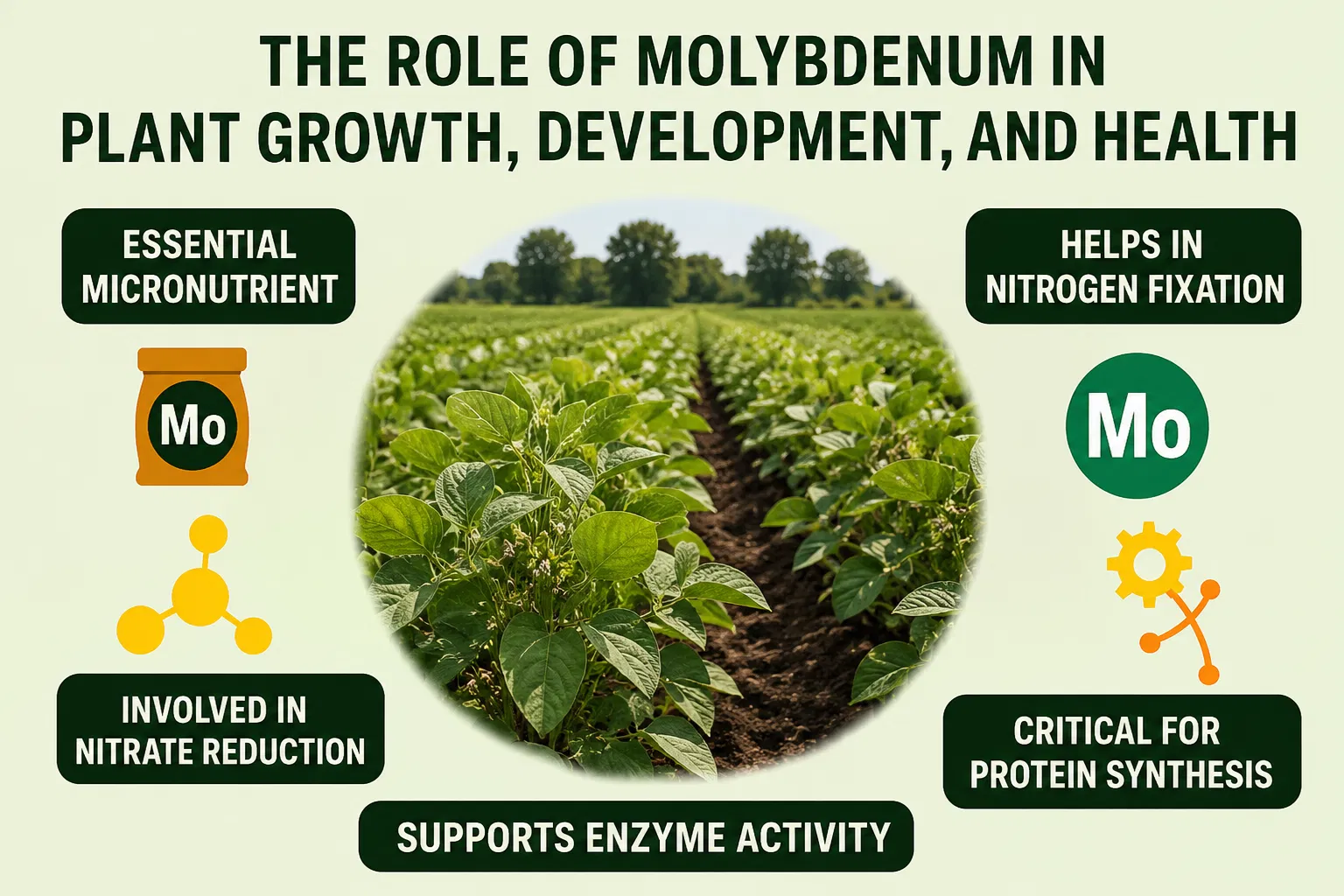
In pulse crops, molybdenum is especially important because it supports enzymes involved in nitrogen metabolism. This makes it a key nutrient for legumes that rely on root nodules and rhizobia bacteria to convert atmospheric nitrogen into a usable form.
Why Molybdenum Matters in Pulse Crops
Pulses are unique because they can fix their own nitrogen through a symbiotic relationship with rhizobia. But this process is not automatic. It depends on the right soil conditions and nutrient availability, including molybdenum.
Molybdenum is a core component of the nitrogenase enzyme system used in nitrogen fixation. It also supports nitrate reductase, an enzyme that helps plants convert nitrate into forms they can use for growth. In simple terms, molybdenum helps pulse crops access and use nitrogen efficiently.
When molybdenum is adequate, pulse plants can:
- Form healthy root nodules
- Fix nitrogen more effectively
- Produce better vegetative growth
- Support higher protein content in grain
- Improve overall yield potential
Common Molybdenum Deficiency Symptoms in Pulses
Molybdenum deficiency can be easy to overlook because its symptoms often resemble nitrogen deficiency. In pulses, the most noticeable signs usually appear in older leaves first, but the pattern can vary depending on crop type and soil conditions.
Typical deficiency symptoms include:
- Pale or yellowing leaves
- Reduced nodulation on roots
- Stunted plant growth
- Weak or delayed flowering
- Poor pod fill and reduced seed development
- Leaf curling or marginal scorching in severe cases
Because these symptoms can look like other nutrient problems, soil testing and tissue analysis are useful tools for confirming the issue. If a pulse crop is not fixing nitrogen well and is showing weak growth, molybdenum may be part of the problem.
Soil Conditions That Influence Molybdenum Availability
One of the most important things to understand about molybdenum is that its availability depends strongly on soil pH. Unlike many micronutrients that become less available in higher-pH soils, molybdenum is generally more available in alkaline conditions and less available in acidic soils.
This means pulse crops grown in acidic fields are at greater risk of deficiency, even when total soil molybdenum is present. Soil texture and organic matter also influence how much molybdenum is available to plants.
Factors that can reduce molybdenum availability:
- Low soil pH
- Sandy soils with low organic matter
- Leaching in high-rainfall areas
- Overuse of acid-forming fertilizers
- Limited soil reserves of available micronutrients
For growers managing pulse crops in acidic soils, liming may improve molybdenum availability while also supporting better nodulation and root health.
Molybdenum and Nitrogen Fixation
The relationship between molybdenum and nitrogen fixation is one of the most important nutrient connections in pulse production. Rhizobia bacteria inside the nodules need molybdenum to function properly. Without enough of it, nitrogen fixation becomes inefficient, and the crop may depend more heavily on soil-applied nitrogen.
In pulse crops, molybdenum is not just a micronutrient; it is a key driver of biological nitrogen fixation.
That matters because healthy nitrogen fixation supports sustainability, lowers dependence on synthetic nitrogen, and helps maintain productivity in the field. When molybdenum levels are corrected, growers may see improved nodulation and more vigorous crop growth.
How to Manage Molybdenum in Pulse Crops
Good molybdenum management starts with knowing the soil status. Since this nutrient is required in such small amounts, overapplication is rarely necessary, but deficiency can still limit yield. A targeted approach works best.
1. Test the soil
Soil testing helps identify pH issues and micronutrient limitations. In many cases, molybdenum deficiency is linked to acidic soils rather than extremely low total molybdenum levels.
2. Consider seed treatment or foliar application
In some production systems, molybdenum can be applied as a seed treatment or foliar spray. These methods are often used when a quick correction is needed or when soil conditions make uptake difficult.
3. Correct soil pH where needed
Liming acidic soils can improve molybdenum availability and benefit pulse crops in multiple ways. Better pH conditions also help rhizobia perform more effectively.
4. Integrate with overall nutrient management
Molybdenum works best as part of a complete fertility program. Adequate phosphorus, sulfur, and other micronutrients also support strong nodulation and crop development.
Best Practices for Pulse Growers
Pulse crops respond best when nutrition is balanced and field conditions support root activity. Molybdenum management should be part of a broader strategy aimed at maximizing nitrogen fixation and grain yield.
- Monitor soil pH regularly
- Use crop-specific soil and tissue tests
- Watch for poor nodulation in early growth stages
- Apply molybdenum only when deficiency risk is confirmed
- Combine micronutrient management with inoculation best practices
It is also important to avoid assuming that all pulse fields need molybdenum every season. In some soils, levels may already be sufficient. The goal is not routine application, but precise correction where needed.
Why Molybdenum Supports Better Yield and Protein
Yield in pulse crops is tied closely to nitrogen availability, and molybdenum helps keep that system running. When the plant can fix nitrogen efficiently, it has more resources for vegetative growth, flowering, pod formation, and seed filling. This often leads to stronger harvest performance and improved grain quality.
Because pulses are valued for their protein content, molybdenum also contributes indirectly to market value. Better nitrogen metabolism supports the production of amino acids and proteins, which are key traits in lentils, peas, chickpeas, and beans.
Final Thoughts on Molybdenum in Pulse Crops
Molybdenum may be needed in tiny amounts, but its role in pulse crops is anything but small. From nitrogen fixation to protein formation, this micronutrient supports some of the most important functions in legume production. When it is lacking, pulse crops can underperform even under otherwise good management.
If you grow pulses, make molybdenum part of your nutrient planning. Test your soil, pay attention to pH, and look closely at nodulation and crop color during the season. Small adjustments can lead to meaningful gains in plant health, yield, and profitability.
Strong pulse crops start with the right nutrition, and molybdenum is one of the quiet essentials that makes success possible.