Citrus trees can look healthy on the surface while quietly struggling with micronutrient deficiencies that limit growth, reduce fruit quality, and weaken long-term productivity. In citrus orchards, the smallest nutrients often make the biggest difference. When micronutrients are managed correctly, trees respond with stronger flushes, better flowering, improved fruit set, and more consistent yields.
If you want healthier citrus orchards and premium fruit quality, micronutrient management should be part of your core nutrition strategy. Below, we’ll cover the best micronutrient practices for citrus orchards, including how to identify deficiencies, apply nutrients effectively, and avoid common mistakes that reduce performance.
Why Micronutrients Matter in Citrus Orchards
Micronutrients are required in smaller amounts than nitrogen, phosphorus, and potassium, but they are essential for plant metabolism, enzyme activity, chlorophyll formation, and fruit development. In citrus orchards, even a minor shortage can affect tree health and profitability.
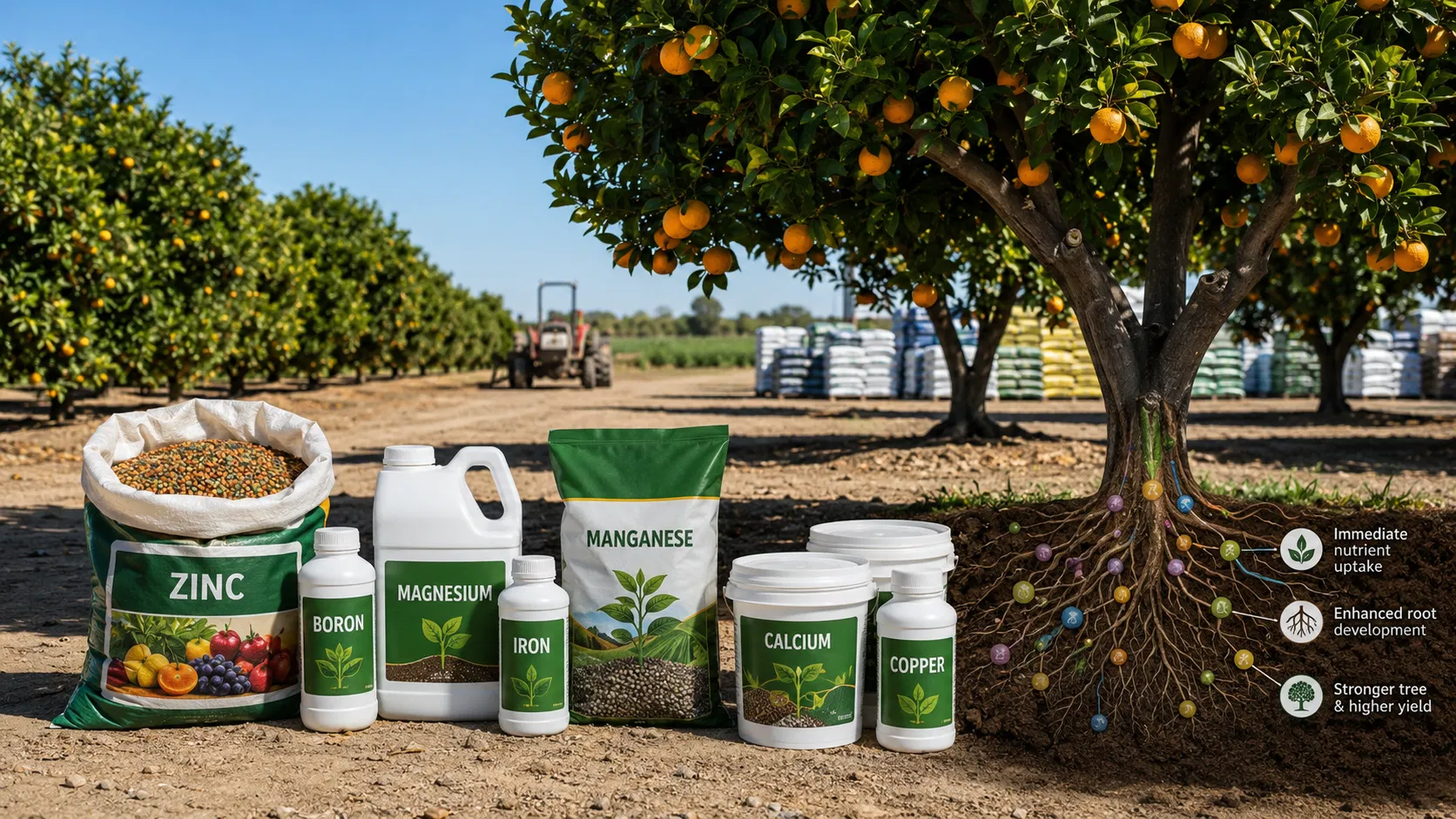
The most important micronutrients for citrus include:
- Iron – supports chlorophyll production and healthy leaf color
- Zinc – important for shoot growth, leaf development, and fruiting
- Manganese – helps with photosynthesis and enzyme function
- Boron – critical for flowering, pollen tube growth, and fruit set
- Copper – supports enzyme systems and overall tree vigor
- Molybdenum – involved in nitrogen metabolism
Because citrus roots are sensitive to soil conditions, nutrient uptake can be limited even when micronutrients are present in the soil. That is why orchard managers need a practical, site-specific approach.
Start with Soil and Leaf Testing
The best micronutrient program begins with data. Visual symptoms are useful, but they are not enough to diagnose the problem accurately. Soil testing and leaf analysis provide a clearer picture of what the trees actually need.
Use Soil Tests to Understand Availability
Soil tests reveal pH, organic matter, and micronutrient levels. Since micronutrient availability is heavily influenced by pH, this information is essential. For example, iron and zinc often become less available in alkaline soils, while copper and manganese can behave differently depending on soil conditions.
Use Leaf Analysis to Confirm Tree Nutrition
Leaf tissue testing is one of the most reliable tools for citrus nutrient management. It shows what the tree has absorbed, not just what is sitting in the soil. Regular leaf sampling helps you detect hidden deficiencies before they affect yield or fruit size.
Best practice: Combine soil tests and leaf analysis every season or at least annually to guide micronutrient decisions with confidence.
Watch for Common Micronutrient Deficiency Symptoms
Micronutrient deficiencies in citrus often show up in the leaves, new shoots, and fruit. Early detection helps prevent long-term losses.
Iron Deficiency
Iron deficiency often causes young leaves to turn yellow while the veins remain green. This condition is especially common in high-pH soils and calcareous sites.
Zinc Deficiency
Zinc deficiency may lead to small leaves, short internodes, rosetting, and sparse canopy growth. Fruit can be undersized, and overall tree vigor declines.
Manganese Deficiency
Manganese deficiency can resemble iron deficiency, with interveinal chlorosis on young leaves. It often appears in sandy or alkaline soils.
Boron Deficiency
Boron deficiency can affect flowering and fruit set. Symptoms may include distorted leaves, cracked fruit, poor seed development, or misshapen fruit.
Copper Deficiency
Copper deficiency is less common but can cause weak shoots, reduced vigor, and poor fruit quality in some orchards.
Manage Soil pH for Better Nutrient Availability
Soil pH is one of the biggest factors affecting micronutrient uptake in citrus orchards. Even when nutrients are applied correctly, improper pH can lock them up and limit absorption.
In general, citrus performs best in slightly acidic to neutral soils. When pH rises too high, iron, zinc, manganese, and boron availability often drops. If pH is too low, other nutrient imbalances may occur.
To improve nutrient availability:
- Monitor soil pH regularly
- Apply amendments only when needed
- Avoid overliming acidic soils
- Use acidifying fertilizers carefully where appropriate
- Manage irrigation water quality if it contributes to alkalinity
Choose the Right Micronutrient Application Method
There is no single best method for every orchard. The right approach depends on soil type, pH, tree age, symptom severity, and urgency. A balanced citrus nutrition program may use one or more of the following application methods.
Soil Applications
Soil-applied micronutrients work best when root uptake is possible and the nutrient can remain available in the root zone. Chelated forms are often used for iron and zinc in high-pH soils because they stay more available than standard forms.
Foliar Sprays
Foliar feeding is an efficient way to correct deficiencies quickly, especially for zinc, manganese, and boron. It is useful when trees need a fast response during active growth or flowering.
For best results, foliar sprays should be applied:
- During cool parts of the day
- With proper spray coverage
- At recommended concentrations
- Using compatible products only
Fertigation
In irrigated orchards, fertigation can deliver micronutrients efficiently through the irrigation system. This approach allows frequent, low-dose applications that support steady nutrient uptake.
Time Micronutrient Applications Strategically
Timing matters just as much as product selection. Citrus trees have key growth stages when micronutrients are especially important.
Consider applying micronutrients during:
- Spring flush
- Pre-bloom or bloom period
- Fruit set and early fruit development
- Periods of active root growth
For example, boron is particularly important before and during flowering, while zinc and manganese are often needed during new flush growth. Applying the right nutrient at the wrong time can reduce effectiveness and increase waste.
Avoid Overapplication and Nutrient Interactions
More is not always better. Micronutrients are needed in small amounts, and excess applications can cause toxicity or create new nutrient imbalances. Overuse of one element may also interfere with the uptake of another.
Important interaction examples include:
- Excess phosphorus can reduce zinc availability
- High pH can limit iron and manganese uptake
- Too much boron can become toxic quickly
- Excess copper can accumulate in soil over time
Always follow lab recommendations, label directions, and orchard-specific guidelines rather than guessing rates based on visible symptoms alone.
Use Chelated Micronutrients Where Appropriate
Chelated micronutrients are often a smart choice in citrus orchards, especially where soil conditions reduce nutrient availability. Chelates protect the nutrient from becoming fixed in the soil, making it easier for roots to absorb.
They are especially useful for:
- Iron deficiency in calcareous soils
- Zinc deficiency in high-pH orchards
- Rapid correction through fertigation or soil drench programs
That said, chelated products should still be used based on test results and orchard needs. Product quality matters, and not all chelates perform the same way under every soil condition.
Support Micronutrient Uptake with Healthy Roots
Even the best micronutrient program will fall short if root health is poor. Citrus roots need oxygen, moisture balance, and a healthy soil environment to absorb nutrients effectively.
To support better uptake:
- Avoid waterlogging and compaction
- Maintain good irrigation scheduling
- Encourage organic matter where possible
- Reduce root disease pressure
- Keep weeds from competing for nutrients and water
Healthy roots improve the orchard’s ability to respond to every micronutrient application.
Create a Seasonal Micronutrient Plan
The most productive citrus orchards use a planned nutrition calendar rather than reactive treatments. A seasonal strategy helps prevent deficiencies before they affect fruit quality.
A simple plan may include:
- Soil and leaf testing before the season starts
- Review of last season’s deficiency history
- Targeted soil, foliar, or fertigation applications
- Midseason scouting for leaf symptoms and fruit abnormalities
- Post-season analysis to improve the next cycle
This approach helps orchard managers stay ahead of problems while improving nutrient use efficiency.
Conclusion: Small Nutrients, Big Results
Micronutrient management is one of the smartest investments you can make in citrus orchard productivity. When soil testing, leaf analysis, pH management, proper timing, and the right application methods work together, trees stay healthier and more productive.
If you want stronger citrus trees, better fruit set, and higher-quality harvests, make micronutrient practices a consistent part of your orchard management plan. The smallest nutrients can deliver some of the biggest returns.
Final insight: In citrus orchards, success often depends on precision. Test regularly, apply carefully, and let data guide every micronutrient decision.