If you want a leafy green that thrives in warm weather, looks beautiful climbing a trellis, and delivers impressive nutrition, Malabar spinach is a standout choice. Also known as Basella, this vigorous vine is not a true spinach, but it offers tender, spinach-like leaves that are delicious in soups, stir-fries, and salads. Best of all, it grows fast, handles heat well, and rewards gardeners with harvest after harvest.
Whether you are a home gardener, a health-conscious cook, or someone looking for an easy-to-grow vegetable for the backyard, Malabar spinach is worth learning about. In this guide, you'll discover how to cultivate Basella successfully and why it deserves a place in your garden and kitchen.
What Is Malabar Spinach?
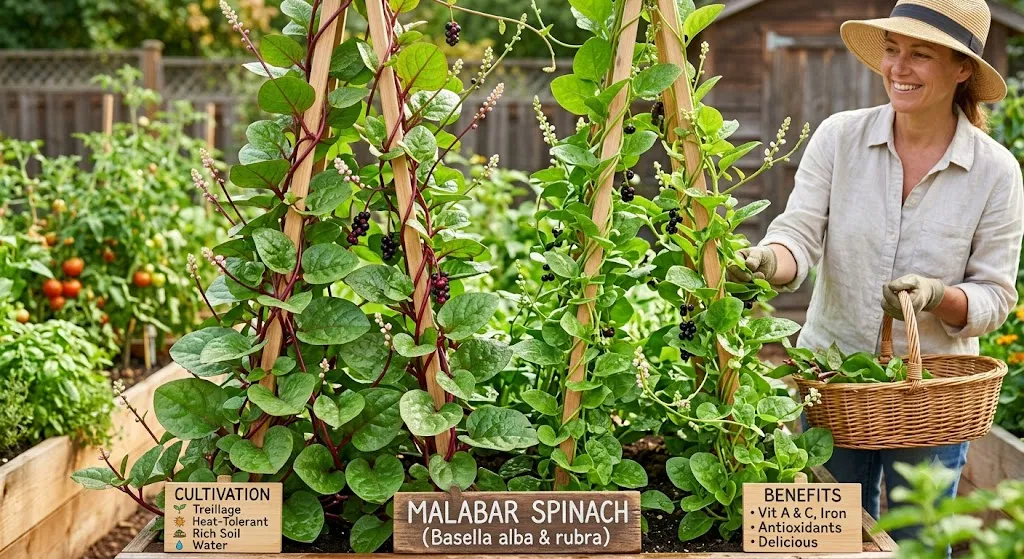
Malabar spinach is a tropical vine from the genus Basella, commonly grown as Basella alba or Basella rubra. It is prized for its thick, glossy leaves and fast-growing climbing habit. Unlike traditional spinach, which prefers cooler weather, Basella flourishes in hot, humid conditions and continues producing tender leaves through summer.
The plant has fleshy stems, heart-shaped leaves, and small clusters of flowers that later develop into dark purple berries. These berries can be used for seed saving, though the leaves are the main reason gardeners grow it.
Why Grow Malabar Spinach?
Malabar spinach offers a mix of practical and nutritional benefits that make it especially appealing.
- Heat tolerant: It performs well when regular spinach bolts in warm weather.
- Highly productive: Frequent harvesting encourages more leaf growth.
- Space-saving: Since it climbs, it can grow vertically on fences, poles, or trellises.
- Nutrient-rich: The leaves provide vitamins, minerals, and antioxidants.
- Versatile in cooking: It works well in a wide range of dishes.
"If you struggle to grow spinach during summer, Malabar spinach is an excellent warm-season alternative."
Ideal Growing Conditions for Basella
To grow Malabar spinach successfully, give it the conditions it loves most: warmth, moisture, and support for climbing. This plant is tropical by nature, so it responds best when the weather is consistently warm.
Climate and Temperature
Malabar spinach thrives in temperatures between 21°C and 35°C. It grows slowly in cool weather and may stop producing if temperatures drop too low. In frost-free areas, it can behave as a perennial, while in cooler regions it is usually grown as an annual.
Sunlight
Basella grows best in full sun, but it can tolerate partial shade, especially in very hot climates. If your summer is extremely intense, light afternoon shade may help prevent leaf scorch while still promoting healthy growth.
Soil
Use fertile, well-drained soil rich in organic matter. A soil pH between 6.0 and 7.5 is ideal. Before planting, mix in compost or well-rotted manure to support strong vine growth and abundant leaf production.
How to Plant Malabar Spinach
Basella is usually grown from seed. The seeds have a hard coating, so a little preparation helps improve germination.
Seed Preparation
Soak the seeds in warm water for 12 to 24 hours before planting. This softens the seed coat and helps speed up sprouting.
Sowing Seeds
- Choose a warm location after the danger of frost has passed.
- Sow seeds 1 to 2 cm deep in moist soil.
- Space plants 30 to 45 cm apart.
- Install a trellis, fence, or stake early so vines can climb from the start.
Germination usually takes 7 to 21 days, depending on warmth and moisture. Keep the soil evenly moist during this stage for the best results.
Care and Maintenance
Once established, Malabar spinach is fairly low-maintenance. A few simple care practices will keep it healthy and productive throughout the season.
Watering
This plant likes consistent moisture. Water deeply when the top layer of soil begins to dry out, especially during hot spells. Avoid letting the soil become soggy, as poor drainage can lead to root problems.
Fertilizing
Because Basella grows vigorously, it benefits from regular feeding. Use compost, organic liquid fertilizer, or a balanced vegetable fertilizer every few weeks to encourage lush leaf growth.
Training the Vine
Malabar spinach climbs by twining around supports. Gently guide young vines onto a trellis, string, or pole. Once they start climbing, they usually hold on by themselves.
Pruning and Harvesting
Regular harvesting acts like pruning and encourages bushier growth. Pinch off the growing tips if you want the plant to branch more. This also helps delay flowering and keeps the leaves tender longer.
Harvesting Malabar Spinach
You can begin harvesting when the vines are well established and the leaves are large enough to pick. Harvest young leaves and tender stems for the best texture and flavor.
- Pick leaves regularly: Harvest outer leaves first to allow continued growth.
- Use young stems: Tender stems are edible and useful in cooked dishes.
- Harvest frequently: This keeps the plant producing fresh foliage.
The leaves have a mild, slightly earthy flavor with a pleasant texture. When cooked, they become silky and soft, making them ideal for soups, curries, and sautés.
Common Problems and How to Avoid Them
Malabar spinach is generally hardy, but a few issues can affect growth.
- Poor germination: Soak seeds before sowing and ensure warm soil.
- Slow growth: Check for low temperatures or lack of nutrients.
- Pests: Watch for aphids, snails, and caterpillars.
- Wilting: Increase watering during hot dry periods.
Good airflow, healthy soil, and steady watering will prevent most problems. If pests appear, remove them manually or use gentle organic controls.
Health Benefits of Malabar Spinach
Basella is valued not only for its culinary uses but also for its nutritional profile. The leaves are rich in beneficial compounds that support a healthy diet.
- Vitamins: A good source of vitamins A and C.
- Minerals: Provides calcium, iron, and magnesium.
- Antioxidants: Contains plant compounds that help protect cells.
- Dietary fiber: Supports digestive health.
- Low in calories: Useful for light, nutrient-dense meals.
Because it is nutrient-rich and easy to incorporate into everyday cooking, Malabar spinach is a smart addition to a balanced diet.
How to Use Malabar Spinach in the Kitchen
One of the best things about Basella is its flexibility in the kitchen. It can be eaten raw in small amounts, though it is most commonly cooked. The leaves soften quickly and develop a smooth, slightly mucilaginous texture that thickens broths beautifully.
Popular Cooking Ideas
- Stir-fry with garlic, onion, and chili
- Add to soups and stews as a thickening green
- Cook with coconut milk and spices
- Mix into omelets or savory pancakes
- Toss young leaves into fresh salads
In many cuisines, Malabar spinach is cherished for its ability to add body, color, and nutrition to meals without overpowering other ingredients.
Saving Seeds
If you want to grow Basella year after year, allow a few berries to mature on the vine. Once they turn dark purple and soften, collect the seeds, clean them, and dry them thoroughly before storing. Keep seeds in a cool, dry place until the next planting season.
Final Thoughts on Growing Malabar Spinach
Malabar spinach is a beautiful, productive, and nutritious leafy green that deserves more attention in home gardens. It is especially valuable for growers in hot climates where traditional spinach struggles. With the right warmth, steady moisture, and a simple support structure, Basella can provide abundant harvests throughout the season.
If you are looking for an easy way to add fresh greens to your garden and your meals, start growing Malabar spinach. Once you experience how fast it climbs and how generous it is with harvests, it may become one of your favorite vegetables.