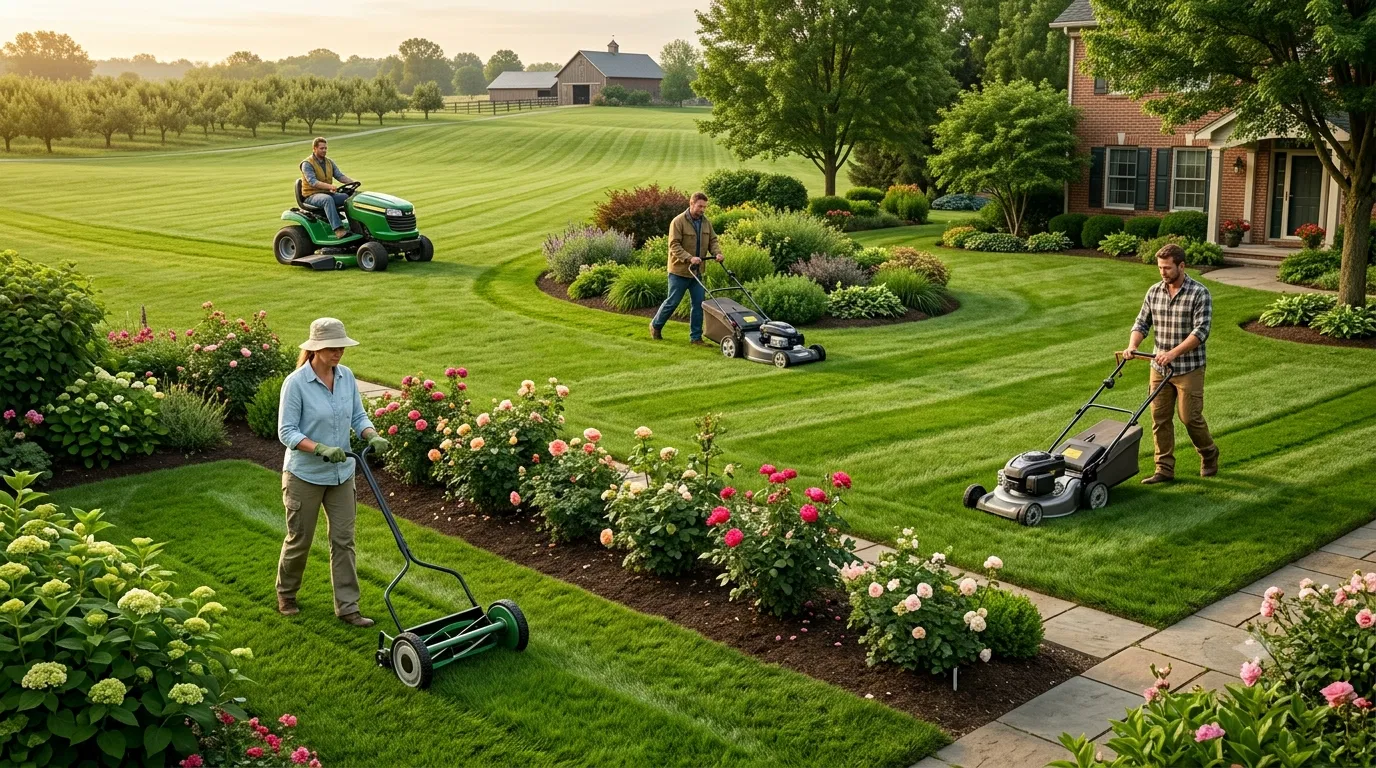
Choosing the right lawn mower can make yard care faster, easier, and far less frustrating. The best mower for one lawn may be the wrong fit for another, which is why understanding the different lawn mower types matters before you buy. From compact push mowers to powerful riding mowers, each option is designed for a specific kind of yard, terrain, and cutting preference.
If you want a cleaner cut, less effort, and better long-term value, the key is matching the mower to your lawn size, grass type, and maintenance habits. Here’s a clear guide to the main lawn mower types and how to choose the right one.
Why Choosing the Right Lawn Mower Matters
A mower is more than just a yard tool. It affects how often you mow, how much energy you spend, and how healthy your grass looks. The wrong mower can leave uneven patches, struggle on slopes, or wear you out before the job is done.
The best lawn mower is not always the most powerful one. It is the one that fits your yard, your schedule, and your comfort level.
Main Types of Lawn Mowers
1. Push Reel Mowers
Push reel mowers are manual, eco-friendly, and simple to use. They use a scissor-like cutting action, which many homeowners like for a clean, precise cut. These mowers work best on small, flat lawns with short grass.
- Best for: Small yards and environmentally conscious homeowners
- Pros: Quiet, lightweight, low maintenance, no fuel or electricity needed
- Cons: Requires more physical effort, not ideal for tall or thick grass
2. Corded Electric Lawn Mowers
Corded electric mowers plug into an outlet and provide consistent power without battery charging or fuel. They are typically lighter than gas mowers and easier to start, making them a popular choice for smaller lawns.
- Best for: Small to medium yards near a power source
- Pros: Low maintenance, quiet, lightweight, no emissions
- Cons: Limited by cord length, can be less convenient around obstacles
3. Cordless Battery-Powered Mowers
Battery-powered mowers offer freedom of movement without the hassle of a cord. They are a strong choice for homeowners who want quiet operation and easy starting with less maintenance than gas models.
- Best for: Small to medium lawns with moderate mowing needs
- Pros: Portable, quiet, easy to start, no gas or oil required
- Cons: Limited run time, battery charging required, may struggle with very large yards
4. Gas-Powered Push Mowers
Gas mowers are known for power and performance. They can handle thicker grass, larger lawns, and rougher terrain better than many electric options. If you need reliability and cutting strength, a gas mower is still a popular choice.
- Best for: Medium to large lawns and tougher mowing conditions
- Pros: Strong cutting power, longer runtime, good for dense grass
- Cons: Louder, heavier, requires fuel and regular maintenance
5. Self-Propelled Mowers
Self-propelled mowers move forward on their own, reducing the effort needed to push them. They are especially useful for sloped lawns or larger yards where a standard push mower may feel tiring.
- Best for: Uneven terrain, hills, and medium to large yards
- Pros: Easier to handle, less physical strain, available in gas and electric models
- Cons: More expensive than basic push mowers, may weigh more
6. Riding Mowers
Riding mowers are built for large properties and long mowing sessions. Instead of walking behind the mower, you sit and drive it. For expansive lawns, this type can save significant time and effort.
- Best for: Large lawns, estates, and properties with wide open spaces
- Pros: Fast, comfortable, efficient for big areas
- Cons: Higher cost, larger storage needs, more maintenance
7. Zero-Turn Mowers
Zero-turn mowers are designed for speed and maneuverability. They can turn in very tight circles, making them ideal for lawns with trees, flower beds, and other landscaping features. They are often favored by professionals and homeowners with large, complex yards.
- Best for: Large lawns with obstacles or intricate layouts
- Pros: Excellent maneuverability, fast cutting, efficient around landscaping
- Cons: Expensive, requires practice to operate well, not ideal for small lawns
How to Choose the Right Lawn Mower
The best lawn mower depends on a few practical factors. Before buying, think about your lawn size, terrain, power preference, and how much maintenance you are willing to handle.
1. Consider Lawn Size
Your yard size is one of the biggest factors in mower selection. A mower that is too small for your lawn will waste time, while one that is too large may be unnecessary and costly.
- Small lawns: Reel, corded electric, or battery-powered mowers
- Medium lawns: Battery-powered, gas, or self-propelled mowers
- Large lawns: Riding or zero-turn mowers
2. Think About Terrain
If your yard is flat, almost any mower may work well. But hills, bumps, and obstacles call for a mower with more control and comfort.
- Flat lawns: Push mowers and reel mowers
- Sloped lawns: Self-propelled or lightweight battery mowers
- Obstacle-heavy yards: Zero-turn mowers or maneuverable self-propelled models
3. Decide Between Gas, Electric, and Manual
Power source affects convenience, cost, and maintenance. Each option has strengths depending on your mowing routine.
- Manual: Best for simplicity and small lawns
- Electric: Great for low maintenance and quieter operation
- Gas: Best for power, endurance, and larger jobs
4. Match the Mower to Your Comfort Level
Some mowers require more physical effort than others. If you want the easiest experience, choose a self-propelled, battery-powered, or riding model. If you do not mind a workout and want a simpler tool, a push or reel mower may be enough.
5. Factor in Maintenance
Maintenance can be a dealbreaker for some buyers. Gas mowers usually need oil changes, air filter cleaning, spark plug checks, and fuel management. Electric and reel mowers are easier to maintain, which can save time and money over the long run.
Helpful Features to Look For
Once you narrow down the mower type, look at the features that improve performance and convenience.
- Cutting width: Wider decks cover more ground faster
- Height adjustment: Lets you control grass length easily
- Bagging, mulching, and side discharge: Useful for different lawn care preferences
- Foldable handles: Helpful for storage in tight spaces
- Battery runtime: Important for cordless models
- Engine power: Important for gas mowers and tough mowing conditions
Quick Lawn Mower Buying Guide
- Measure your lawn size so you know what category fits best.
- Check your terrain for hills, slopes, and obstacles.
- Choose a power source based on convenience and maintenance tolerance.
- Decide how much effort you want to spend mowing each week.
- Compare features and budget to find the best overall value.
Final Thoughts on Choosing the Best Lawn Mower
The right lawn mower should make lawn care easier, not harder. Whether you need a simple reel mower for a small yard or a powerful zero-turn mower for a large property, there is a model built for your exact needs. Focus on lawn size, terrain, power source, and maintenance requirements, and you will be far more likely to choose a mower that performs well for years.
If you are shopping for a mower now, start with the basics: measure your lawn, identify your mowing challenges, and compare the mower types that fit your situation. A smart choice today can save you time, energy, and money every season.